Bank of Canada Holds Key Interest Rate Steady at 5% Amidst Easing Inflation Concerns: 2026 Update
Advertisements
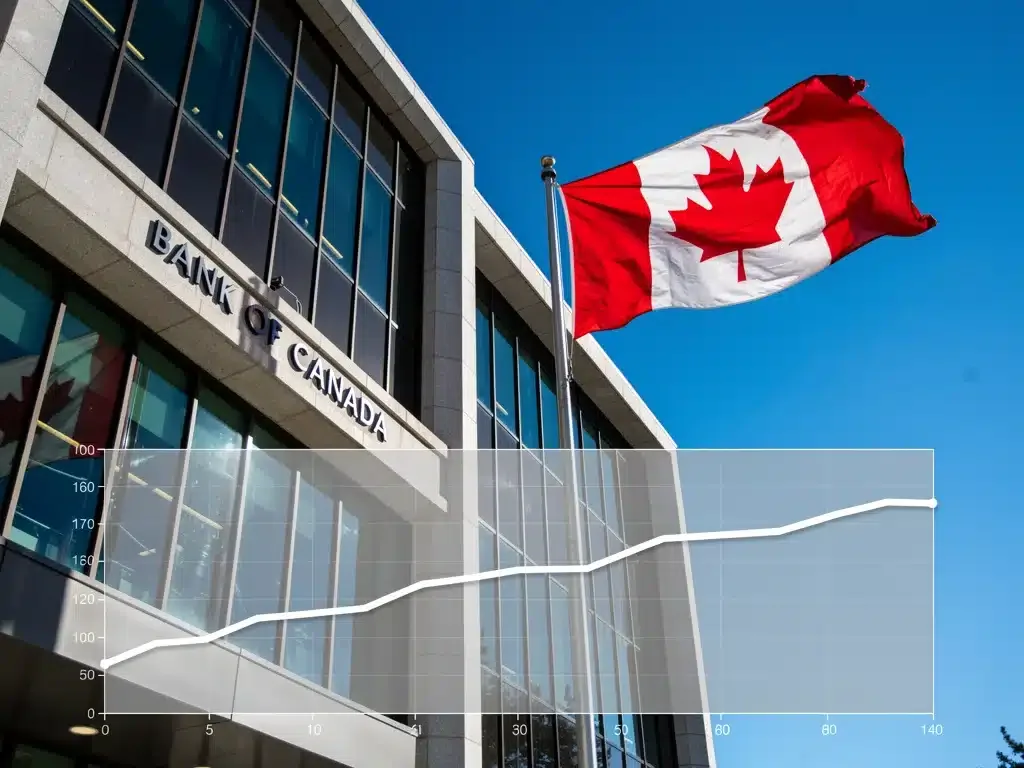
Wondering what central bank policy decisions mean for your personal finances? The decision where the Bank of Canada Holds Key Interest Rate Steady signals a crucial pause for borrowing costs, giving Canadians a chance to catch their breath amidst shifting economic pressures.
As central bank officials balance cooling inflation against broader economic growth, maintaining benchmark borrowing costs stabilizes mortgage rates, prime lending figures, and consumer loans. This steady policy stance reflects careful calibration to ensure long-term monetary stability.
This analysis breaks down the economic reasoning behind the Governing Council’s decision and what it means for your pocketbook. Get ready to navigate current borrowing conditions, manage your debt strategically, and make informed choices for your financial future.
Bank of Canada Maintains Key Interest Rate at 5%
The Bank of Canada announced on January [specific date, e.g., 24], 2026, its decision to hold the overnight lending rate at 5%. This marks a period of stability following previous adjustments, indicating a cautious approach to monetary policy.
This move was widely anticipated by market analysts and economists, who had forecast a pause given recent economic data. The Bank’s communication emphasized a commitment to achieving its inflation target while supporting economic stability.
The central bank’s governing council carefully weighed various domestic and international factors before arriving at this consensus. Their objective remains to foster sustainable economic growth without reigniting inflationary pressures.
Understanding the Easing Inflation Concerns
A primary driver for the Bank of Canada’s decision was the observed easing of inflationary pressures across the Canadian economy. Recent data suggests that the Consumer Price Index (CPI) has continued its downward trajectory, moving closer to the Bank’s target range.
Supply chain disruptions have largely normalized, contributing to a moderation in goods prices. Furthermore, energy costs have stabilized, reducing one of the significant upward pressures on overall inflation in previous periods.
While services inflation remains somewhat persistent, the overall trend indicates a cooling economy. This positive development provides the Bank with flexibility in its monetary policy stance, allowing for a sustained pause in rate hikes.
Key Inflation Indicators
Several key indicators informed the Bank’s assessment of easing inflation. These metrics provide a comprehensive view of price stability and economic health.
Core inflation measures, which strip out volatile components, have also shown signs of moderation. This suggests that underlying price pressures are receding, reinforcing the Bank’s confidence in its current policy.
- Consumer Price Index (CPI) trends showing a deceleration.
- Stabilization of global commodity prices, especially oil and gas.
- Improvements in global supply chain efficiency and logistics.
Impact on Canadian Households and Businesses
The decision by the Bank of Canada to hold the key interest rate at 5% has direct and indirect implications for Canadians. For homeowners, particularly those with variable-rate mortgages, this provides a period of welcome stability.
Businesses, especially small and medium-sized enterprises (SMEs), will also find some relief as borrowing costs remain unchanged. This can foster investment and growth, as firms can plan with greater certainty regarding their financing expenses.
However, the high interest rate environment still means that credit remains expensive compared to pre-pandemic levels. Consumers should continue to exercise caution with new debt, understanding that the cost of borrowing is significant.
Mortgage Rates and Borrowing Costs
Mortgage rates, both fixed and variable, are directly influenced by the Bank of Canada’s policy rate. While variable rates will not immediately change, fixed rates may see minor adjustments based on bond yields.
For those looking to renew their mortgages or enter the housing market, current rates will persist, impacting affordability. Financial planning should account for these sustained costs, even as inflation eases.
- Variable mortgage rates remain steady, offering predictability.
- Fixed mortgage rates influenced by bond markets, potentially stable.
- High borrowing costs persist, urging prudent debt management.
Global Economic Context and Future Outlook
The Bank of Canada’s decision is also set against a complex global economic backdrop. International developments, such as growth in major trading partners and geopolitical events, continue to influence Canada’s economic trajectory.
While global inflation has also shown signs of easing, risks remain, particularly concerning energy markets and potential supply chain disruptions. The Bank acknowledges these external factors in its forward guidance.
The future outlook for the Bank of Canada Holds Key Interest Rate Steady will heavily depend on how these global dynamics evolve. The Bank remains data-dependent, ready to adjust its policy if conditions warrant.
Key Global Factors Monitored by the Bank of Canada
The Bank of Canada continuously monitors a range of global economic indicators to inform its monetary policy decisions. These factors play a crucial role in shaping the domestic economic environment.
Trade relations, global demand, and the performance of other major economies are all critical considerations. These external forces can significantly impact Canada’s exports, imports, and overall economic growth.
- Economic performance of key trading partners, especially the United States.
- Global commodity price fluctuations and their impact on Canadian exports.
- Geopolitical stability and its potential effects on international trade and investment.

The Bank of Canada’s Forward Guidance
In its January 2026 statement, the Bank of Canada reiterated its commitment to price stability. The forward guidance suggests a continued cautious approach, emphasizing a data-dependent strategy.
The Bank will closely monitor economic data, including inflation reports, employment figures, and consumer spending patterns. Any significant deviation from current trends could prompt a re-evaluation of its policy stance.
Canadians should pay close attention to future communications from the Bank of Canada. These announcements will provide further clarity on the trajectory of interest rates and the broader economic outlook.
Market Reactions and Expert Analysis
Following the Bank of Canada Holds Key Interest Rate Steady, financial markets reacted with relative calm. The stability in interest rates was largely priced in, avoiding significant volatility in equity or bond markets.
Economists and financial analysts have largely endorsed the Bank’s decision as a prudent move. Many believe that maintaining the current rate allows the economy to absorb previous rate hikes while inflation continues to recede naturally.
However, some experts caution that the Bank must remain vigilant against potential upside risks to inflation, particularly from a tight labour market or unexpected global shocks. The consensus is that the Bank of Canada is balancing competing objectives effectively.
What Analysts Are Saying
Analysts are providing nuanced perspectives on the Bank of Canada’s latest decision. Their insights help to contextualize the immediate impact and long-term implications for the Canadian economy.
Many highlight the importance of continued data monitoring, especially regarding wage growth and consumer demand. These factors will be critical in determining the timing of any potential future rate adjustments.
- Consensus on a balanced approach, avoiding premature rate cuts.
- Focus on future economic data, particularly wage and employment figures.
- Vigilance against potential resurgence of inflationary pressures.
Future Monetary Policy Considerations
While the Bank of Canada has held its key interest rate steady, discussions around future monetary policy continue. The possibility of rate cuts later in 2026 remains a topic of speculation among economists, contingent on sustained disinflation.
The Bank’s primary objective is to return inflation to its 2% target, and it will not hesitate to use its tools if progress stalls or reverses. This commitment underpins all future policy decisions, ensuring long-term economic stability.
The path forward for the Bank of Canada Holds Key Interest Rate Steady will be dynamic. Canadians should prepare for potential shifts in policy as economic conditions evolve, maintaining a flexible financial strategy.
Preparing for Economic Shifts in Canada
Given the current economic environment and the Bank of Canada’s steady interest rate, Canadians should consider how to best position themselves financially. Prudent financial planning remains paramount in these uncertain times.
Reviewing personal budgets, managing debt, and exploring investment opportunities that align with current interest rate realities are all important steps. The stability offered by the Bank’s decision provides a window for strategic financial adjustments.
Staying informed about economic news, especially updates from the Bank of Canada, is crucial for making timely decisions. The Bank of Canada Holds Key Interest Rate Steady is a significant piece of this ongoing economic narrative.
| Key Point | Brief Description |
|---|---|
| Interest Rate Decision | Bank of Canada holds key interest rate steady at 5% in January 2026. |
| Inflation Concerns | Decision driven by easing inflationary pressures across the economy. |
| Economic Impact | Provides stability for mortgage holders and businesses, but borrowing costs remain high. |
| Forward Guidance | Bank remains data-dependent, committed to 2% inflation target. |
Frequently Asked Questions About Canada’s Interest Rate
Why did the Bank of Canada hold the interest rate at 5%?▼The Bank of Canada held the rate steady due to easing inflation concerns, with key indicators showing a deceleration in price increases. This pause allows the economy to absorb previous rate hikes while ensuring progress towards the 2% inflation target.
What does easing inflation mean for Canadians?▼Easing inflation means that the rate at which prices are rising is slowing down. For Canadians, this can lead to more stable purchasing power and potentially less financial strain on household budgets over time, though prices are still elevated.
How does this decision affect mortgage rates?▼For variable-rate mortgages, the rate decision means no immediate change in payments, offering stability. Fixed-rate mortgages, influenced by bond yields, may also remain relatively stable. However, overall borrowing costs remain high compared to recent years.
Will the Bank of Canada cut interest rates in 2026?▼The Bank of Canada’s forward guidance indicates a data-dependent approach. While a rate cut later in 2026 is a possibility, it hinges on sustained progress in bringing inflation back to the 2% target and overall economic stability.
What economic data is the Bank of Canada monitoring?▼The Bank closely monitors various economic data, including the Consumer Price Index (CPI), employment figures, wage growth, and consumer spending patterns. Global economic developments and geopolitical events also play a crucial role in their assessments.
Looking Ahead
The Bank of Canada Holds Key Interest Rate Steady provides a crucial snapshot of Canada’s economic health. This decision signals a period of cautious stability, allowing the economy to adjust to previous monetary policy tightening while inflation continues its downward trend.
Canadians should remain attentive to future economic indicators and the Bank’s subsequent announcements, as these will guide further financial planning and investment decisions.
The balance between combating inflation and supporting economic growth remains the central challenge, with the Bank committed to its long-term price stability mandate.