Understanding the 2026 Canada Learning Bond: A Step-by-Step Guide for New Parents to Access Up to $2,000 in Educational Savings
Advertisements

Did you know the federal government might deposit up to $2,000 directly into your child’s future fund—no personal contributions required? Accessing the Canada Learning Bond in 2026 is one of the easiest financial moves new parents can make to kickstart post-secondary savings.
Eligible families receive an initial $500 deposit right out of the gate, followed by $100 annual top-ups to help build a stress-free education nest egg. All it takes to unlock this zero-cost grant is opening a no-fee savings account for your newborn or toddler.
Ready to claim every dollar your child is entitled to before missing out on retroactive payments? Here is your simple guide to qualifying, applying, and maximizing federal aid from day one.
Understanding the 2026 Canada Learning Bond: An Overview
The Canada Learning Bond (CLB) represents a significant federal government initiative designed to help low-income families save for their children’s post-secondary education.
For children born in 2004 or later, the CLB provides an initial $500, with an additional $100 for each year of eligibility, up to a maximum of $2,000.
This financial support is deposited directly into a Registered Education Savings Plan (RESP) and does not require any personal contributions from parents or guardians. The goal is to encourage early savings habits and reduce financial barriers to higher education for Canadian youth.
As 2026 approaches, new parents need to be fully aware of the criteria and processes to ensure their eligibility. The government continues to emphasize accessible education, making programs like the Canada Learning Bond 2026 crucial for future generations.
Eligibility Criteria for the 2026 Canada Learning Bond
Eligibility for the Canada Learning Bond hinges primarily on the child’s birth year and the family’s net income. Children born on or after January 1, 2004, are generally eligible, provided they are residents of Canada.
The key income threshold is determined by the adjusted family net income, which must be below a certain amount set annually by the government. This threshold varies based on the number of children in the family.
Parents must also open an RESP for their child, as the CLB funds are deposited directly into this account. Without an RESP, the child cannot receive the benefits of the Canada Learning Bond 2026.
Who Qualifies for the Bond
A child qualifies for the CLB if they are a Canadian resident, born in 2004 or later, and their family receives the National Child Benefit Supplement. This supplement is a component of the Canada Child Benefit (CCB).
The family’s adjusted net income is assessed annually by the Canada Revenue Agency (CRA) to determine eligibility for the CCB and its supplements. Maintaining low-income status is essential for continued annual CLB payments.
Understanding the specific income cut-offs for the 2026 Canada Learning Bond is paramount for new parents planning their child’s educational future.
- Child born on or after January 1, 2004.
- Family receives the National Child Benefit Supplement.
- Child is a Canadian resident with a valid Social Insurance Number (SIN).
Step-by-Step Application Process for New Parents
Applying for the Canada Learning Bond involves several straightforward steps, primarily centred around establishing an RESP. New parents should start by obtaining a Social Insurance Number (SIN) for their child as soon as possible after birth.
Once the child has a SIN, the next critical step is to open an RESP account with a participating financial institution. Many banks, credit unions, and investment firms offer RESPs.
The financial institution will then apply for the Canada Learning Bond 2026 on your behalf. This process ensures that the funds are correctly allocated and managed for your child’s future education.
Opening an RESP Account
Choosing the right RESP provider is an important decision for new parents. Compare fees, investment options, and customer service to find a plan that best suits your family’s needs.
When opening the RESP, you will need your child’s SIN and your own SIN. The financial institution will guide you through the necessary paperwork and explain how the CLB will be deposited.
Ensure that the RESP is set up to receive government grants, including the Canada Learning Bond 2026, to maximize your child’s educational savings.
- Obtain a Social Insurance Number (SIN) for your child.
- Choose a financial institution and open a Registered Education Savings Plan (RESP).
- Authorize the RESP provider to apply for the Canada Learning Bond on your behalf.
Maximizing Your Child’s Educational Savings with CLB
To fully leverage the Canada Learning Bond, families should understand how the annual payments work and how they accumulate. The initial $500 is provided when the child first becomes eligible, followed by $100 for each subsequent year.
These annual payments continue until the child turns 15, or until the maximum of $2,000 has been reached. Even if you miss a year, you can still apply for past eligible years, ensuring no child misses out on the Canada Learning Bond 2026 benefits.
This cumulative approach means that consistent eligibility can significantly boost a child’s post-secondary education fund. It’s a foundational component of many Canadian families’ financial planning.
Understanding Annual Payments and Accumulation
The annual $100 payments are contingent on the family’s continued eligibility based on their adjusted net income. It is crucial to file income tax returns every year to ensure the CRA can assess eligibility.
If a family’s income rises above the threshold in a particular year, they may not receive the $100 payment for that year, but they can become eligible again in subsequent years if their income drops. The initial $500 is a one-time payment.
This flexibility ensures that the Canada Learning Bond remains a valuable resource for families experiencing fluctuating incomes over time. The $2,000 potential is a strong incentive.
The CLB can be combined with other government grants, such as the Canada Education Savings Grant (CESG), further enhancing educational savings. While the CLB requires no contributions, the CESG matches personal contributions to an RESP.
By understanding the interplay between these grants, new parents can strategically plan their RESP contributions to maximize government support. This integrated approach ensures comprehensive financial backing for post-secondary studies.
Ultimately, the goal is to create a robust educational fund that minimizes student debt and provides greater opportunities for Canadian youth. The Canada Learning Bond 2026 is a key piece of this puzzle.
Common Misconceptions About the Canada Learning Bond
Many parents mistakenly believe they must contribute their own money to an RESP to receive the Canada Learning Bond. This is a common misconception, as the CLB is a non-contributory grant.
Another frequent misunderstanding is that the CLB is only for university education. In reality, these funds can be used for various post-secondary programs, including college, trade schools, and apprenticeship programs.
Clarifying these points is essential for new parents to fully appreciate the accessibility and versatility of the Canada Learning Bond 2026. Dispelling myths helps more families benefit.
Addressing Key Misunderstandings
Some parents also believe that receiving the CLB will affect their eligibility for other government benefits. The Canada Learning Bond is designed to supplement, not replace, existing support systems.
It’s also important to note that the CLB funds belong to the child, not the parents, and are specifically designated for educational expenses. This ensures the money serves its intended purpose.
Educating parents on these nuances ensures they can confidently apply for and utilize the Canada Learning Bond 2026 without undue concern.
The CLB is not a loan; it is a grant that never needs to be repaid, provided the funds are used for eligible post-secondary education. This distinction is crucial for financial planning.
Furthermore, the CLB does not expire if not used immediately after high school. The funds remain in the RESP until the beneficiary is 31 years old, offering flexibility for varied educational paths.
These facts underscore the significant value and long-term benefit of the Canada Learning Bond for eligible Canadian families.
The Role of RESPs in Accessing the Canada Learning Bond
A Registered Education Savings Plan (RESP) is the foundational vehicle through which the Canada Learning Bond is delivered. Without an RESP, a child cannot receive any CLB funds.
The RESP acts as a tax-deferred savings account specifically for education. While parents can contribute to an RESP, for the CLB, no personal contributions are required.
This makes the RESP an indispensable tool for accessing the Canada Learning Bond 2026, simplifying the process of receiving government grants for education.
Choosing the Right RESP Provider
Financial institutions offering RESPs include banks, credit unions, and mutual fund companies. It is advisable to research and compare different providers to find one that aligns with your financial goals.
Some providers specialize in group RESPs, while others offer individual or family plans. Understand the terms and conditions, including fees and investment options, before committing.
The chosen provider will handle all government grant applications, including the Canada Learning Bond, making the process seamless for parents.
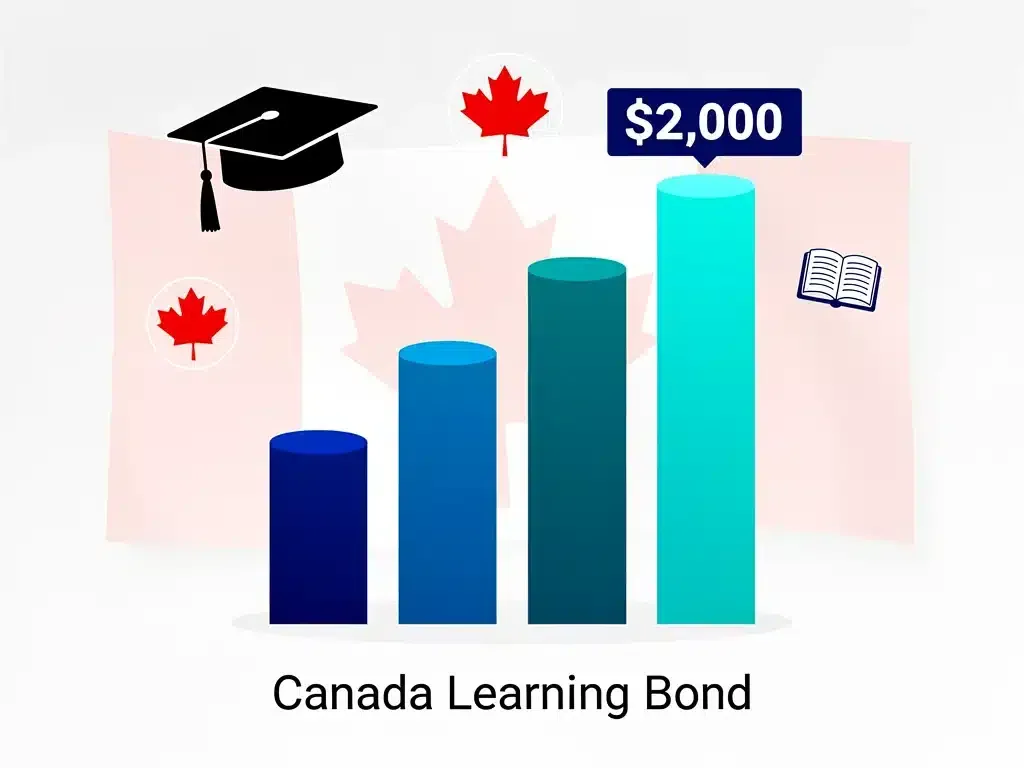
Impact and Benefits of the Canada Learning Bond for Families
The Canada Learning Bond has a profound impact on Canadian families, particularly those with lower incomes. It provides a tangible head start on educational savings, fostering hope and opportunity.
By reducing the financial burden of post-secondary education, the CLB enables more students to pursue their academic and career aspirations. This leads to a more educated and skilled workforce.
Ultimately, the Canada Learning Bond 2026 contributes to breaking cycles of poverty and promoting social mobility across Canada. It’s an investment in both individual futures and national prosperity.
Long-Term Advantages for Canadian Youth
Access to post-secondary education often correlates with higher earning potential and improved quality of life. The CLB helps bridge the gap for students who might otherwise face significant financial hurdles.
Even the initial $500 can be a powerful motivator, encouraging families to think about and plan for their children’s future education early on. This preventative approach is highly effective.
The consistent availability of the Canada Learning Bond reinforces the government’s commitment to equitable educational opportunities for all Canadian children.
Moreover, the existence of these funds can influence a child’s perception of their own educational prospects. Knowing that money is set aside for their future studies can instill confidence and ambition.
This psychological benefit, combined with the practical financial support, makes the Canada Learning Bond a truly transformative program for many young Canadians. It shapes aspirations from an early age.
The long-term societal benefits of a more educated populace, driven by programs like the Canada Learning Bond 2026, are immeasurable, contributing to innovation and economic growth.
Future Outlook and Updates for the 2026 Canada Learning Bond
As 2026 approaches, it’s important for new parents to stay informed about any potential updates or changes to the Canada Learning Bond program. While the core structure is stable, minor adjustments can occur.
Government initiatives are subject to periodic review and refinement to ensure they continue to meet their objectives effectively. Monitoring official government sources is always recommended.
Any modifications to income thresholds or application procedures will be communicated well in advance, giving families ample time to adapt their plans regarding the Canada Learning Bond 2026.
Staying Informed on Program Changes
Subscribing to updates from the Government of Canada’s education and finance departments can help parents stay current. Financial institutions offering RESPs also typically provide relevant information.
Reliable news outlets and financial planning resources often cover significant program changes, offering accessible summaries and practical advice. Proactive information gathering is key.
Being aware of the latest information ensures that new parents can always take full advantage of the Canada Learning Bond and other educational grants.
| Key Point | Brief Description |
|---|---|
| Eligibility Overview | Canadian residents, born 2004+, family receiving National Child Benefit Supplement. |
| Accessing Funds | Requires opening an RESP; financial institution applies for CLB on your behalf. |
| Maximum Benefit | Up to $2,000 per child ($500 initial, $100 annually). |
| No Personal Contribution | CLB is a grant; no personal funds needed to receive it. |
Frequently Asked Questions About the Canada Learning Bond
What is the Canada Learning Bond (CLB)?▼The CLB is a federal government grant designed to help low-income families save for a child’s post-secondary education. It provides an initial $500 and up to $1,500 more ($100 annually) into a Registered Education Savings Plan (RESP).
Do I need to contribute money to receive the Canada Learning Bond?▼No, the Canada Learning Bond is a non-contributory grant. You do not need to deposit any of your own money into an RESP to receive the CLB for your eligible child. It is a direct government payment.
How do I apply for the Canada Learning Bond 2026?▼To apply, first obtain a Social Insurance Number (SIN) for your child. Then, open a Registered Education Savings Plan (RESP) with a financial institution. The institution will then apply for the CLB on your behalf.
What can the Canada Learning Bond funds be used for?▼The funds can be used for a wide range of post-secondary education expenses. This includes tuition fees, books, supplies, and transportation costs for programs at universities, colleges, and recognized trade schools across Canada.
What is the maximum amount a child can receive from the CLB?▼An eligible child can receive a total of $2,000 through the Canada Learning Bond. This includes an initial $500 payment and subsequent annual payments of $100, up to a maximum of 15 years.
Looking Ahead: Securing Educational Futures
The Canada Learning Bond 2026 stands as a critical pillar in Canada’s commitment to accessible education. For new parents, understanding and utilizing this program is a straightforward yet impactful step towards securing their child’s future.
The consistent availability of this non-contributory grant underlines its importance in fostering educational opportunities and reducing financial barriers.
As the landscape of post-secondary education evolves, programs like the Canada Learning Bond provide a stable foundation, offering peace of mind and tangible support. Families are encouraged to act proactively, open an RESP early, and ensure all eligibility requirements are met.
The ongoing success and potential for growth of the Canada Learning Bond will continue to shape how Canadian children from diverse backgrounds access and achieve higher education, reinforcing a national value of equitable opportunity.