Essential Steps to Coordinate 12-Week Paid Family Leave With Short-Term Disability Benefits in 2026
Advertisements
Navigating statutory benefits while taking time off for a new child or medical recovery can quickly turn into a financial headache. Learning how to Coordinate 12-Week Paid Family Leave alongside short-term disability insurance is the single best way to maximize your wage replacement without creating costly payout gaps.
Because state-mandated caregiving programs and private income-protection policies follow drastically different elimination periods and offset rules, timing your submissions is everything. Stacking these supplemental benefits correctly ensures you maintain a continuous stream of income throughout your entire parental or medical leave.
This 2026 playbook breaks down the essential steps to align your employer policies with statutory benefits. Discover how to sync eligibility dates, avoid policy offsets, and lock in seamless financial security for your family.
Understanding the 2026 Landscape for Paid Family Leave and STD
The year 2026 marks a pivotal period for employee benefits, particularly concerning the interaction between Paid Family Leave (PFL) and Short-Term Disability (STD) benefits. New regulations and evolving state mandates necessitate a clear understanding of how these two crucial support systems will integrate.
Employers and employees alike must prepare for these changes to ensure compliance and maximize benefit utilization. The coordination of these leaves is not merely an administrative task but a strategic imperative for workforce planning and employee well-being.
Navigating the complexities requires proactive planning and a deep dive into legislative updates. The objective is to create a seamless experience for individuals needing time off while maintaining operational efficiency for organizations.
Key Legislative Updates Impacting Benefit Coordination
Recent legislative shifts at both federal and state levels are directly influencing how PFL and STD benefits are administered. These changes aim to standardize certain aspects of leave while allowing for state-specific variations, creating a nuanced compliance landscape.
Understanding these legal frameworks is the cornerstone of effective coordination. Employers must stay abreast of new laws to avoid penalties and ensure their policies align with the latest requirements.
Failure to adapt to these updates can lead to significant legal and financial repercussions. Therefore, a comprehensive review of current and pending legislation is paramount for all stakeholders.
Federal and State Mandates Overview
Several states have already implemented or are in the process of implementing expanded PFL programs that may overlap with existing STD provisions. These mandates often dictate how benefits are calculated and the sequence in which different types of leave can be taken.
The federal landscape, while not mandating a universal PFL program, continues to influence state-level decisions through various legislative discussions and incentive programs. This interplay between federal and state initiatives adds layers of complexity to benefit coordination.
Review state-specific PFL and STD laws.
Identify any new federal guidelines or recommendations.
Consult legal experts on multi-state compliance challenges.
Strategic Planning for Seamless PFL and STD Integration
Developing a robust strategy for integrating PFL and STD benefits in 2026 is critical for both employers and employees. This involves more than just updating policy documents; it requires a holistic approach to benefit design, communication, and administration.
Effective planning ensures that employees can access the full spectrum of benefits they are entitled to without unnecessary administrative hurdles. For employers, it means maintaining a competitive benefits package and fostering a supportive work environment.
A well-thought-out integration plan minimizes confusion, reduces the risk of errors, and optimizes the overall experience for everyone involved in the leave process.
Developing Unified Leave Policies
One of the primary challenges is creating unified leave policies that clearly outline the interaction between PFL and STD. These policies should define eligibility criteria, application processes, and the sequencing of benefits, ensuring clarity for all parties.
Unified policies help prevent situations where an employee might inadvertently exhaust one benefit while still eligible for another. They also provide a consistent framework for HR and management to apply across the organization, promoting fairness and equity.
The goal is to eliminate ambiguity and provide a single, comprehensive guide for employees navigating personal or family health events. This approach streamlines the process and reduces administrative burden.
Draft clear eligibility requirements for both PFL and STD.
Outline the application and approval process for combined leave.
Specify benefit sequencing and payment coordination.
Communication Strategies for Employees and Management
Transparent and consistent communication is paramount for successful implementation of coordinated PFL and STD benefits. Employees need to understand their rights and how to access benefits, while management requires clear guidelines for processing requests and managing teams during absences.
Misinformation or lack of clarity can lead to frustration, compliance issues, and decreased employee morale. Therefore, investing in comprehensive communication strategies is an essential step.
Effective communication builds trust and ensures that all stakeholders are well-informed, minimizing potential disruptions and maximizing the positive impact of these benefits.
Educating Your Workforce on Benefit Coordination
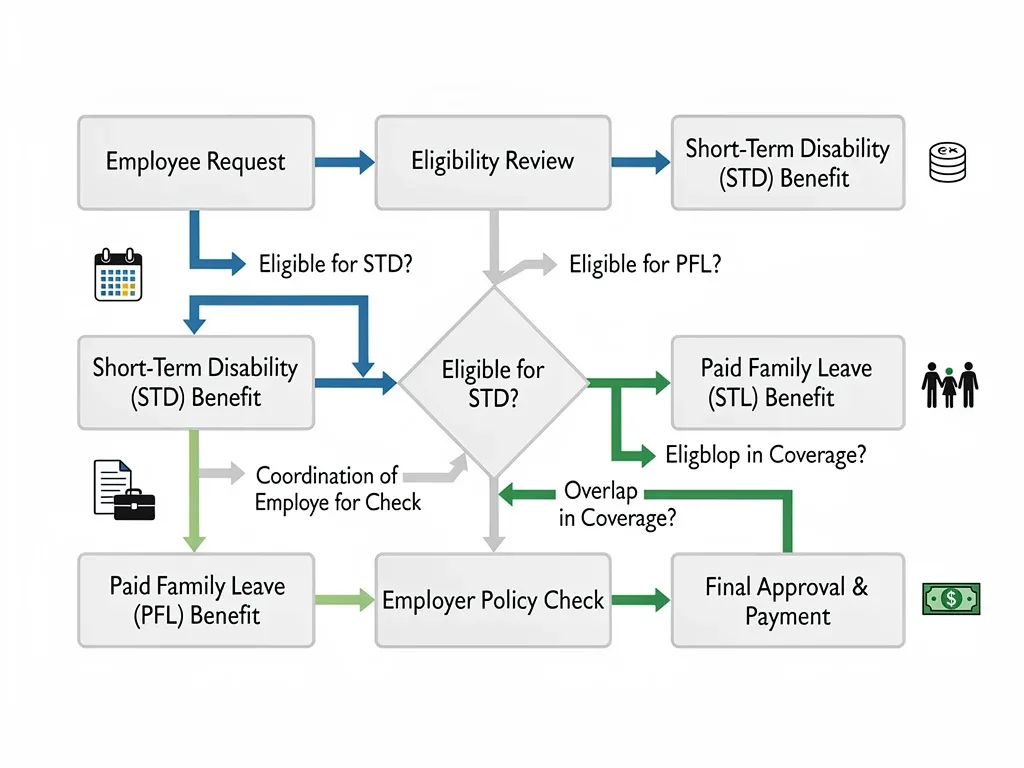
Regular information sessions, detailed FAQs, and easily accessible online resources are vital tools for educating employees. These resources should explain how 12-week paid family leave coordinates with short-term disability benefits in 2026, using clear and understandable language.
Providing real-world examples or case studies can help employees grasp the practical implications of these policies. Proactive education reduces the burden on HR departments by answering common questions before they arise.
Empowering employees with knowledge about their benefits fosters a sense of security and appreciation, contributing to a more engaged and satisfied workforce.
Host regular workshops or webinars for employees.
Develop a comprehensive, easy-to-understand FAQ document.
Create an online portal with all relevant policy documents and forms.
Leveraging Technology for Efficient Benefit Administration
The complexities of coordinating PFL and STD benefits in 2026 can be significantly streamlined through the strategic use of technology. Benefit administration platforms and HRIS systems offer powerful tools for tracking leave, managing claims, and ensuring compliance.
Automating aspects of the leave management process reduces manual errors, saves time, and provides real-time data for better decision-making. Technology can transform a daunting administrative task into a manageable and efficient operation.
Investing in appropriate technological solutions is no longer a luxury but a necessity for organizations aiming for optimal benefit coordination and compliance.
Implementing Integrated Leave Management Systems
Integrated leave management systems can track an employee’s eligibility for various types of leave, calculate benefit amounts, and manage the transition between PFL and STD. These systems provide a centralized platform for all leave-related information, enhancing accuracy and efficiency.
Such systems can also generate compliance reports, alerting HR to potential issues or upcoming deadlines. This proactive approach helps organizations stay ahead of regulatory changes and avoid costly mistakes.
The right technology solution ensures that the Essential Steps to Coordinate 12-Week Paid Family Leave With Short-Term Disability Benefits in 2026 are executed flawlessly, from initial application to benefit disbursement.
Evaluate HRIS and benefit administration software capabilities.
Ensure system integration between PFL and STD tracking.
Utilize automated alerts for compliance and eligibility.
Financial Implications and Budgeting for Coordinated Benefits
The coordination of 12-week paid family leave with short-term disability benefits in 2026 carries significant financial implications for employers. Understanding these costs and budgeting effectively is crucial for maintaining fiscal stability and ensuring the long-term viability of benefit programs.
Employers must analyze potential increases in benefit payouts, administrative costs, and the impact on workforce productivity. Proactive financial planning can mitigate unexpected expenses and ensure adequate funding for these essential benefits.
A clear financial outlook allows organizations to make informed decisions about benefit design and funding mechanisms, supporting both employee needs and business objectives.
Assessing Costs and Funding Mechanisms
Calculating the potential cost of coordinated PFL and STD benefits involves several factors, including employee demographics, historical leave patterns, and state-mandated contribution rates. Employers should conduct thorough actuarial analyses to project future expenses.
Funding mechanisms can vary, ranging from self-insurance to fully insured plans or state-run programs. Choosing the right approach depends on the organization's size, risk tolerance, and financial capacity, all while considering the Essential Steps to Coordinate 12-Week Paid Family Leave.
Exploring various funding options and understanding their implications is a vital part of preparing for the 2026 benefit landscape. This ensures that benefits are sustainable and accessible when needed.
Conduct an actuarial assessment of projected leave costs.
Review various funding options (self-funded, insured, state programs).
Adjust annual budgets to account for anticipated benefit expenses.
Ensuring Compliance and Mitigating Legal Risks
Compliance with the evolving landscape of PFL and STD regulations is non-negotiable for employers in 2026. Non-compliance can result in substantial fines, legal challenges, and damage to an organization's reputation. Proactive measures are essential to mitigate these risks.
A thorough understanding of both federal and state-specific requirements is critical. This includes staying informed about changes to eligibility, benefit duration, and anti-discrimination provisions related to leave.
Regular audits and legal consultations can help identify potential compliance gaps and ensure that policies and practices align with all applicable laws, protecting both the employer and employee.
Regular Audits and Legal Counsel
Conducting regular internal audits of leave policies and practices is a proactive way to ensure compliance. These audits should review benefit calculations, documentation, and communication processes to identify any discrepancies or areas for improvement.
Engaging with legal counsel specializing in labor and employment law provides invaluable guidance on interpreting complex regulations. Legal experts can help navigate ambiguities and ensure that all Essential Steps to Coordinate 12-Week Paid Family Leave are legally sound.
This dual approach of internal scrutiny and external expert advice creates a robust compliance framework, minimizing legal exposure and fostering a fair and lawful benefit environment.
Schedule periodic internal audits of leave administration.
Consult with legal experts on emerging regulations and best practices.
Ensure all policy updates are reviewed and approved by legal counsel.
Future Outlook and Continuous Adaptation
The landscape of employee benefits, particularly concerning PFL and STD, is constantly evolving. What is current in 2026 may change in subsequent years, necessitating a commitment to continuous adaptation and ongoing monitoring of legislative developments.
Organizations must cultivate a culture of flexibility and responsiveness to these changes. This ensures that their benefit programs remain effective, compliant, and supportive of their workforce's changing needs.
Staying informed and being prepared to adjust strategies will be key to long-term success in managing these complex benefits, reinforcing the importance of the Essential Steps to Coordinate 12-Week Paid Family Leave.
Monitoring Evolving Regulations and Best Practices
Establishing a system for continuously monitoring legislative updates at both federal and state levels is crucial. Subscribing to legal and HR publications, attending industry webinars, and participating in professional networks can keep organizations informed.
Best practices in benefit coordination are also subject to evolution as organizations gain more experience with integrated leave programs. Sharing insights and learning from peers can help refine internal processes and improve the overall employee experience.
This ongoing vigilance ensures that benefit programs remain competitive and aligned with the latest legal requirements and industry standards, providing the best support for employees.
Subscribe to legislative update services and HR publications.
Participate in industry forums and professional associations.
Regularly benchmark benefit programs against industry best practices.
Key Point | Brief Description |
|---|---|
Legislative Awareness | Stay updated on federal and state PFL/STD laws for 2026. |
Policy Integration | Develop unified policies for seamless PFL and STD coordination. |
Employee Communication | Educate workforce on benefit access and coordination processes. |
Technology Adoption | Utilize HRIS for efficient leave tracking and administration. |
Frequently Asked Questions About PFL and STD Coordination
What exactly is 12-week paid family leave?▼
12-week paid family leave refers to a period of paid absence from work, typically offered for family-related reasons such as caring for a new child, a seriously ill family member, or managing a qualifying military exigency. The "paid" aspect means employees receive a portion of their wages during this time, often mandated by state law.
How does short-term disability (STD) differ from PFL?▼
Short-term disability (STD) provides income replacement when an employee is unable to work due to their own non-work-related illness or injury. PFL, conversely, is for family-related reasons or bonding with a new child. While both offer wage replacement, the qualifying reasons for leave are distinct, requiring careful coordination in 2026.
Can PFL and STD benefits be taken concurrently in 2026?▼
Generally, PFL and STD benefits are not taken concurrently for the same reason, as they serve different purposes. However, they can be taken sequentially, or in some cases, PFL might supplement STD if permitted by state law or employer policy. Understanding the specific state and company policies for 2026 is crucial for proper sequencing.
What are the employer's responsibilities regarding these benefits?▼
Employers are responsible for understanding and complying with all federal and state laws governing PFL and STD. This includes developing clear policies, communicating benefits to employees, accurately processing claims, and ensuring non-discriminatory application of leave. Proactive planning for 2026 is essential to meet these obligations effectively.
Where can I find state-specific information on PFL and STD?▼
State-specific information on PFL and STD can typically be found on the official websites of state labor departments or workforce agencies. These sites provide detailed guidelines, eligibility requirements, and application procedures. Consulting with HR professionals or legal counsel specializing in benefits can also offer tailored guidance for your specific location and situation.
What Happens Now
The evolving landscape for coordinating 12-week paid family leave with short-term disability benefits in 2026 demands immediate attention from employers and employees.
Organizations must prioritize understanding legislative changes, developing integrated policies, and fostering clear communication to ensure compliance and support their workforce effectively.
This proactive approach will be critical for navigating the complexities of modern benefit administration and maintaining a competitive edge in employee well-being.