EI Regular Benefits 2026: Maximize 45 Weeks Income Support
Advertisements

Latest developments on EI Regular Benefits in 2026: Maximizing Your Claim for Up to 45 Weeks of Income Support, with key facts, verified sources and what readers need to monitor next in Canada, presented clearly.
EI Regular Benefits in 2026: Maximizing Your Claim for Up to 45 Weeks of Income Support is shaping today’s agenda with new details released by officials and industry sources. This update prioritizes what changed, why it matters and what to watch next, in a straightforward news format.
The Canadian government continues to refine its Employment Insurance program, a critical safety net for many. As 2026 approaches, understanding the nuances of how these benefits operate becomes paramount for those who may need to access them.
Recent discussions and policy adjustments suggest a renewed focus on supporting Canadians through periods of unemployment. These changes aim to provide more robust assistance, particularly concerning the duration of support available.
Navigating the complexities of EI can be challenging, but informed claimants are better positioned to receive the full extent of their entitlements. This article will delve into the specifics of EI Regular Benefits in 2026: Maximizing Your Claim for Up to 45 Weeks of Income Support, offering practical insights and essential updates.
Understanding EI Regular Benefits in 2026
The Employment Insurance (EI) program provides temporary financial assistance to unemployed Canadians. In 2026, the framework for EI Regular Benefits is expected to continue its evolution, reflecting economic conditions and labour market needs.
These benefits are crucial for individuals who lose their jobs through no fault of their own, offering a bridge while they search for new employment. The duration and amount of benefits are determined by various factors, including insurable earnings and regional unemployment rates.
As we look towards 2026, potential claimants must familiarize themselves with the established criteria and any forthcoming adjustments. This proactive approach ensures readiness should the need for income support arise.
Eligibility Criteria for EI Regular Benefits
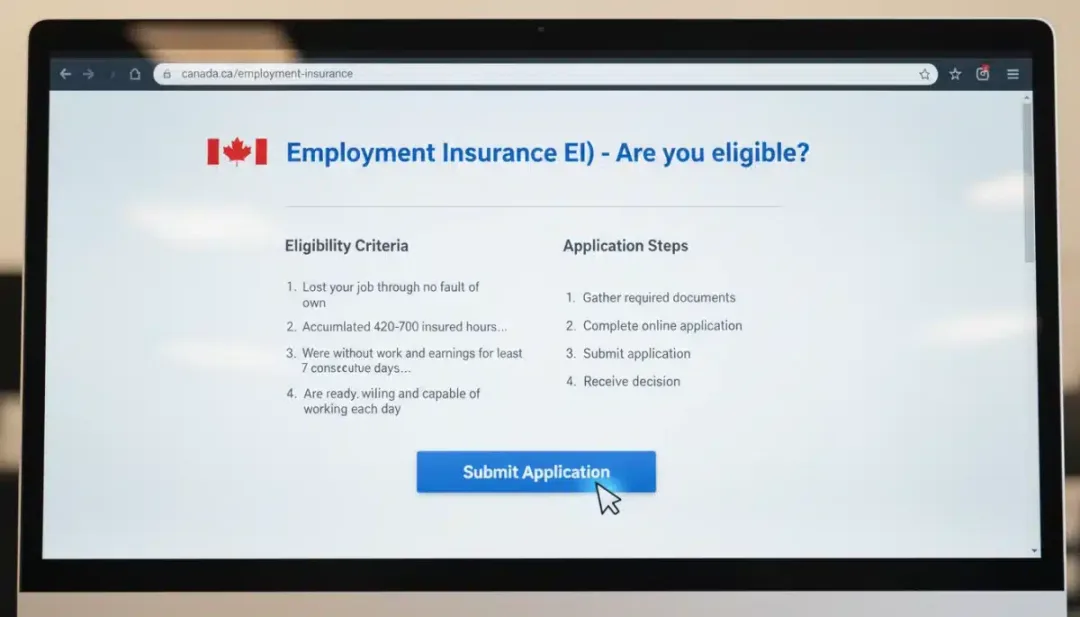
To qualify for EI Regular Benefits, claimants must meet specific criteria set forth by Service Canada. These typically include having accumulated a certain number of insurable hours in the 52 weeks preceding their claim or since their last claim, whichever is shorter.
The number of insurable hours required varies based on the regional unemployment rate where the claimant resides. Generally, higher unemployment rates in a region mean fewer hours are needed to qualify for EI Regular Benefits.
Furthermore, claimants must demonstrate that they are actively looking for work and are ready, willing, and capable of working each day. Understanding these foundational requirements is the first step in successfully claiming EI Regular Benefits in 2026: Maximizing Your Claim for Up to 45 Weeks of Income Support.
- Accumulated minimum insurable hours.
- Loss of employment through no fault of your own.
- Actively seeking and available for work.
- Residing in Canada.
Maximizing Your Claim: Up to 45 Weeks of Support
The prospect of receiving up to 45 weeks of income support through EI Regular Benefits is a significant consideration for many Canadians. This extended duration can provide much-needed stability during prolonged job searches or economic downturns.
The actual number of weeks a claimant can receive depends on their accumulated insurable hours and the unemployment rate in their economic region. Provinces with higher unemployment generally offer more weeks of benefits.
Claimants should actively monitor the unemployment rate in their specific region, as fluctuations can directly impact their potential benefit duration. This strategic awareness is key to understanding and maximizing EI Regular Benefits in 2026: Maximizing Your Claim for Up to 45 Weeks of Income Support.
Factors Influencing Benefit Duration
Several factors play a critical role in determining the maximum number of weeks an individual can receive EI Regular Benefits. The primary determinants are the number of insurable hours accumulated in the qualifying period and the unemployment rate in the claimant’s economic region.
For instance, an individual with 1,820 insurable hours in a region with an unemployment rate of 13.1% or higher could potentially receive up to 45 weeks of benefits. Conversely, fewer hours or a lower regional unemployment rate would result in fewer weeks of support.
It is imperative for claimants to accurately report all insurable earnings and hours to Service Canada to ensure their claim is assessed correctly. Inaccuracies can lead to delays or a reduction in entitled benefits.
- Total insurable hours accumulated.
- Unemployment rate in your economic region.
- Previous EI claims and benefit usage.
- Compliance with reporting requirements.
Application Process for EI Regular Benefits in 2026
Applying for EI Regular Benefits involves a series of steps that must be completed accurately and promptly. The application can typically be done online through the Service Canada website, which is the most efficient method.
Claimants will need to provide personal information, details about their employment history, and their Record of Employment (ROE). The ROE is a crucial document issued by employers, detailing insurable earnings and hours.
It is advisable to gather all necessary documentation before starting the application to avoid interruptions and ensure a smooth process. Timely submission is critical, as benefits are often paid from the date the application is received.
Required Documentation for Your Claim
When applying for EI Regular Benefits, several key documents are essential for a complete and timely submission. The most important is your Record of Employment (ROE) from all employers in the last 52 weeks or since your last EI claim.
Additionally, you will need your Social Insurance Number (SIN), your mother’s maiden name, and complete banking information for direct deposit. Providing accurate and up-to-date information is crucial for processing your claim without delays.
Any missing or incorrect information can significantly prolong the assessment period, delaying the receipt of your benefits. Double-checking all documentation before submission is a best practice for securing EI Regular Benefits in 2026: Maximizing Your Claim for Up to 45 Weeks of Income Support.
- Record of Employment (ROE).
- Social Insurance Number (SIN).
- Personal identification.
- Banking information for direct deposit.
Reporting Requirements and Maintaining Eligibility
Once approved for EI Regular Benefits, claimants are required to complete regular reports to Service Canada. These reports confirm continued eligibility and provide updates on job search efforts and any earnings.
Typically, these reports are submitted every two weeks, either online or by telephone. Failure to submit these reports on time can result in delays or suspension of benefits.
Maintaining eligibility also involves being available for work and actively seeking employment. Claimants must be prepared to accept suitable employment when offered, as refusal without good cause can impact benefit entitlement. Understanding these ongoing obligations is vital for receiving EI Regular Benefits in 2026: Maximizing Your Claim for Up to 45 Weeks of Income Support.
Impact of Earnings While on Claim
Earning income while on an EI claim can affect the amount of benefits received. Service Canada has rules regarding how earnings are treated, often allowing claimants to keep a portion of their benefits while working part-time.
Generally, for every dollar earned, 50 cents are deducted from EI benefits, up to a certain threshold. Beyond that threshold, every dollar earned is deducted dollar-for-dollar from benefits.
It is crucial to accurately report all earnings to Service Canada, even if they are minimal. Misreporting earnings can lead to overpayments, which claimants are legally obligated to repay, often with penalties.
Regional Economic Conditions and Their Influence
Canada’s Employment Insurance program is highly sensitive to regional economic conditions. The unemployment rate in a claimant’s economic region directly influences both the eligibility requirements and the maximum duration of EI Regular Benefits.
Regions with higher unemployment rates typically require fewer insurable hours to qualify and offer a greater number of benefit weeks. This design ensures that support is more readily available where it is most needed.
As 2026 approaches, monitoring these regional economic indicators will be essential for potential claimants. Understanding your region’s economic landscape can help in estimating your potential eligibility and duration for EI Regular Benefits in 2026: Maximizing Your Claim for Up to 45 Weeks of Income Support.
How Regional Rates Affect Your Benefits
The government divides Canada into various economic regions, each with its own unemployment rate. These rates are updated periodically and directly impact the variable entrance requirement (VER) and the maximum benefit duration.
For example, an individual in a region with a high unemployment rate might only need 420 insurable hours to qualify for EI, while someone in a low unemployment region might need 700 hours. This variability is a cornerstone of the EI program’s responsiveness.
Claimants should always verify the specific requirements for their region at the time of their claim, as these can change. Service Canada’s website provides up-to-date information on regional unemployment rates and their corresponding EI parameters.

Appeals and Recourse Mechanisms
If a claimant disagrees with a decision made by Service Canada regarding their EI Regular Benefits, they have the right to request a reconsideration. This is an important mechanism to ensure fairness and accuracy in benefit assessments.
A request for reconsideration must typically be submitted in writing within 30 days of receiving the decision. It should clearly outline the reasons for disagreement and include any supporting documentation.
Should the reconsideration decision still be unsatisfactory, claimants can further appeal to the Social Security Tribunal of Canada. Understanding these recourse options is vital for anyone seeking to challenge a decision regarding EI Regular Benefits in 2026: Maximizing Your Claim for Up to 45 Weeks of Income Support.
Navigating the Social Security Tribunal
The Social Security Tribunal (SST) is an independent administrative tribunal that hears appeals on decisions made under the Employment Insurance Act. It consists of two divisions: the General Division and the Appeal Division.
The General Division hears initial appeals from Service Canada decisions. If a claimant is still dissatisfied with the General Division’s decision, they may be able to appeal to the Appeal Division, though specific grounds for appeal apply.
Navigating the SST process can be complex, and claimants may consider seeking assistance from legal aid services or community organizations specializing in social benefit appeals. Proper preparation and understanding of the process are key to a successful appeal.
Anticipated Changes and Future Outlook for 2026
While the core structure of EI Regular Benefits is expected to remain consistent, the program is subject to ongoing review and potential adjustments. These changes often reflect shifts in Canada’s economic landscape and government priorities.
Policy discussions around modernizing EI are continuous, aiming to make the system more responsive and equitable. Potential areas of focus could include adjustments to eligibility criteria, benefit rates, or duration in specific circumstances.
Staying informed about official announcements from the government of Canada and Service Canada is crucial for anticipating any modifications that might affect EI Regular Benefits in 2026: Maximizing Your Claim for Up to 45 Weeks of Income Support. These updates will be communicated through official channels.
Potential Policy Adjustments
The Canadian government frequently consults with stakeholders and reviews economic data to ensure the EI program remains effective. This ongoing evaluation can lead to policy adjustments, which might be introduced closer to or during 2026.
These adjustments could range from minor tweaks to more significant reforms, potentially impacting how insurable hours are calculated, the benefit rate formula, or the specific conditions for extended benefit duration. Any such changes would be publicly announced.
Potential claimants and those currently receiving benefits should pay close attention to news from official sources. This vigilance ensures that they are aware of any new rules or opportunities related to EI Regular Benefits in 2026: Maximizing Your Claim for Up to 45 Weeks of Income Support.
| Key Aspect | Description |
|---|---|
| Eligibility | Requires specific insurable hours and job loss through no fault. |
| Benefit Duration | Up to 45 weeks, based on insurable hours and regional unemployment. |
| Application | Online via Service Canada, requiring ROE and personal details. |
| Reporting | Bi-weekly reports essential for continued eligibility and payments. |
Frequently Asked Questions About EI Regular Benefits in 2026
What are the primary eligibility requirements for EI Regular Benefits in 2026?▼To qualify for EI Regular Benefits, you must have accumulated a minimum number of insurable hours in the past 52 weeks or since your last claim. You must also have lost your job through no fault of your own and be actively seeking and available for work. Regional unemployment rates influence the exact hours required.
How can I maximize my claim to receive up to 45 weeks of income support?▼The number of weeks you receive depends on your total insurable hours and your economic region’s unemployment rate. To maximize your claim, ensure all insurable hours are accurately reported. Residing in a region with a higher unemployment rate can also increase your potential benefit duration up to the maximum of 45 weeks.
What documents are necessary to apply for EI Regular Benefits in 2026?▼You will need your Record of Employment (ROE) from all employers in the last 52 weeks, your Social Insurance Number (SIN), and banking information for direct deposit. Having these documents ready before starting your online application will significantly expedite the process and prevent delays in receiving benefits.
How do regional unemployment rates affect EI Regular Benefits?▼Regional unemployment rates directly influence both the variable entrance requirement (number of insurable hours needed) and the maximum number of benefit weeks. Regions with higher unemployment rates generally require fewer hours to qualify and offer more weeks of EI Regular Benefits, up to the 45-week maximum.
What should I do if my EI application is denied or I disagree with a decision?▼If your EI application is denied or you disagree with a Service Canada decision, you have the right to request a reconsideration. This must be done in writing, usually within 30 days. If still unsatisfied, you can appeal to the Social Security Tribunal of Canada for further review of your case.
Looking Ahead
The adjustments and ongoing discussions surrounding EI Regular Benefits in 2026 underscore the program’s vital role in Canada’s social safety net. Understanding these mechanisms and staying informed about official updates is crucial for current and future claimants. Proactive engagement with Service Canada resources and accurate reporting will be key to successfully navigating and maximizing your claim.