Federal Fuel Charge Rebates 2026: What Your Household Will Receive This Year
Advertisements

With the cost of living top of mind, many Canadians are eager to know what the Federal Fuel Charge Rebates will look like this year.
If you live in a province under the federal carbon pricing system, these upcoming quarterly payments are designed to put money back into your pocket.
Officials have recently updated the numbers, clarifying exactly who qualifies and when the funds will land in your bank account. Understanding these adjustments is essential for mapping out your household budget for the months ahead.
This guide breaks down the new payment schedules and amounts for this climate action benefit. Read on to find out precisely what your family is set to receive and how to maximize your return.
Understanding the Federal Fuel Charge and Its Purpose
The federal fuel charge, commonly known as the carbon tax, is a key component of Canada’s climate action plan. It applies to certain fossil fuels, making them more expensive and thereby incentivizing reduced consumption and a shift towards greener alternatives.
This charge is applied in provinces that do not have their own carbon pricing system that meets federal standards.
Currently, these include Alberta, Saskatchewan, Manitoba, Ontario, New Brunswick, Nova Scotia, Prince Edward Island, and Newfoundland and Labrador, though the specific application can evolve.
The revenue generated from this charge is not kept by the government; instead, approximately 90% is returned directly to households through the Federal Fuel Charge Rebates.
This mechanism ensures that the policy remains revenue-neutral for the majority of Canadians, especially low to middle-income families.
How the Fuel Charge Works
The fuel charge is an excise tax applied at the point of sale or distribution of fossil fuels like gasoline, natural gas, and propane. This upstream application means it is built into the price consumers pay at the pump or on their utility bills.
The rate of the fuel charge increases annually, as part of the government’s commitment to progressively price carbon pollution. This escalating charge drives continuous innovation and adaptation in energy consumption and production across the country.
Understanding this underlying mechanism is crucial to appreciating the subsequent rebates. The rebates are designed to counteract the financial burden of this charge, especially for households that might be disproportionately affected by rising fuel costs.
The Rationale Behind the Rebates
- To make carbon pricing more equitable across different income levels.
- To ensure that the majority of households, particularly those with lower incomes, receive more money back than they pay in fuel charges.
- To encourage Canadians to make eco-friendly choices without facing undue financial strain.
- To maintain public support for carbon pricing by demonstrating a tangible financial return.
Eligibility for Federal Fuel Charge Rebates 2026
Eligibility for the Federal Fuel Charge Rebates is primarily determined by residency and tax filing status. Most individuals residing in a province where the federal fuel charge applies are eligible to receive the payment.
To qualify, you must be a resident of Canada at the beginning of the month in which the payment is made, and also a resident of an eligible province. This ensures that the rebates are distributed fairly to those directly impacted by the federal carbon levy.
It is important to note that even if you didn’t pay much in fuel charges, you are still eligible for the rebate if you meet the residency requirements. This broad eligibility helps achieve the policy’s goal of returning revenue to a wide base of taxpayers.
Who Qualifies for the CAI Payments
Generally, any individual aged 18 or older who files an income tax return and resides in an eligible province qualifies. This includes single individuals, families, and those with dependents, with specific amounts tailored to household composition.
For families, one spouse or common-law partner will receive the full payment for the family. The person who files their tax return first is usually the one who receives the payment, so coordination within a household is advised.
New residents to Canada or those moving between provinces should be aware of the residency criteria. Eligibility is assessed quarterly based on your residence at the start of the payment month, ensuring timely and accurate distribution of funds.
Provinces Included in the Rebate Program
- Alberta
- Saskatchewan
- Manitoba
- Ontario
- New Brunswick
- Nova Scotia
- Prince Edward Island
- Newfoundland and Labrador
Expected Rebate Amounts for 2026 by Province
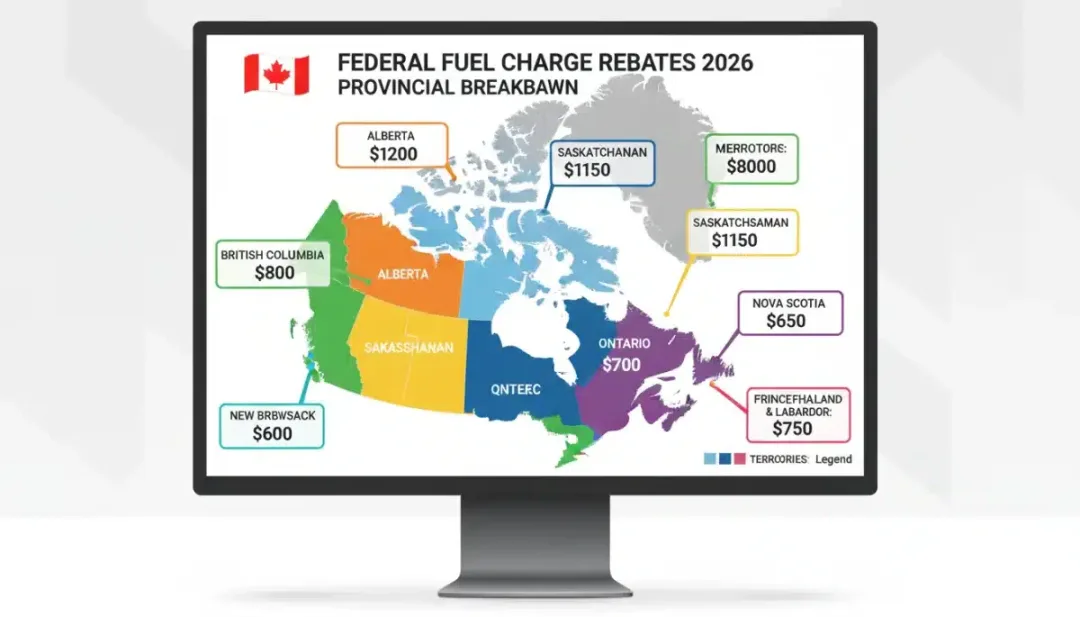
The specific amounts for the Federal Fuel Charge Rebates will vary by province and household composition. These amounts are carefully calculated to reflect the estimated average cost of the federal fuel charge in each jurisdiction.
The federal government typically announces these updated amounts well in advance, providing clarity for households to plan their finances. These figures are usually published on the Canada Revenue Agency (CRA) website and through official government publications.
It is essential for residents in eligible provinces to consult these official sources to confirm the precise figures applicable to their situation. Estimating your rebate can aid in budgeting and understanding the net impact of the carbon pricing scheme on your household.
Factors Influencing Rebate Amounts
Rebate amounts are influenced by several factors, including the province of residence, the number of adults in the household, and the number of children under 18.
Rural residents often receive an additional supplement to account for higher energy consumption and limited public transportation options.
The base amount for each adult and child is determined by the estimated average cost of the fuel charge in that province.
For instance, provinces with higher population density might see slightly different calculations compared to less populated regions, though the intent is consistent across all.
These calculations aim to ensure that most households receive more in rebates than they pay in carbon taxes. This design is central to the program’s fairness and its objective of encouraging environmental responsibility without disproportionately burdening families.
How to Access Official Payment Schedules
The CRA typically releases a schedule of payment dates for the Federal Fuel Charge Rebates at the beginning of each year. These payments are usually made quarterly, aligning with other federal benefit payments.
To ensure you receive your payments on time, it is crucial to file your income tax return each year, even if you have no income to report. The CRA uses information from your tax return to determine your eligibility and to send out the payments.
Setting up direct deposit with the CRA is highly recommended. This ensures that your rebate payments are deposited directly into your bank account, avoiding potential delays associated with mailed cheques and providing immediate access to your funds.
Payment Methods and Schedule for 2026
The Federal Fuel Charge Rebates are typically disbursed through direct deposit or by cheque. Direct deposit is the preferred and most efficient method, ensuring timely receipt of funds directly into your bank account.
The Canada Revenue Agency (CRA) manages the distribution of these payments. Households that have previously provided their direct deposit information to the CRA for other benefits, such as the Canada Child Benefit, will likely receive their fuel charge rebates through the same method.
For those who have not set up direct deposit, payments will be issued via cheque. However, it is strongly advised to register for direct deposit to avoid any potential mail delays or lost cheques, ensuring a smoother financial process.
Quarterly Payment Dates
The Federal Fuel Charge Rebates are usually paid quarterly, with specific dates announced by the CRA. These payments typically fall in April, July, October, and January of the following year, providing regular financial support throughout the year.
While the exact dates for 2026 will be confirmed by the CRA, this quarterly schedule has been consistent in previous years. Households should mark these months on their calendars to anticipate the arrival of their rebates and plan accordingly.
Staying informed about these payment dates can help households manage their budgets more effectively, especially given ongoing economic considerations. Official CRA communications are the most reliable source for precise dates.
Ensuring Timely Receipt of Payments
- File your income tax return annually, even if you have no income.
- Register for direct deposit with the Canada Revenue Agency (CRA).
- Keep your personal information, including address and banking details, up-to-date with the CRA.
- Check the CRA My Account portal for updates on your payment status and eligibility.
Impact on Canadian Households and the Economy
The Federal Fuel Charge Rebates 2026 play a significant role in mitigating the financial impact of carbon pricing on Canadian households. For many, these payments help offset the increased cost of fuel and other goods and services affected by the carbon levy.
Economically, the rebates are designed to ensure that the carbon price remains progressive, meaning lower and middle-income households generally benefit more than they pay. This helps to protect vulnerable populations while still incentivizing emission reductions.
The consistent injection of these funds into the economy, particularly on a quarterly basis, can also provide a stable boost to consumer spending. This contributes to local economies and helps households manage their day-to-day expenses more effectively.
Financial Benefits for Families
For families, the rebates can provide substantial financial relief, especially in provinces where the federal fuel charge is applied. The additional amounts for children and rural residents further enhance the benefit for larger or more geographically isolated households.
These funds can be used to cover various household expenses, from groceries and utilities to transportation costs. The flexibility of the rebate allows families to allocate the money where it is most needed, directly supporting their financial well-being.
By making carbon pricing more palatable, the rebates help maintain public acceptance of environmental policies. This balance between environmental goals and economic fairness is a cornerstone of the Canadian approach to climate action.
Broader Economic Effects
Beyond individual households, the rebates contribute to the broader economic landscape by recycling carbon revenues back into the economy.
This mechanism supports economic activity while the carbon price simultaneously encourages businesses and industries to innovate and reduce their emissions.
While the direct economic impact of the rebates can be seen in consumer spending, the indirect effects extend to job creation in green sectors and investments in sustainable technologies.
The policy aims for a transition that is both environmentally effective and economically sound.
Studies and analyses often highlight that the majority of Canadian households receive more through the rebates than they pay in carbon taxes, underscoring the redistributive nature of the policy.
This makes the federal fuel charge rebates a critical component of Canada’s economic and environmental strategy.
Comparing 2026 Rebates with Previous Years
As 2026 approaches, it is natural for Canadians to compare the forthcoming Federal Fuel Charge Rebates 2026 with amounts received in previous years. The rebate amounts generally increase annually, mirroring the scheduled increase in the federal fuel charge itself.
This annual adjustment ensures that the rebates continue to offset the rising costs of the carbon levy. The government’s commitment to returning the majority of proceeds remains constant, even as the charge itself escalates to meet climate targets.
Households should expect to see a slight increase in their rebate payments for 2026, reflecting the continued progression of Canada’s carbon pricing strategy. This incremental increase is a predictable feature of the program’s design, providing consistency for recipients.
Evolution of Rebate Amounts
Since its inception, the Climate Action Incentive payment has seen a steady increase in its quarterly amounts.
This reflects the government’s strategy of gradually raising the price on carbon to achieve emission reduction targets, while simultaneously enhancing the rebates to maintain affordability.
Each year, the federal government conducts analyses to determine the appropriate rebate levels for each eligible province. These calculations consider the provincial-specific impacts of the fuel charge and aim to ensure that the rebates remain fair and effective.
Comparing past statements with current projections for 2026 reveals a clear trend of increasing support. This continuous adjustment is a testament to the dynamic nature of climate policy and its responsiveness to economic realities.
Why Rebates Increase Annually
- To compensate for the annual increase in the federal fuel charge rate.
- To maintain the policy’s revenue-neutrality for the majority of households.
- To ensure the rebates continue to incentivize cleaner energy choices effectively.
- To adapt to evolving economic conditions and the cost of living across Canada.
Future Outlook and Policy Adjustments
The long-term outlook for the Federal Fuel Charge Rebates 2026 suggests continued governmental commitment to this mechanism. The rebates are integral to Canada’s broader climate strategy, which aims for significant emission reductions by 2030 and net-zero by 2050.
While the core structure of the program is expected to remain consistent, minor policy adjustments or refinements are always possible.
These could stem from new economic data, evolving climate science, or shifts in provincial participation in the federal carbon pricing system.
Canadians should remain attentive to official announcements from the Department of Finance and the Canada Revenue Agency for any future modifications. These updates will provide the most current information regarding the fuel charge and its associated rebates.
Potential Policy Changes
The federal government regularly reviews its climate policies to ensure they are effective and equitable. Any potential changes to the Federal Fuel Charge Rebates could involve adjustments to eligibility criteria, payment amounts, or the frequency of payments.
Stakeholder consultations and public feedback often play a role in shaping these policy decisions. The government strives to balance environmental objectives with economic considerations, aiming for policies that are both ambitious and practical for Canadians.
It’s also possible that provinces currently not under the federal system might opt in, or vice versa, which would alter the geographic scope of the rebates. Such changes would be widely publicized and would directly impact residents in those provinces.
Staying Informed on Future Developments
To stay abreast of any future developments regarding the Federal Fuel Charge Rebates, it is advisable to regularly check official government websites. The Canada Revenue Agency (CRA) and Environment and Climate Change Canada are primary sources of information.
Subscribing to government newsletters or alerts can also be an effective way to receive timely updates directly. Reliable news outlets and financial blogs, like this one, will also continue to report on significant changes as they are announced.
Understanding these potential shifts is crucial for long-term financial planning. The consistency of information from official channels ensures that households can make informed decisions based on the most accurate and up-to-date policy details.
| Key Point | Brief Description |
|---|---|
| Rebate Purpose | Offsets federal fuel charge costs, promoting affordability for most households. |
| Eligibility Criteria | Residents of eligible provinces who file income tax returns qualify. |
| Payment Schedule | Quarterly payments, typically in April, July, October, and January. |
| Annual Increases | Rebate amounts increase annually to match rising carbon levy rates. |
Frequently Asked Questions About Federal Fuel Charge Rebates
Who is eligible for the Federal Fuel Charge Rebates in 2026?▼Most individuals aged 18 or older residing in a province where the federal fuel charge applies (currently AB, SK, MB, ON, NB, NS, PEI, NL) are eligible. You must file an income tax return to receive the payment for Federal Fuel Charge Rebates 2026: What Your Household Will Receive This Year.
How are the rebate amounts determined for 2026?▼Rebate amounts for Federal Fuel Charge Rebates 2026: What Your Household Will Receive This Year are calculated based on your province of residence, household size (adults and children), and whether you live in a rural area. These amounts aim to offset the estimated average cost of the fuel charge.
When can I expect to receive my Federal Fuel Charge Rebates in 2026?▼Payments for Federal Fuel Charge Rebates 2026: What Your Household Will Receive This Year are typically issued quarterly, usually in April, July, October, and January of the following year. Specific dates are announced by the Canada Revenue Agency (CRA) annually.
Do I need to apply separately for the Federal Fuel Charge Rebates?▼No, you do not need to apply separately for the Federal Fuel Charge Rebates 2026: What Your Household Will Receive This Year. By filing your annual income tax return, the CRA automatically assesses your eligibility and sends the payments to qualifying households.
What should I do if I don’t receive my rebate payment?▼If you don’t receive your Federal Fuel Charge Rebates 2026: What Your Household Will Receive This Year, first ensure you’ve filed your tax return and your direct deposit information with the CRA is current. Then, check your CRA My Account for payment status or contact the CRA directly for assistance.
What This Means for Your Household
The ongoing implementation of the Federal Fuel Charge Rebates underscores the government’s dual commitment to climate action and household affordability.
Understanding these rebates is not just about environmental policy; it’s about practical financial planning for Canadian families.
Keep a close watch on official CRA announcements for precise figures and payment dates, ensuring you maximize these benefits. This proactive approach will empower you to manage your household budget effectively in the face of evolving economic and environmental policies.