Why 42% of U.S. High Schools Adopting AI Curriculums by 2026
Advertisements
Remember when teachers banned calculators and warned that smartphones didn't belong in classrooms? Today, 42% of U.S. High Schools Adopting AI Curriculums are rewriting the rules of American secondary education in 2026.
Rather than treating generative tools as an academic threat, forward-thinking school districts are embedding artificial intelligence literacy, prompt engineering, and algorithmic ethics directly into core classes. Preparing teenagers for an automated workforce now ranks right alongside traditional STEM and humanities milestones.
Whether you are a parent tracking graduation readiness or an educator navigating new state guidelines, this rapid classroom shift affects every student. Here are the key drivers, district policies, and learning trends you need to monitor next.
The Driving Forces Behind AI Curriculum Adoption
The decision by a substantial portion of U.S. high schools to embrace AI-integrated curriculums by 2026 is rooted in a confluence of educational, economic, and societal factors.
This widespread movement is driven by the undeniable impact of artificial intelligence on virtually every sector of the global economy and daily life, demanding a proactive response from educational institutions.
School administrators and district leaders are recognizing that preparing students for future careers necessitates a foundational understanding of AI concepts, applications, and ethical considerations. The skills acquired through AI education extend beyond technical proficiency, fostering computational thinking, data literacy, and innovative problem-solving crucial for any field.
Furthermore, competition on a global scale also plays a significant role, as other nations rapidly advance their AI education initiatives. U.S. high schools are responding to ensure American students remain competitive in a technologically advanced world, equipping them with the tools needed to innovate and lead.
Economic Imperatives and Workforce Readiness
The economic landscape is being reshaped by AI, creating new jobs and transforming existing ones. High schools are adopting AI-integrated curriculums to bridge the skills gap, ensuring graduates are prepared for a workforce increasingly reliant on AI technologies.
Industries from healthcare to manufacturing are leveraging AI for efficiency and innovation, making AI literacy a core competency for future employees. This proactive approach aims to provide students with a competitive edge and open doors to diverse career paths in a rapidly evolving job market.
AI skills are becoming essential across various industries.
Curriculum integration prepares students for future job demands.
Economic competitiveness drives educational reform.
Enhancing Learning Experiences with AI Tools
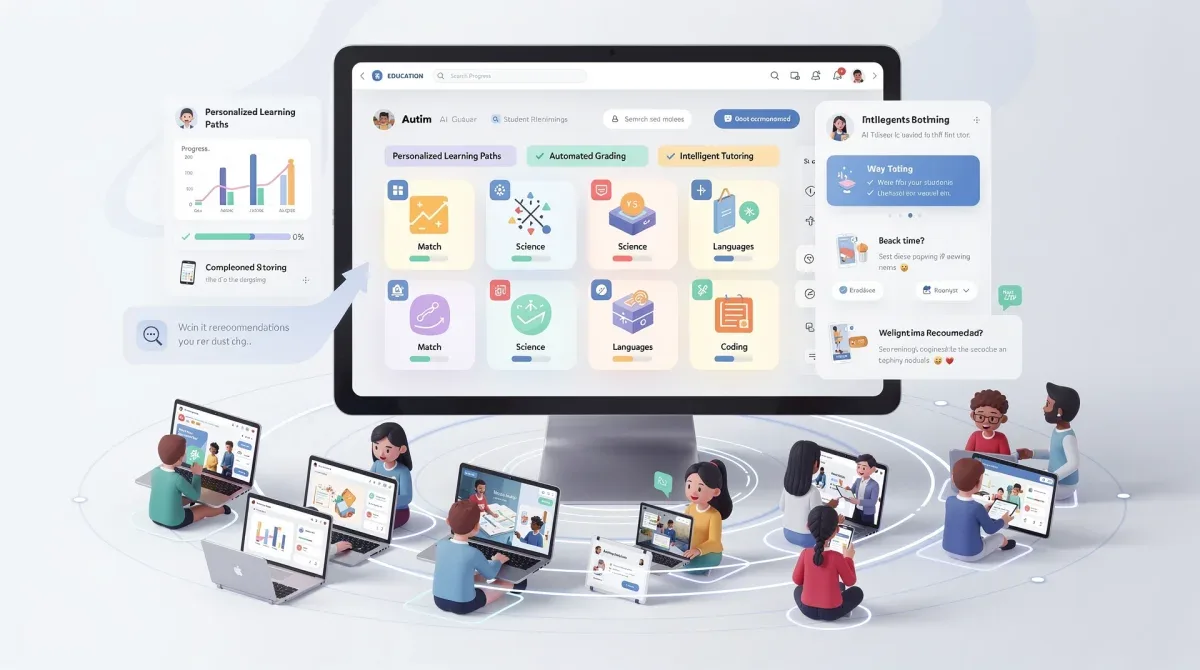
Beyond teaching about AI, the integration also involves using AI as a tool to enhance the learning experience itself. Personalized learning pathways, intelligent tutoring systems, and adaptive assessments are examples of how AI can revolutionize classroom instruction.
These tools can cater to individual student needs, providing targeted support and challenges that maximize engagement and comprehension. The goal is to create a more dynamic and effective learning environment, moving beyond traditional one-size-fits-all approaches to education.
Key Components of AI-Integrated Curriculums
As High Schools Adopting AI Curriculums, the specific components of these new programs are varied but share common foundational elements. These curriculums aim to provide a comprehensive understanding of AI, balancing theoretical knowledge with practical application and ethical considerations.
The design of these integrated curriculums often involves collaboration between educators, AI experts, and industry professionals to ensure relevance and rigor. This collaborative approach helps to define what students need to know and how best to deliver that knowledge effectively within the high school setting.
Core topics typically include machine learning fundamentals, data science principles, natural language processing, and robotics, alongside critical discussions on the societal impact and ethical implications of AI. The aim is to cultivate well-rounded citizens who can both utilize and critically evaluate AI technologies.
Foundational AI Concepts and Programming
A significant part of the new curriculum focuses on introducing students to the fundamental concepts of artificial intelligence. This often includes basic programming skills, particularly in languages like Python, which are widely used in AI development.
Students learn about algorithms, data structures, and how AI systems are designed to learn from data. Practical projects allow them to build simple AI models, gaining hands-on experience that solidifies theoretical understanding and sparks further interest in the field.
Ethical AI and Societal Impact
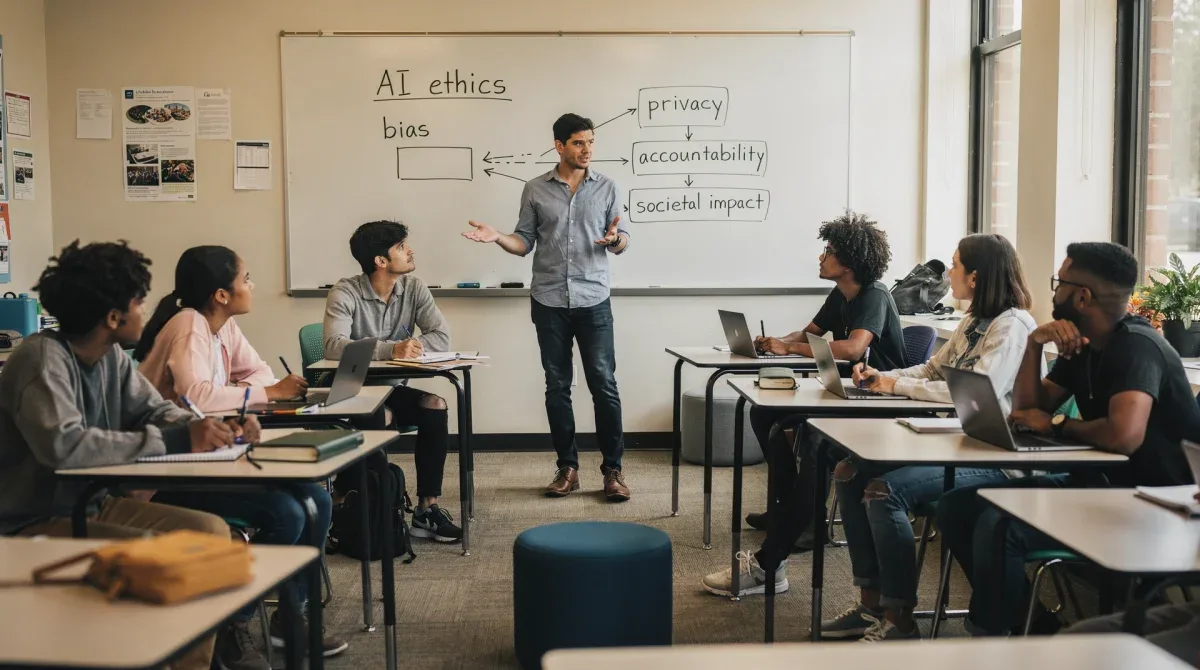
Crucially, these curriculums also dedicate substantial attention to the ethical dimensions of AI. As AI becomes more pervasive, understanding its societal implications, biases, and potential for misuse is paramount for responsible innovation.
Discussions often revolve around topics such as data privacy, algorithmic fairness, job displacement, and the future of human-AI interaction. This critical component ensures that students not only understand how AI works but also how to engage with it responsibly and ethically as future developers and users.
Challenges and Opportunities in Implementation
The widespread adoption of AI-integrated curriculums, with High Schools Adopting AI Curriculums, presents both significant challenges and unparalleled opportunities for the U.S. education system. Navigating these complexities effectively will determine the success and longevity of these initiatives.
One primary challenge is ensuring that teachers are adequately trained and equipped to teach AI concepts, many of whom may have limited prior experience with the technology. Professional development programs and ongoing support will be critical to empowering educators in this new domain.
Another hurdle involves equitable access to technology and resources, as not all school districts possess the same infrastructure or funding. Addressing these disparities is essential to prevent a widening of the digital divide and ensure all students benefit from AI education.
Teacher Training and Professional Development
The success of AI curriculum integration hinges heavily on the preparedness of teachers. Comprehensive professional development programs are being designed to equip educators with the necessary knowledge and pedagogical strategies to teach AI effectively.
These programs often include hands-on workshops, online courses, and collaborative learning communities where teachers can share best practices and troubleshoot challenges. Investing in teacher training is a non-negotiable step to ensure high-quality AI education across all adopting schools.
Extensive training programs for educators are vital.
Ongoing support and resources are necessary for implementation.
Collaborative learning among teachers fosters best practices.
Ensuring Equitable Access and Resources
As High Schools Adopting AI Curriculums, disparities in access to technology and funding pose a significant challenge. Ensuring that all students, regardless of their socioeconomic background or geographic location, have access to high-quality AI education is a critical equity issue.
Initiatives are being explored to provide grants, subsidized technology, and remote learning resources to underserved districts. Collaborations with community organizations and technology companies can also play a crucial role in bridging these resource gaps and promoting digital inclusion.
Developing Critical Thinking and Problem-Solving Skills
Beyond technical proficiency, AI education is instrumental in developing crucial cognitive skills. Students learn to approach complex problems systematically, analyze data, and evaluate the efficacy of AI models, fostering a rigorous analytical mindset.
The process of designing and debugging AI applications encourages iterative thinking and resilience in the face of challenges. These skills are transferable and beneficial across all academic disciplines and future endeavors, preparing students for intellectual rigor.
Policy and Funding Initiatives Supporting AI in Education
The significant trend of High Schools Adopting AI Curriculums is not occurring in a vacuum; it is underpinned by a growing ecosystem of policy and funding initiatives at both federal and state levels. These initiatives are crucial for providing the necessary support and infrastructure for such a large-scale educational transformation.
Federal agencies, such as the National Science Foundation (NSF) and the Department of Education, are increasingly allocating grants and resources towards AI education research and implementation. These funds often target curriculum development, teacher training, and technology acquisition for schools.
At the state level, various departments of education are developing guidelines, creating model curriculums, and establishing frameworks to facilitate AI integration. These policy efforts aim to standardize approaches while allowing for local flexibility, ensuring a cohesive yet adaptable nationwide strategy.
Government Grants and Public-Private Partnerships
Government grants play a vital role in funding the initial rollout and ongoing development of AI curriculums. These grants help schools acquire necessary hardware, software licenses, and access to specialized training programs for their staff.
Public-private partnerships are also emerging as a key mechanism for accelerating AI integration. Technology companies are collaborating with school districts to provide expertise, resources, and mentorship, bridging the gap between industry innovation and educational practice. This collaborative model is essential for sustained growth.
Curriculum Design and Pedagogical Approaches
The effective integration of AI into high school education, particularly as High Schools Adopting AI Curriculums, requires thoughtful curriculum design and innovative pedagogical approaches. Simply adding AI topics to existing courses is often insufficient; a more holistic and interdisciplinary strategy is being pursued.
Many schools are adopting a spiraled curriculum model, where AI concepts are introduced at a basic level in earlier grades and then revisited with increasing complexity in higher grades. This approach allows students to build upon their knowledge incrementally, fostering deeper understanding and retention.
Project-based learning and hands-on activities are also central to these new pedagogies, enabling students to apply AI principles in practical contexts. This active learning approach enhances engagement and helps students see the real-world relevance of what they are learning.
Interdisciplinary AI Integration
AI is not being taught in isolation but is often integrated across various subjects. For instance, AI concepts can be applied in mathematics for data analysis, in science for modeling and simulation, and in humanities for understanding the societal impact of technology.
This interdisciplinary approach ensures that students recognize AI as a versatile tool that transcends disciplinary boundaries. It encourages them to think creatively about how AI can solve problems in diverse fields, preparing them for a future where AI permeates all aspects of work and life.
Measuring Success and Future Outlook
As High Schools Adopting AI Curriculums, assessing the success of these initiatives is paramount for continuous improvement and demonstrating value. Schools are developing robust metrics to evaluate the effectiveness of AI integration, focusing on student outcomes, teacher proficiency, and overall program impact.
Success will be measured not only by students' technical skills in AI but also by their ability to think critically, ethically, and adaptively in an AI-driven world. Longitudinal studies will be crucial to understand the long-term benefits for students as they transition to higher education and the workforce.
The future outlook for AI in U.S. high schools is one of continued growth and evolution. As technology advances and educational best practices emerge, curriculums will undoubtedly adapt to remain relevant and impactful, ensuring that American students are well-prepared for the challenges and opportunities ahead.
Assessment Strategies for AI Literacy
New assessment strategies are being developed to measure AI literacy effectively. These go beyond traditional tests, incorporating project-based assessments, portfolio reviews, and demonstrations of AI application skills.
The goal is to evaluate students' understanding of AI concepts, their ability to apply AI tools, and their capacity to engage in ethical reasoning related to AI. This comprehensive approach ensures that assessments reflect the multifaceted nature of AI education and its broader objectives.
Key Point | Brief Description |
|---|---|
Rapid Adoption | 42% of U.S. high schools integrating AI curriculums by 2026. |
Workforce Readiness | Preparing students for AI-driven careers and future job markets. |
Ethical Considerations | Focus on responsible AI use and societal impact. |
Teacher Training | Essential professional development for educators in AI. |
Frequently Asked Questions About AI in High Schools
What exactly does an AI-integrated curriculum entail?▼
An AI-integrated curriculum involves teaching students about artificial intelligence concepts, applications, and ethical considerations. It often includes programming fundamentals, data science, machine learning, and hands-on projects, ensuring students understand both the technical and societal aspects of AI. The aim is to prepare them for an AI-driven future.
Why is AI education becoming so crucial for high school students?▼
AI education is crucial because artificial intelligence is rapidly transforming industries and daily life. Equipping high school students with AI literacy prepares them for future careers, fosters critical thinking, and enables them to navigate a technologically advanced world responsibly. It's about future workforce readiness and informed citizenship.
What challenges do schools face in adopting AI curriculums?▼
Schools face challenges such as ensuring adequate teacher training, providing equitable access to technology and resources across diverse districts, and developing relevant, engaging curriculum content. Overcoming these requires significant investment in professional development and strategic partnerships to bridge resource gaps.
How will AI integration impact teachers?▼
AI integration will require teachers to adapt their pedagogical approaches and continuously update their skills. Extensive professional development will be essential to empower educators to effectively teach AI concepts and utilize AI tools in their classrooms, transforming their roles into facilitators of technologically enhanced learning.
What are the long-term benefits for students from this shift?▼
Long-term benefits for students include enhanced critical thinking, advanced problem-solving skills, and a competitive edge in the job market. They will be better prepared for higher education in STEM fields and equipped to innovate and adapt in a world where AI plays a central role in nearly every sector.
Looking Ahead: The Evolving Landscape of AI in Education
The rapid adoption, with High Schools Adopting AI Curriculums, signals a fundamental shift in educational priorities. This movement is not a temporary trend but a foundational change reflecting the increasing dominance of artificial intelligence in society and the global economy.
As schools implement these curriculums, ongoing evaluation and adaptation will be essential. The landscape of AI is constantly evolving, and educational programs must remain agile to incorporate new developments, ethical considerations, and best practices. This continuous improvement ensures that students receive the most relevant and impactful education possible.
The coming years will see further refinement of AI pedagogical approaches, increased collaboration between academia and industry, and a deeper understanding of how AI can truly empower the next generation. The focus will remain on fostering not just technical proficiency, but also critical thinking, creativity, and ethical responsibility in an AI-driven world.