Micro-Credentials vs. Master's: 2026 Outcomes Analysis
Advertisements
Weighing the cost and career impact of Micro-Credentials vs. Master's programs is top of mind for professionals aiming to future-proof their resumes in today's shifting job market.
With hiring managers prioritizing rapid skill acquisition over traditional diplomas, deciding between specialized certificates and graduate degrees requires a hard look at real-world return on investment.
Targeted digital badges and short-form industry certifications offer lower upfront tuition costs and accelerated pathways to career pivot opportunities. Meanwhile, comprehensive post-graduate programs continue to hold weight for executive positions and specialized sectors demanding deep theoretical grounding.
Evaluating salary outcomes, skill longevity, and employer preferences helps you select the exact educational path aligned with your long-term goals. Here is what the latest career outcomes data reveals about choosing the right higher education model.
The Evolving Landscape of Graduate Education
The traditional master's degree has long been the gold standard for advanced professional development, promising deeper specialization and enhanced career prospects. However, the rapid pace of technological change and evolving industry demands have fueled the rise of micro-credentials as a nimble alternative.
This shift reflects a broader trend toward lifelong learning and skill-based employment, where specific competencies often outweigh broad academic qualifications. The 2026 data analysis provides a clearer picture of how these two educational paths are diverging and converging in the modern workforce.
Institutions and employers are actively adapting their strategies to integrate both micro-credentials and master's degrees, recognizing their unique strengths in different contexts.
Authorities confirmed new timelines and outlined initial impacts across different regions concerning the integration of these educational frameworks. Statements from representatives indicate short-term adjustments and a more defined path for upcoming decisions regarding recognition and accreditation.
Recent data helps clarify the scope and sequence of events, showing how various sectors are responding to this educational shift. Markets and local communities reacted as information became public, with agencies coordinating responses under established protocols for workforce development.
The topic’s background connects the update to previous milestones in educational reform and workforce training. Analysts highlight short-term signals that deserve attention before broader trends become clear in the discussion of Micro-Credentials vs Master's Degrees.
Employer Perceptions and Hiring Trends
Employer perceptions are a critical factor in the value proposition of both micro-credentials and master's degrees. A 2026 survey indicates a growing acceptance of micro-credentials for specific skill sets, particularly in tech, healthcare, and digital marketing sectors.
Conversely, master's degrees continue to hold strong value for roles requiring extensive theoretical knowledge, research capabilities, or leadership positions in established industries. The nuanced understanding of what each credential offers is becoming increasingly vital for hiring managers.
This evolving perception directly influences hiring trends, with companies often seeking a blend of both formal education and targeted skill validation to meet complex job requirements.
Skill-Specific Hiring: Employers increasingly value micro-credentials for validating specific, in-demand skills, leading to faster hiring processes for certain roles.
Leadership Roles: Traditional master's degrees remain preferred for senior management and specialized expert positions requiring a comprehensive academic foundation.
Hybrid Approaches: Many organizations are now favoring candidates who combine a foundational degree with targeted micro-credentials, showcasing both breadth and depth of knowledge.
Direct quotes and attributed summaries show positions, responsibilities and next steps from leading HR executives. Independent experts assess the credibility of the information and likely outcome scenarios concerning the comparative value of these educational paths.
Career Advancement and Salary Outcomes
The impact on career advancement and salary outcomes is a central point of interest in the Micro-Credentials vs Master's Degrees debate.
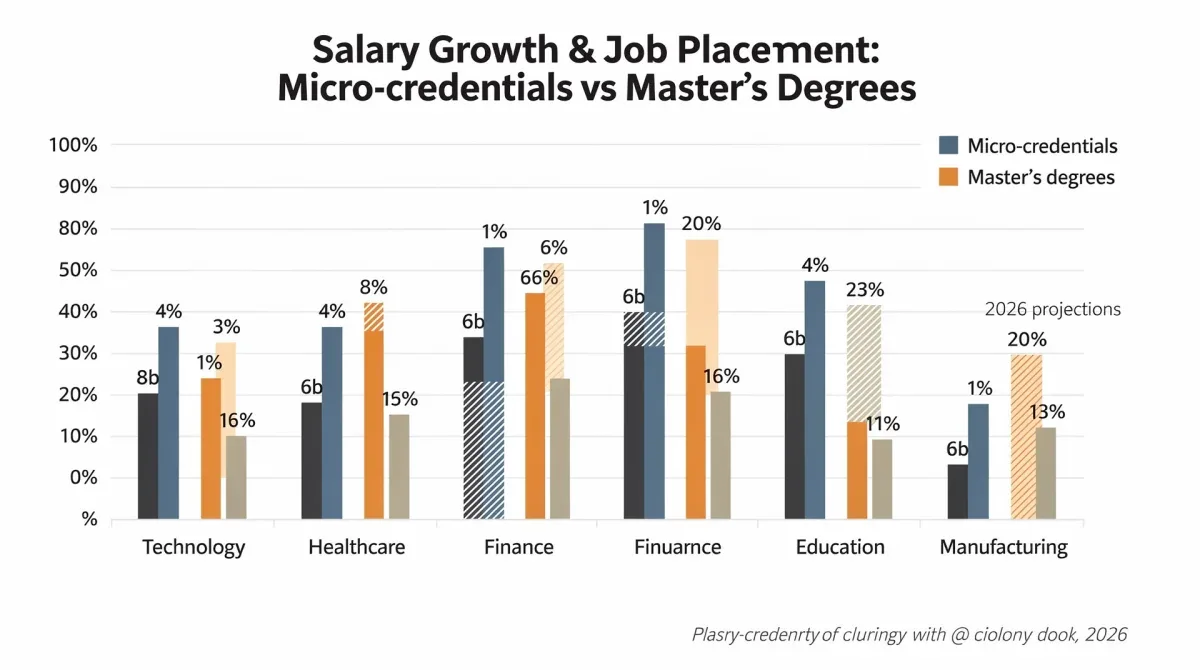
Data from 2026 indicates that while master's degrees often lead to higher starting salaries and long-term earning potential, micro-credentials can provide quicker salary bumps through upskilling or reskilling into high-demand roles.
For individuals seeking rapid career pivots or specialized skill enhancements, micro-credentials offer an agile pathway to increased earnings. However, the ceiling for career progression without a broader academic foundation might be lower in some fields.
Conversely, a master's degree can unlock senior leadership positions and provide a more robust framework for sustained career growth, albeit with a larger initial investment of time and money.
Immediate Impact: Micro-credentials often lead to faster job placement and incremental salary increases by addressing specific skill gaps in the workforce.
Long-Term Growth: Master's degrees typically offer a more significant long-term return on investment, opening doors to advanced roles and higher salary brackets over time.
Industry Variation: The financial benefits of each credential vary significantly by industry, with tech and healthcare showing strong returns for both, depending on the specialization.
For now, practical effects are concentrated in specific areas, while broader impacts depend on future decisions and compliance with new guidelines regarding workforce education and credential recognition.
Accessibility, Cost, and Time Commitment
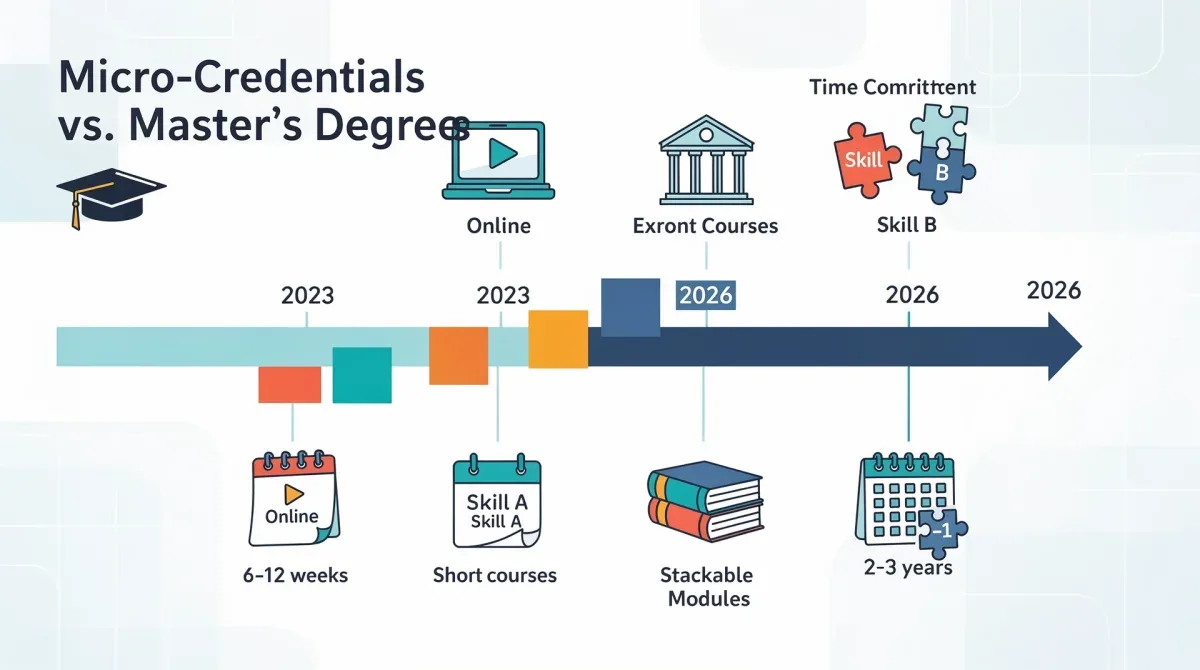
Accessibility, cost, and time commitment are crucial factors distinguishing micro-credentials from traditional master's degrees. Micro-credentials are typically more affordable, shorter in duration, and often available through flexible online formats, making them highly accessible to working professionals.
This flexibility allows individuals to integrate learning into their existing schedules without significant disruption to their careers or personal lives. The lower financial barrier also makes them an attractive option for those hesitant to incur substantial student debt.
Master's degrees, on the other hand, demand a more significant investment of time and finances, often requiring full-time study or a multi-year commitment. While the cost is higher, the comprehensive nature of the curriculum and the prestige of a degree often justify the investment for many.
The accessibility of micro-credentials has democratized advanced learning, allowing a broader demographic to acquire specialized skills. This shift is particularly beneficial for underrepresented groups seeking pathways to career advancement without the traditional academic hurdles.
Data from 2026 indicates that the rapid growth of online micro-credential platforms has significantly expanded access to high-quality, industry-relevant training. This expansion is forcing traditional universities to innovate and offer more flexible options.
The cost-benefit analysis for both educational paths is becoming more complex, with individuals weighing immediate career impact against long-term academic prestige and comprehensive knowledge acquisition.
Accreditation and Recognition Challenges
Accreditation and recognition remain significant challenges for micro-credentials, which often lack the standardized validation processes of traditional degrees. While many reputable institutions and industry leaders offer micro-credentials, their acceptance varies widely among employers and academic bodies.
This inconsistency can create uncertainty for individuals relying on these credentials for career progression or further academic pursuits. Efforts are underway by educational consortia and government agencies to establish clearer guidelines and frameworks for micro-credential recognition.
The evolving landscape of accreditation is a key area to watch, as standardized validation would significantly enhance the credibility and portability of micro-credentials across different sectors.
Standardization Efforts: Industry groups and educational bodies are working to create universal standards for micro-credential accreditation, aiming to improve recognition.
Employer Discretion: Currently, employer acceptance often depends on the issuing institution or platform, leading to varied recognition in the job market.
Pathways to Degrees: Some institutions are developing pathways for micro-credentials to count towards traditional degrees, bridging the gap between the two educational forms.
The lack of a unified accreditation system is a critical hurdle that needs to be addressed for micro-credentials to fully realize their potential. This issue directly impacts the long-term value and transferability of these qualifications.
Future Outlook: Blended Learning and Hybrid Models
The future of graduate education is likely to feature blended learning and hybrid models that integrate elements of both micro-credentials and traditional master's degrees. This approach allows individuals to customize their learning journeys, combining foundational academic knowledge with targeted, in-demand skills.
Universities are increasingly exploring modular master's programs that incorporate micro-credential components, offering greater flexibility and relevance to rapidly changing industries. This innovation aims to provide the best of both worlds: academic rigor and practical applicability.
The 2026 data analysis suggests that these hybrid models will become more prevalent, catering to a diverse student body with varying needs and career aspirations.
This evolution is driven by the demand for continuous learning and upskilling in a dynamic job market. Blended approaches acknowledge that one-size-fits-all education is no longer sufficient.
The integration of micro-credentials within traditional degree frameworks could also alleviate some of the financial burdens associated with higher education. By allowing students to earn credits through smaller, more affordable units, institutions can make advanced learning more accessible.
Ultimately, the goal is to create a more responsive and effective educational ecosystem that prepares individuals for the complexities of the modern workforce, leveraging the strengths of both Micro-Credentials vs Master's Degrees.
Government Initiatives and Policy Changes
Government initiatives and policy changes are playing a significant role in shaping the future of Micro-Credentials vs Master's Degrees. Federal and state governments are exploring ways to support workforce development through funding for micro-credential programs and reforms in accreditation processes.
These policies aim to close skill gaps, promote economic growth, and ensure that the American workforce remains competitive globally. Legislation is being considered to standardize the recognition of non-traditional credentials, which would provide much-needed clarity for both learners and employers.
The push for policy changes reflects a growing recognition of the economic importance of agile and accessible education pathways.
Funding Programs: New federal grants are being allocated to institutions developing innovative micro-credential programs that align with critical workforce needs.
Accreditation Reform: Discussions are ongoing to establish national standards for validating micro-credentials, enhancing their legitimacy and transferability.
Workforce Development: Government agencies are collaborating with industry leaders to identify in-demand skills and promote educational pathways that directly address these needs.
These policy shifts are crucial for creating a robust and equitable educational ecosystem. Without clear governmental support, the potential of micro-credentials to transform the workforce might not be fully realized.
Navigating the Choice: Micro-Credentials vs Master's Degrees
Navigating the choice between micro-credentials and master's degrees requires a careful consideration of individual career goals, financial resources, and time availability. There is no universally superior option; the best path depends on specific circumstances and aspirations.
For those seeking rapid skill acquisition, career pivots, or targeted professional development, micro-credentials offer an efficient and cost-effective solution. They are ideal for staying current with industry trends and demonstrating specific competencies to employers.
However, individuals aiming for deep theoretical knowledge, extensive research opportunities, or leadership roles in established professions may still find the master's degree to be the more appropriate choice, providing a comprehensive foundation for sustained growth.
The decision should involve a thorough assessment of the job market in one's chosen field and a realistic evaluation of the long-term career impact of each credential. It is also important to consider the reputation of the issuing institution for both options.
Many professionals are now opting for a blended approach, pursuing micro-credentials to complement their existing degrees or to explore new areas before committing to a full master's program. This strategy allows for flexibility and continuous learning.
Ultimately, the most effective educational strategy in 2026 will be one that is adaptable and aligned with the dynamic demands of the modern workforce, leveraging the strengths of both Micro-Credentials vs Master's Degrees.
Key Point | Brief Description |
|---|---|
Employer Value | Micro-credentials for specific skills; Master's for leadership and deep knowledge. |
Career Impact | Micro-credentials offer quick upskilling; Master's provides long-term career growth. |
Accessibility & Cost | Micro-credentials are more affordable and flexible; Master's requires greater investment. |
Future Trends | Blended learning and hybrid models are expected to become prevalent. |
Frequently Asked Questions About Graduate Education Outcomes
What does the 2026 data analysis say about Micro-Credentials vs Master's Degrees?▼
The 2026 data analysis indicates that micro-credentials are gaining significant traction for specific skill validation and rapid career shifts. Master's degrees, however, maintain their strong value for comprehensive knowledge, leadership roles, and long-term career progression in many sectors.
Are employers accepting micro-credentials as much as traditional master's degrees?▼
Employer acceptance of micro-credentials is growing, especially for roles requiring specific, in-demand skills, according to 2026 surveys. However, master's degrees generally retain a higher perceived value for broader academic foundations and senior positions, though this varies by industry.
What are the main financial differences between pursuing these two educational paths?▼
Micro-credentials are typically more affordable and offer a quicker return on investment through immediate upskilling. Master's degrees involve a substantially larger financial commitment, but often lead to higher long-term earning potential and access to more lucrative career paths.
How do accessibility and time commitment compare for Micro-Credentials vs Master's Degrees?▼
Micro-credentials are highly accessible, flexible, and shorter in duration, making them ideal for working professionals. Master's degrees require a more significant time commitment, often spanning several years, and may involve more rigid academic schedules, though online options are expanding.
What future trends are expected in graduate education regarding these credentials?▼
The future points towards blended learning and hybrid models, integrating micro-credentials within traditional master's programs. This approach aims to combine comprehensive academic rigor with targeted, in-demand skill development, offering greater flexibility and relevance for learners by 2026 and beyond.
Impact and Implications
The 2026 data analysis of Micro-Credentials vs Master's Degrees underscores a pivotal moment in graduate education, signaling a shift towards more agile and skill-focused learning pathways. This trend will likely reshape university offerings and employer expectations, pushing for greater integration of varied credentials.
As the job market continues to prioritize specialized skills, individuals must strategically evaluate their educational investments. Future developments will focus on standardization of micro-credentials and the growth of hybrid programs, making the choice between these options increasingly nuanced and personalized.
Monitoring policy changes and industry demands will be crucial for navigating this evolving landscape successfully.