Maximize Yield: Restructure Treasury Ladders with Fed Rates
Advertisements
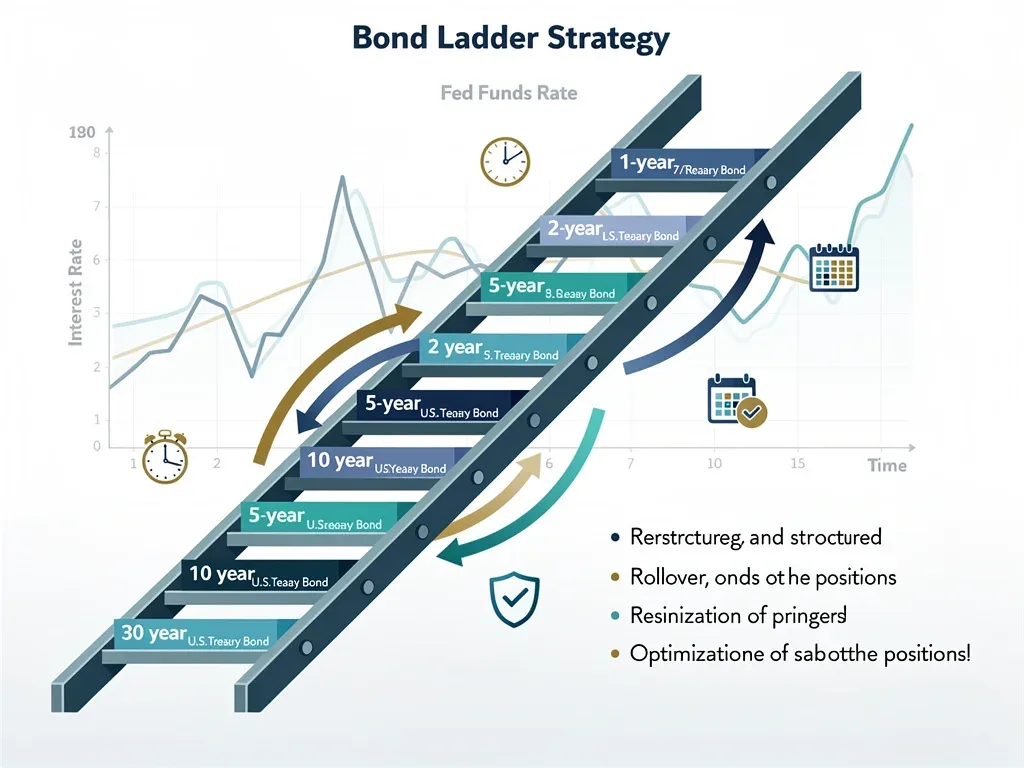
Shift interest rate environments demand a fresh approach to fixed-income portfolios to avoid leaving passive money on the table. Knowing how to Restructure Treasury Ladders allows yield-focused investors to capture optimal returns while adjusting to recent Federal Reserve monetary policy shifts.
Sticking with outdated maturity schedules can lock capital into sub-optimal fixed-income yields. By actively adjusting your short-term government debt allocations, you preserve liquidity, compound returns, and safeguard income against unpredictable rate cuts.
Ready to lock in higher payouts and modernize your bond portfolio? Here is how to realign your fixed-income strategy with updated central bank benchmark rates.
Understanding Treasury Ladders in a Changing Rate Environment
Treasury ladders have long been a favored strategy for income-focused investors, offering a balanced approach to managing interest rate risk and ensuring liquidity. By staggering bond maturities, investors can reinvest maturing principal at prevailing rates, theoretically optimizing returns over time.
However, the efficacy of this strategy is heavily influenced by the Federal Reserve’s monetary policy. When rates are in flux, as they have been recently, a static 4.25% Treasury ladder may not be performing at its peak potential, necessitating a proactive approach to maintain yield.
The current economic climate, marked by updated Federal Reserve rates, demands a careful re-evaluation of existing Treasury ladder structures. Investors must consider how these changes affect both short-term reinvestment opportunities and the long-term income generation of their portfolios.
The Fundamentals of a 4.25% Treasury Ladder
A 4.25% Treasury ladder typically involves purchasing Treasury bonds with varying maturities, from short-term to long-term, all yielding approximately 4.25% at the time of purchase. As each bond matures, the principal is reinvested into a new long-term bond at the then-current interest rate.
This method aims to smooth out the impact of interest rate volatility, ensuring a consistent stream of income and providing opportunities to capture higher rates when they become available. It is a robust strategy, but not immune to significant shifts in monetary policy.
For investors whose ladders were established when rates were at a specific point, the updated Federal Reserve rates present both challenges and opportunities. The key is to understand how these new rates interact with the existing ladder structure to identify areas for improvement.
Impact of Federal Reserve Rate Updates
The Federal Reserve’s decisions on the federal funds rate ripple throughout the financial system, directly influencing Treasury yields across all maturities. An increase in rates generally means new bonds will offer higher yields, while a decrease will lead to lower yields.
For an existing 4.25% Treasury ladder, updated rates mean that maturing bonds will be reinvested at potentially different, and hopefully higher, rates. This dynamic creates a critical juncture for investors seeking to Restructure Treasury Ladders and capitalize on new market conditions.
Analyzing the Fed's trajectory and its forward guidance is paramount. This information provides clues about future rate movements, allowing investors to anticipate changes and make informed decisions about when and how to adjust their laddered portfolios to maximize yield.
Assessing Your Current 4.25% Treasury Ladder for Optimization
Before any restructuring can occur, a thorough assessment of the existing 4.25% Treasury ladder is essential. This involves evaluating each component of the ladder, understanding its current yield, and comparing it against prevailing market rates.
Such an assessment helps identify underperforming segments or opportunities where reallocation could significantly boost overall portfolio yield. It's about taking a snapshot of your current financial position relative to the new economic landscape shaped by Federal Reserve actions.
A critical step in this process is to calculate the weighted average yield of your current ladder. This figure provides a baseline against which potential restructuring benefits can be measured, ensuring that any changes contribute positively to your financial goals.
Identifying Underperforming Bonds
In a rising rate environment, older bonds within your 4.25% Treasury ladder might now be considered 'underperforming' if new issues offer significantly higher yields. These bonds, while still providing their coupon payment, are less efficient in terms of opportunity cost.
Identifying these bonds is the first step towards optimization. It requires comparing the coupon rate and current market price of each bond in your ladder against newly issued Treasuries with similar maturities. This comparison reveals where the most significant yield gaps exist.
The goal is not simply to sell every bond that yields less than current market rates, but to strategically pinpoint those whose sale and reinvestment would result in a net positive impact on your overall yield, making it crucial to Restructure Treasury Ladders effectively.
Calculating Potential Yield Enhancements
Once underperforming bonds are identified, the next step involves calculating the potential yield enhancements from restructuring. This means estimating the gain from selling existing bonds and reinvesting the proceeds into higher-yielding alternatives.
These calculations must account for any capital gains or losses incurred from selling bonds before maturity, as well as transaction costs. The objective is to ensure that the yield improvement outweighs these associated expenses, providing a clear financial benefit.
Sophisticated financial modeling tools or a qualified financial advisor can assist in these complex calculations, providing a clearer picture of the optimal path to Restructure Treasury Ladders for maximum benefit under the updated Federal Reserve rates.
Strategies for Restructuring Your Treasury Ladder
Restructuring a 4.25% Treasury ladder under updated Federal Reserve rates involves several strategic approaches, each with its own benefits and considerations. The chosen strategy should align with an investor's risk tolerance, liquidity needs, and overall financial objectives.
These strategies range from minor adjustments, such as simply reinvesting maturing bonds at higher rates, to more aggressive moves like selling existing bonds and reallocating capital. The key is to be deliberate and informed in every decision.
Effective restructuring ensures that your portfolio remains responsive to market changes, allowing you to maximize yield and maintain a robust income stream even as the economic landscape evolves.
Selling and Reinvesting for Higher Yields
One of the most direct ways to Restructure Treasury Ladders is to sell existing bonds that have become less attractive due to their lower yields compared to current market offerings. The proceeds from these sales can then be reinvested into newly issued Treasuries with higher rates.
This strategy is particularly effective in a rising interest rate environment, where the opportunity cost of holding lower-yielding bonds increases. However, investors must consider potential capital losses if bonds are sold before maturity at a discount.
Careful analysis of current market prices, accrued interest, and tax implications is crucial before implementing this strategy. The aim is to achieve a net positive impact on the overall ladder yield after all factors are considered.
Adjusting Maturity Dates and Spacing
Another powerful strategy involves adjusting the maturity dates and spacing of your Treasury ladder. This could mean shortening the average maturity of your ladder to capture higher short-term rates, or extending it if long-term rates are expected to rise further.
The spacing between maturities can also be optimized. For instance, if you anticipate significant rate increases in the near future, you might concentrate more maturities in the short end of the ladder to allow for quicker reinvestment at higher rates.
This dynamic adjustment of the ladder's structure helps in Maximizing Yield, making it more agile and responsive to the evolving interest rate environment and Federal Reserve policy changes.
Considerations for Risk and Liquidity
While maximizing yield is a primary objective, any strategy to Restructure Treasury Ladders must also carefully consider risk and liquidity. An overly aggressive approach to chasing higher yields can inadvertently expose an investor to unnecessary risks or compromise essential liquidity.
The interplay between interest rate risk, reinvestment risk, and inflation risk must be thoroughly understood. A well-structured ladder balances these elements to provide stable returns without undue exposure.
Maintaining adequate liquidity is also paramount, especially for investors who rely on their Treasury ladder for a consistent income stream or who may need access to capital for unforeseen expenses. Restructuring should enhance, not diminish, financial security.
Managing Interest Rate Risk
Interest rate risk is the primary concern for fixed-income investors, as rising rates can decrease the market value of existing bonds. A laddering strategy inherently mitigates some of this risk by spreading maturities.
However, when actively restructuring, investors might temporarily increase their exposure to interest rate fluctuations. For instance, selling a long-term bond at a discount to reinvest in a higher-yielding short-term bond introduces a new set of considerations.
To effectively manage this, investors must carefully analyze the duration of their portfolio and consider using bond ETFs or mutual funds as part of their ladder to diversify and manage interest rate sensitivity. This helps in Restructure Treasury Ladders effectively.
Ensuring Adequate Liquidity
Liquidity refers to the ease with which an investment can be converted into cash without significant loss of value. For Treasury ladders, liquidity is typically high, as Treasuries are among the most liquid securities.
However, aggressive restructuring that involves selling bonds before maturity could impact immediate cash availability or incur transaction costs that reduce net liquidity. It is crucial to ensure that restructuring does not inadvertently tie up capital needed for other purposes.
Maintaining a portion of the portfolio in very short-term Treasuries or cash equivalents can provide a buffer. This ensures that essential liquidity needs are met, even while optimizing the longer-term components of the ladder to Maximizing Yield.
Leveraging Market Signals and Expert Analysis
In the current financial environment, successfully navigating the complexities of bond markets and Federal Reserve policy requires more than just a basic understanding of laddering. It demands a keen eye on market signals and an openness to expert analysis.
Economic indicators, inflation reports, and the Fed’s official statements all provide valuable clues regarding future interest rate movements. Integrating this information into your decision-making process is crucial for timely and effective restructuring.
Consulting with financial advisors who specialize in fixed-income markets can provide invaluable insights, helping investors to interpret complex data and make informed choices to Restructure Treasury Ladders optimally.
Interpreting Federal Reserve Announcements
Federal Reserve announcements are pivotal events for bond investors. Statements from the Federal Open Market Committee (FOMC) provide explicit guidance on monetary policy and interest rate outlooks.
Paying close attention to the language used, particularly regarding inflation targets and economic forecasts, can offer strong indications of future rate hikes or cuts. This foresight is critical for making proactive adjustments to your Treasury ladder.
Understanding the nuances of these announcements allows investors to anticipate market reactions and position their portfolios accordingly, ensuring that their efforts to Maximizing Yield are well-timed and effective.
The Role of Economic Indicators
Beyond direct Fed announcements, a variety of economic indicators offer insights into the health of the economy and potential future rate decisions. Key indicators include inflation rates, employment figures, GDP growth, and consumer confidence reports.
Strong economic data might signal a hawkish Fed, leading to higher rates, while weaker data could suggest a more dovish stance. Monitoring these indicators provides a broader context for interest rate expectations.
Integrating this economic intelligence into your investment strategy helps in making more robust decisions about when and how to Restructure Treasury Ladders, aligning your portfolio with the prevailing economic winds and maximizing yield potential.
Tax Implications of Restructuring Treasury Ladders
Any decision to Restructure Treasury Ladders must carefully consider the tax implications. Selling bonds before maturity can trigger capital gains or losses, which can significantly impact the net return of your restructuring efforts.
Understanding how these gains and losses are treated for tax purposes is essential for accurate financial planning. The timing of sales and purchases can also play a role in optimizing tax outcomes.
It is always advisable to consult with a tax professional to understand the specific tax consequences of restructuring your Treasury ladder, ensuring that your strategies are tax-efficient and aligned with your overall financial objectives.
Capital Gains and Losses
When you sell a Treasury bond before its maturity date, the difference between the selling price and your purchase price (adjusted for any premium or discount amortization) results in either a capital gain or a capital loss. These are subject to taxation.
Capital gains are generally taxed at either short-term or long-term rates, depending on how long you held the bond. Short-term gains are taxed at ordinary income rates, while long-term gains typically receive preferential tax treatment.
Conversely, capital losses can be used to offset capital gains and, to a limited extent, ordinary income. Strategically realizing losses can help reduce your overall tax liability, an important aspect when you Restructure Treasury Ladders.
Tax-Efficient Reinvestment Strategies
Beyond managing capital gains and losses, investors can employ tax-efficient reinvestment strategies when restructuring their Treasury ladders. This might involve timing reinvestments to coincide with tax planning objectives or utilizing tax-advantaged accounts.
For example, if you have realized capital losses, reinvesting in higher-yielding Treasuries could be timed to offset those losses. Alternatively, considering municipal bonds for certain portions of your fixed-income portfolio could provide tax-exempt income at the state and local levels.
Exploring these options with a tax advisor can help optimize your after-tax yield, making your efforts to Maximizing Yield even more effective and beneficial for your overall financial health.
Diversification Beyond Traditional Treasury Bonds
While Treasury ladders are a cornerstone for many fixed-income portfolios, a holistic approach to maximizing yield under updated Federal Reserve rates often involves looking beyond traditional Treasury bonds. Diversification can enhance returns and manage risk more effectively.
Exploring other high-quality fixed-income assets can provide additional income streams and reduce reliance on a single asset class. This broadens the opportunity set for yield enhancement, especially when traditional Treasuries might not offer the most attractive returns.
Incorporating diverse fixed-income instruments can strengthen your portfolio's resilience against market fluctuations and contribute to a more robust strategy for Maximizing Yield.
Exploring Other Fixed-Income Instruments
Beyond Treasury bonds, investors can consider a range of other fixed-income instruments to diversify and potentially enhance yield. These include corporate bonds, municipal bonds, agency bonds, and even certain types of preferred stocks.
Corporate bonds, for instance, typically offer higher yields than Treasuries due to their increased credit risk, but careful credit analysis is essential. Municipal bonds can offer tax-exempt income, making them attractive for investors in higher tax brackets.
Each of these instruments comes with its own risk profile and tax implications, requiring thorough research and due diligence to ensure they align with your investment objectives and contribute positively as you Restructure Treasury Ladders.
The Role of Bond ETFs and Mutual Funds
Bond Exchange Traded Funds (ETFs) and mutual funds offer a convenient way to gain diversified exposure to various fixed-income markets without purchasing individual bonds. They provide instant diversification and professional management.
These funds can be particularly useful for accessing segments of the bond market that might be difficult for individual investors to navigate, such as international bonds or high-yield corporate bonds. They also offer liquidity that individual bonds might not always provide.
Integrating bond ETFs or mutual funds into your strategy can complement your Treasury ladder, providing an additional layer of diversification and potentially enhancing overall portfolio yield, thereby aiding in Maximizing Yield.

Long-Term Outlook and Continuous Monitoring
Maximizing Yield is not a one-time event but an ongoing process. The financial landscape is constantly evolving, driven by economic data, geopolitical events, and, crucially, Federal Reserve policy decisions.
Therefore, continuous monitoring of both your portfolio and the broader market conditions is essential. This proactive approach ensures that your Treasury ladder remains optimized and aligned with your financial goals over the long term.
Regular review and adjustments, informed by up-to-date information, will allow you to adapt to new opportunities and mitigate emerging risks, ensuring the enduring effectiveness of your investment strategy.
Adapting to Future Federal Reserve Actions
The Federal Reserve's monetary policy is dynamic, reacting to inflation, employment, and economic growth. Future rate hikes or cuts will directly impact Treasury yields and, consequently, the attractiveness of your laddered portfolio.
Staying informed about the Fed's projections and statements is paramount. This allows you to anticipate potential shifts and make timely adjustments, rather than reacting after the market has already moved.
Proactive adaptation to future Federal Reserve actions is a cornerstone of successfully implementing strategies to Restructure Treasury Ladders, ensuring your portfolio continues to generate optimal returns regardless of market conditions.
Regular Portfolio Review and Rebalancing
A structured schedule for portfolio review and rebalancing is critical. This involves periodically assessing the performance of your Treasury ladder against your investment objectives and making necessary adjustments.
During these reviews, you should evaluate the current yield of your ladder, compare it to prevailing market rates, and consider whether the original asset allocation still aligns with your risk tolerance and financial goals.
Rebalancing might involve selling some bonds and purchasing others to maintain the desired maturity distribution and yield profile. This continuous process is key to Maximizing Yield over the long haul.
Key Point | Brief Description |
|---|---|
Fed Rate Impact | Updated Federal Reserve rates directly influence Treasury yields, necessitating ladder re-evaluation. |
Restructuring Need | A 4.25% Treasury ladder requires strategic adjustment to maximize yield in a dynamic rate environment. |
Key Strategies | Sell underperforming bonds, adjust maturities, and diversify to enhance overall portfolio yield. |
Ongoing Monitoring | Continuous review of market signals and Fed actions is crucial for long-term optimization. |
Frequently Asked Questions About Treasury Ladder Restructuring
What is the primary reason to restructure a 4.25% Treasury ladder now?▼
The main reason to restructure is to adapt to updated Federal Reserve interest rates. Existing 4.25% ladders might not be generating optimal returns compared to new market offerings, making adjustments necessary to maximize yield and maintain portfolio efficiency.
How do Federal Reserve rate changes specifically affect Treasury ladders?▼
Federal Reserve rate changes directly influence prevailing Treasury yields. When rates rise, newly issued bonds offer higher returns, potentially making older, lower-yielding bonds in your ladder less attractive. This creates opportunities for reinvestment at better rates upon maturity.
What are the main risks associated with restructuring a Treasury ladder?▼
Key risks include incurring capital losses if bonds are sold before maturity at a discount, and potential transaction costs. Interest rate risk also remains, as future rate movements are uncertain. Careful analysis and professional advice can help mitigate these risks.
Should I sell all my lower-yielding bonds to buy new ones?▼
Not necessarily. The decision to sell should be strategic, weighing potential capital losses and transaction costs against the expected yield gain. It's often more effective to target specific underperforming bonds or to wait for maturities for reinvestment.
How often should I review and potentially restructure my Treasury ladder?▼
Regular review, at least annually or whenever significant Federal Reserve policy shifts occur, is recommended. Continuous monitoring allows for timely adjustments, ensuring your ladder remains optimized for yield and aligned with your financial objectives over time.
What Happens Now
The ongoing adjustments by the Federal Reserve continue to reshape the investment landscape, particularly for fixed-income portfolios. Investors focused on Maximizing Yield must remain vigilant and proactive.
Understanding the immediate implications and developing a responsive strategy are crucial for maintaining portfolio performance. The ability to adapt to these evolving conditions will define success in the current financial climate.
Ongoing monitoring of economic data, Federal Reserve communications, and market dynamics will provide the insights needed to make informed decisions and ensure your Treasury ladder continues to serve its purpose effectively.