Treasury Bills vs. High-Yield Savings at 4.15%: Optimizing Cash
Advertisements
Navigating Treasury Bills vs. High-Yield Savings accounts at 4.15% APY is essential for optimizing idle cash before upcoming Federal Reserve rate cuts. Choosing between short-term government debt and high-yield bank accounts determines how effectively you preserve liquidity while maximizing returns.
Short-term sovereign debt securities let yield-focused investors lock in guaranteed fixed returns, protecting their principal against unexpected rate drops. These government-backed instruments also offer state and local tax exemptions, yielding higher net profits for residents in top tax brackets.
Conversely, variable-rate savings products offer immediate liquidity for emergency funds without secondary market risk or lock-up periods. Here is a breakdown of how to structure your cash reserves to maximize yield before benchmark policy changes take effect.
Understanding the Current Financial Climate for Cash Reserves
The current economic environment presents unique challenges and opportunities for cash management. Inflation, though moderating, remains a key concern, while the Federal Reserve’s monetary policy continues to be a dominant force in determining returns.
Against this backdrop, the decision between traditional high-yield savings accounts and Treasury Bills has become more pertinent than ever. Investors are seeking strategies that offer both security and competitive returns for their idle cash.
Anticipation of potential mid-year Fed rate cuts further complicates this choice, as future yields on both instruments could shift significantly. Understanding these dynamics is crucial for informed decision-making.
The Federal Reserve's Influence on Yields
The Federal Reserve's interest rate decisions directly impact the yields offered by both Treasury Bills and high-yield savings accounts. When the Fed raises rates, these instruments typically follow suit, offering more attractive returns to savers.
Conversely, a reduction in the federal funds rate, as is anticipated mid-year, usually translates to lower yields on new investments. This forward-looking perspective is vital for investors planning their cash reserve strategies.
The market is closely watching economic indicators for clues on the timing and magnitude of these potential cuts. This uncertainty underscores the importance of a well-thought-out approach to cash management.
Federal Funds Rate: Benchmark for short-term interest rates.
Inflation Data: Key driver for Fed policy decisions.
Economic Growth: Influences the Fed's stance on monetary tightening or easing.
Treasury Bills: A Deep Dive into Safety and Returns
Treasury Bills, or T-Bills, are short-term debt obligations of the U.S. government, maturing in one year or less. They are considered among the safest investments available, backed by the full faith and credit of the U.S. government.
These instruments are sold at a discount to their face value, and the investor receives the face value at maturity. The difference between the purchase price and the face value represents the interest earned.
For investors prioritizing capital preservation and seeking competitive, albeit relatively short-term, returns, T-Bills offer a compelling option, especially in periods of elevated interest rates.
How T-Bills Work and Their Appeal
T-Bills are typically auctioned off by the U.S. Treasury with maturities of 4, 8, 13, 17, 26, and 52 weeks. Investors can purchase them directly through TreasuryDirect or via brokerage firms.
Their appeal lies in their extreme liquidity and exemption from state and local income taxes, though they are subject to federal income tax. This tax advantage can make them more attractive than other taxable investments for certain individuals.
The yield on T-Bills is highly responsive to the prevailing interest rate environment and market demand. As such, understanding current market conditions is paramount when considering these investments.
Government Backing: Highest level of security for investors.
Short Maturities: Offers flexibility and quick access to funds.
Tax Advantages: Exempt from state and local income taxes.
High-Yield Savings Accounts: Accessibility and Competitive APY
High-yield savings accounts (HYSAs) are deposit accounts offered by banks and credit unions that pay a significantly higher annual percentage yield (APY) than traditional savings accounts. Currently, many offer rates around 4.15% APY.
These accounts provide easy access to funds, typically through online transfers, ATM withdrawals, or debit card transactions. They are an excellent option for emergency funds or short-term savings goals.
Unlike T-Bills, HYSAs are typically FDIC-insured up to the legal limit, providing another layer of security for depositors' funds. The 4.15% APY highlights their current attractiveness for cash optimization.
Benefits of High-Yield Savings at 4.15%
The primary benefit of a high-yield savings account at 4.15% is the combination of competitive returns and high liquidity. Funds are readily available without the need to wait for a maturity date, as with T-Bills.
This accessibility makes HYSAs ideal for cash that might be needed unexpectedly or for funds designated for imminent expenses. The interest earned is compounded regularly, allowing savings to grow faster.
Furthermore, the FDIC insurance protects deposits against bank failure, offering peace of mind to savers. This stability is a significant factor for individuals looking to safeguard their principal.
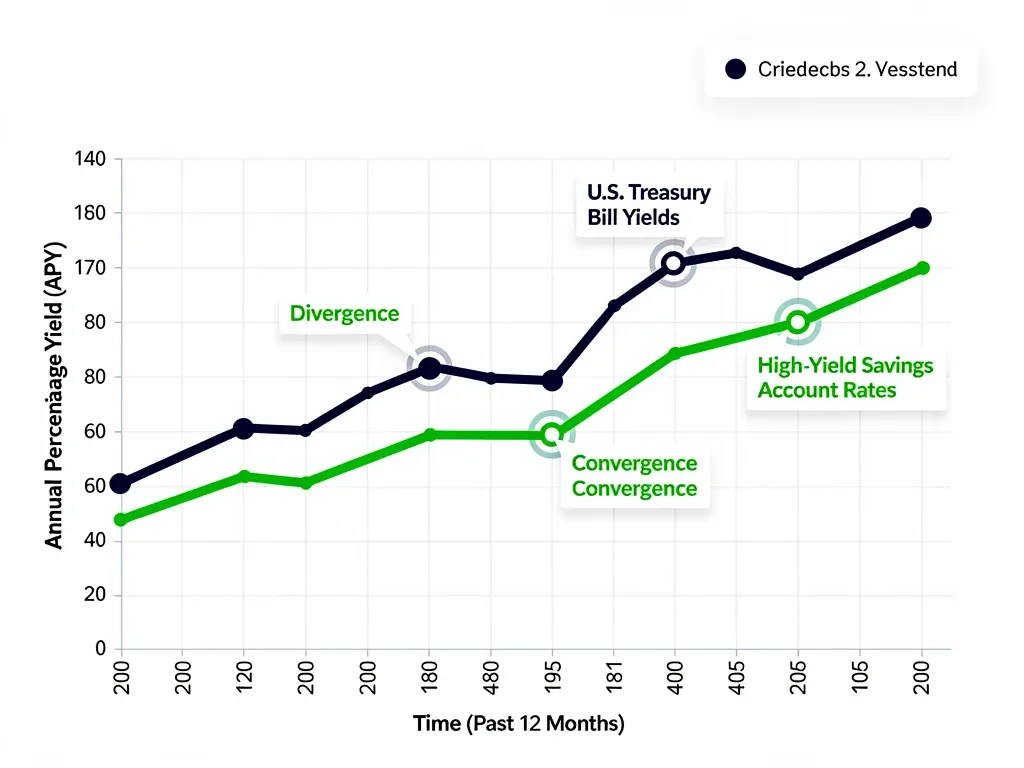
Comparing Treasury Bills vs. High-Yield Savings at 4.15%
When evaluating Treasury Bills vs. High-Yield Savings, several factors come into play. Both offer advantages, but their suitability depends on individual financial goals and risk tolerance.
T-Bills generally offer slightly higher yields than HYSAs during periods of rising interest rates, due to their direct link to government borrowing rates. However, HYSAs provide greater flexibility in accessing funds.
The decision often boils down to liquidity needs, tax considerations, and the investor's outlook on future interest rate movements. Each option serves a distinct purpose in a diversified financial strategy.
Key Differences and Considerations
One major distinction is liquidity. While T-Bills can be sold on the secondary market before maturity, there's a risk of selling at a discount if interest rates have risen. HYSAs offer immediate access without penalty.
Taxation is another critical factor. T-Bills are exempt from state and local taxes, which can be a significant advantage for residents in high-tax states. HYSA interest is fully taxable at federal, state, and local levels.
The impact of anticipated Fed cuts also differs. T-Bill yields on new issues will immediately reflect rate changes, while HYSA rates may adjust more slowly, though they are ultimately influenced by the same monetary policy.
Liquidity: HYSAs offer immediate access; T-Bills are liquid but subject to market fluctuations.
Tax Implications: T-Bills offer state/local tax exemption; HYSAs are fully taxable.
Yield Volatility: T-Bill yields fluctuate with market rates; HYSA rates may adjust with a lag.
Optimizing Cash Reserves Ahead of Mid-Year Fed Cuts
Optimizing cash reserves requires a forward-thinking approach, especially with potential Fed rate cuts on the horizon. The goal is to position funds to maximize returns while maintaining necessary liquidity and minimizing risk.
Investors should consider laddering T-Bills to benefit from varying maturities and to reinvest at potentially higher rates if cuts are delayed. This strategy can help smooth out returns over time.
For funds requiring immediate access, maintaining a portion in a high-yield savings account at 4.15% remains a prudent choice. The blend of these strategies can offer a balanced approach to cash management.
Strategic Allocation for Future Rate Changes
With mid-year Fed cuts anticipated, a strategic allocation between T-Bills and HYSAs becomes paramount. Investors might consider allocating a larger portion of their long-term cash reserves to T-Bills with maturities extending beyond the expected cut.
Conversely, maintaining accessible funds in a high-yield savings account ensures flexibility for unforeseen expenses or investment opportunities. This dual approach hedges against interest rate volatility.
Regularly reviewing and adjusting this allocation based on economic forecasts and personal financial needs is essential. The dynamic nature of interest rates demands an agile cash management strategy.
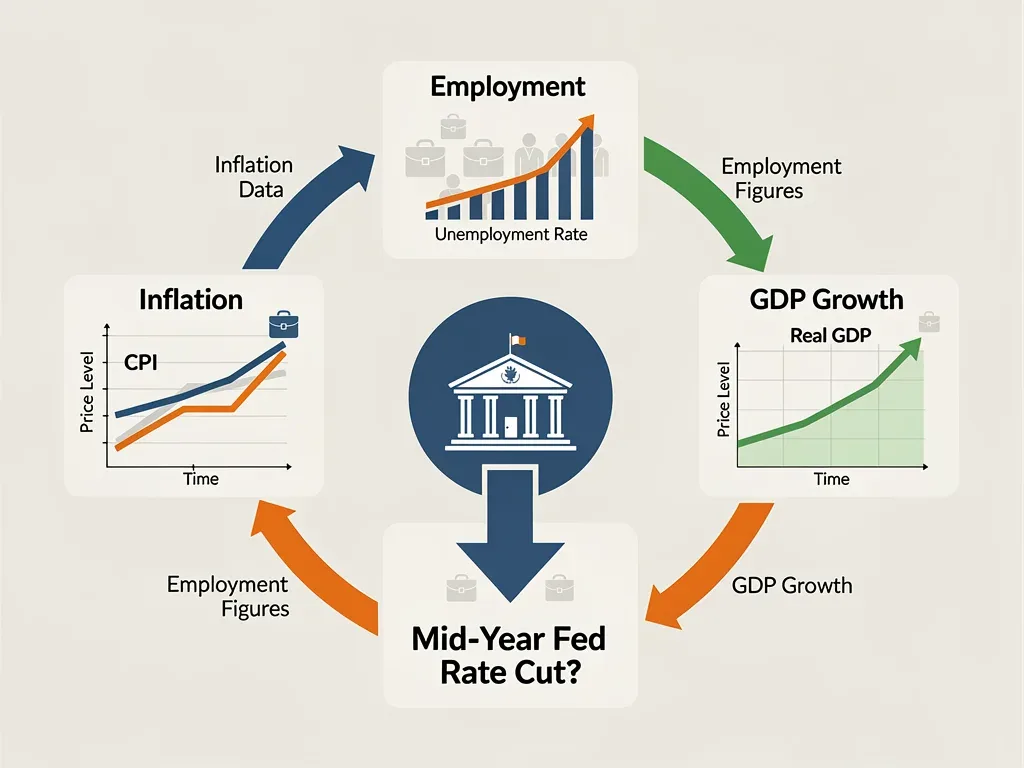
The Impact of Mid-Year Fed Cuts on Investment Decisions
The widely anticipated mid-year Federal Reserve interest rate cuts will undoubtedly reshape the landscape for both Treasury Bills and high-yield savings accounts. Investors need to understand how these changes could affect their returns.
A rate cut typically means lower yields on newly issued T-Bills and a potential reduction in the APY offered by high-yield savings accounts. This makes locking in current higher rates, where possible, an attractive strategy.
The timing and magnitude of these cuts remain subject to economic data, including inflation and employment figures. Staying informed about these developments is crucial for making timely adjustments to cash reserve strategies.
Navigating Lower Yield Environments
In a lower yield environment following Fed cuts, the spread between T-Bill yields and HYSA rates might narrow or even reverse. This could make the tax advantages of T-Bills even more pronounced for some investors.
Investors should also explore alternative short-term fixed-income options if yields become less attractive. However, for sheer safety and liquidity, T-Bills and HYSAs will likely remain foundational.
The key is to avoid complacency and proactively adapt investment strategies to align with the evolving interest rate environment. This ensures that cash reserves continue to work as efficiently as possible.
Monitor Fed Announcements: Stay informed on rate decisions.
Re-evaluate Yields: Compare T-Bill and HYSA rates post-cut.
Consider Laddering: Mitigate reinvestment risk with T-Bill ladders.
Risk and Security Considerations for Cash Holdings
While both Treasury Bills and high-yield savings accounts are considered low-risk investments, understanding their specific security features is paramount. Each offers distinct protections that cater to different investor priorities.
Treasury Bills carry virtually no default risk, as they are backed by the U.S. government. However, their market value can fluctuate if sold before maturity, especially if interest rates change.
High-yield savings accounts, conversely, are protected by FDIC insurance up to the legal limit, providing another layer of security for depositors' funds. This makes them exceptionally secure for typical retail investors.
Mitigating Risk in a Volatile Market
For investors concerned about market volatility, the safety offered by both T-Bills and HYSAs provides a crucial anchor. They serve as excellent vehicles for parking cash that cannot afford to be exposed to equity market swings.
Diversifying cash holdings between these two instruments can also be a prudent risk management strategy. This approach balances the tax advantages and potentially higher yields of T-Bills with the immediate liquidity and FDIC insurance of HYSAs.
Regularly assessing one's personal risk tolerance and liquidity needs will guide the optimal balance between these cash management tools, ensuring that financial goals are met securely.
Key Aspect | Description |
|---|---|
Security | T-Bills: U.S. government-backed. HYSAs: FDIC-insured up to $250,000. |
Liquidity | T-Bills: Secondary market access. HYSAs: Immediate access. |
Taxation | T-Bills: Exempt from state/local tax. HYSAs: Fully taxable. |
Fed Cut Impact | T-Bills: Direct yield adjustment. HYSAs: Potential lag in rate changes. |
Frequently Asked Questions About Cash Reserves
What are the main advantages of Treasury Bills?▼
Treasury Bills offer high security, being backed by the U.S. government, and are exempt from state and local income taxes. Their short maturities provide flexibility, making them suitable for conservative investors seeking capital preservation and modest returns.
How do high-yield savings accounts at 4.15% compare in terms of liquidity?▼
High-yield savings accounts at 4.15% offer superior liquidity compared to T-Bills, providing immediate access to funds without penalty. This makes them ideal for emergency funds or short-term financial needs where quick access is paramount.
Will mid-year Fed cuts affect my existing Treasury Bills?▼
Mid-year Fed cuts will primarily affect the yields on newly issued Treasury Bills. Existing T-Bills held to maturity will continue to pay the yield at which they were purchased. However, if sold before maturity, their market value could be impacted.
Is it better to choose Treasury Bills or high-yield savings for an emergency fund?▼
For an emergency fund, a high-yield savings account is generally preferred due to its immediate liquidity and FDIC insurance. While T-Bills are secure, the need to wait for maturity or sell on the secondary market makes them slightly less ideal for urgent access.
How can investors optimize cash reserves given anticipated Fed cuts?▼
Investors can optimize by laddering T-Bills to spread maturities and reinvest at potentially new rates. Also, maintaining a portion in high-yield savings for immediate liquidity is key. Regularly review and adjust allocations based on economic forecasts and personal needs.
What This Means
The current financial landscape demands a careful assessment of Treasury Bills vs. High-Yield Savings. As the Federal Reserve signals potential rate adjustments, investors must remain agile in their cash management strategies.
The choice between these two secure options hinges on individual liquidity needs, tax situations, and future interest rate expectations. A balanced approach, potentially combining both, offers robust protection and competitive returns.
Staying informed about economic indicators and Fed announcements will be crucial for making timely adjustments and ensuring that cash reserves are working effectively in a dynamic market environment.