Impact of Global Supply Chain Disruptions on Canadian Prices: Forecast for Q2 2026
Advertisements
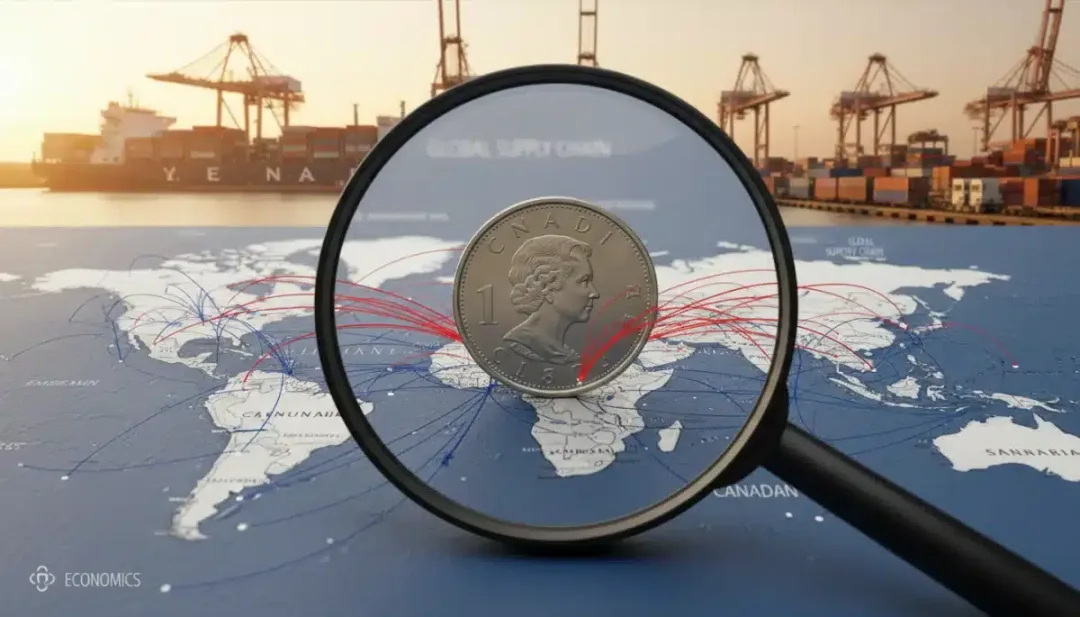
The global logistics landscape is undergoing a massive transformation, directly influencing the Canadian Price Forecast for the upcoming quarter.
As port congestions and geopolitical shifts ripple through the North High-North trade routes, understanding these inflationary pressures is essential for every domestic stakeholder.
This Q2 2026 outlook dissects the latest economic projections, highlighting how volatile shipping costs are trickling down to local consumer indices. We’ve synthesized complex market data into actionable insights, focusing on the specific budgetary shifts occurring across the provinces.
As supply lines tighten, staying ahead of these fiscal trends is no longer optional for informed decision-making. Explore the critical variables currently driving the national cost of living and discover which sectors are braced for the most significant market adjustments.
Understanding the Current Supply Chain Landscape
Global supply chains continue to experience significant volatility, largely due to geopolitical tensions, labour shortages, and ongoing recovery from the pandemic. These factors collectively contribute to an unpredictable environment for international trade and domestic production.
Canadian businesses, heavily reliant on imported goods and components, face increased costs and delivery delays, which inevitably translate to higher consumer prices.
The intricate web of global logistics means a disruption in one region can ripple across the world, affecting Canadian markets.
As we approach Q2 2026, the cumulative effect of these disruptions is becoming clearer, necessitating a detailed examination of their continued influence on the Canadian economy.
Stakeholders across various industries are closely monitoring these trends to anticipate and mitigate potential challenges.
Key Factors Driving Price Increases in Canada
Several critical elements are converging to exert upward pressure on Canadian prices. Energy costs remain a significant concern, directly influencing transportation and manufacturing expenses across all sectors.
Labour market dynamics, characterized by persistent shortages in key logistical roles and rising wage demands, further exacerbate the cost of doing business. These increased operational costs are frequently passed on to consumers, contributing to inflationary pressures.
Furthermore, shifts in consumer demand patterns and inventory management strategies, often a reaction to past disruptions, create additional bottlenecks. The resulting scarcity in certain product categories allows for price increases, impacting the Canadian Price Forecast.
Geopolitical Tensions and Trade Routes
Ongoing geopolitical events, particularly in critical shipping lanes and producing regions, introduce considerable uncertainty into global trade. Blockades, tariffs, and political instabilities can abruptly halt or reroute supply, leading to delays and increased shipping costs.
These disruptions force businesses to seek alternative, often more expensive, sourcing and transportation options.
The increased lead times and higher freight rates directly contribute to the final price of goods on Canadian shelves, making the Canadian Price Forecast a complex issue.
- Major shipping route bottlenecks, such as those seen in the Red Sea, continue to affect transit times and insurance premiums for cargo.
- Trade policy shifts and retaliatory tariffs between major economic blocs can elevate import costs for Canadian businesses.
- Regional conflicts disrupt the production and export of essential raw materials, creating shortages and price hikes globally.
Domestic Labour Shortages and Wages
Canada’s labour market, particularly in logistics, manufacturing, and transportation, continues to face significant shortages. This scarcity of skilled workers drives up wage demands, increasing operational costs for businesses.
Companies are often compelled to offer higher compensation and benefits to attract and retain employees, which subsequently impacts their pricing strategies. These labour-related cost pressures are a direct contributor to the overall rise in consumer prices.
The cumulative effect of these domestic labour challenges compounds the external pressures from global supply chain issues, intensifying the Canadian Price Forecast.
Sector-Specific Price Predictions for Q2 2026
The Canadian Price Forecast will not be uniform across all sectors; some industries are more vulnerable than others.
The automotive sector, for instance, continues to grapple with semiconductor shortages and high demand, leading to elevated vehicle prices and longer wait times.
The electronics industry also faces ongoing challenges, with components sourced from various global locations susceptible to disruptions. Consumers can expect continued price volatility and limited availability for certain electronic goods.
Conversely, sectors with more localized supply chains or those that have successfully diversified their sourcing may experience relatively less severe price increases. However, the interconnected nature of the economy means even these sectors can feel indirect effects.
Food and Agricultural Products
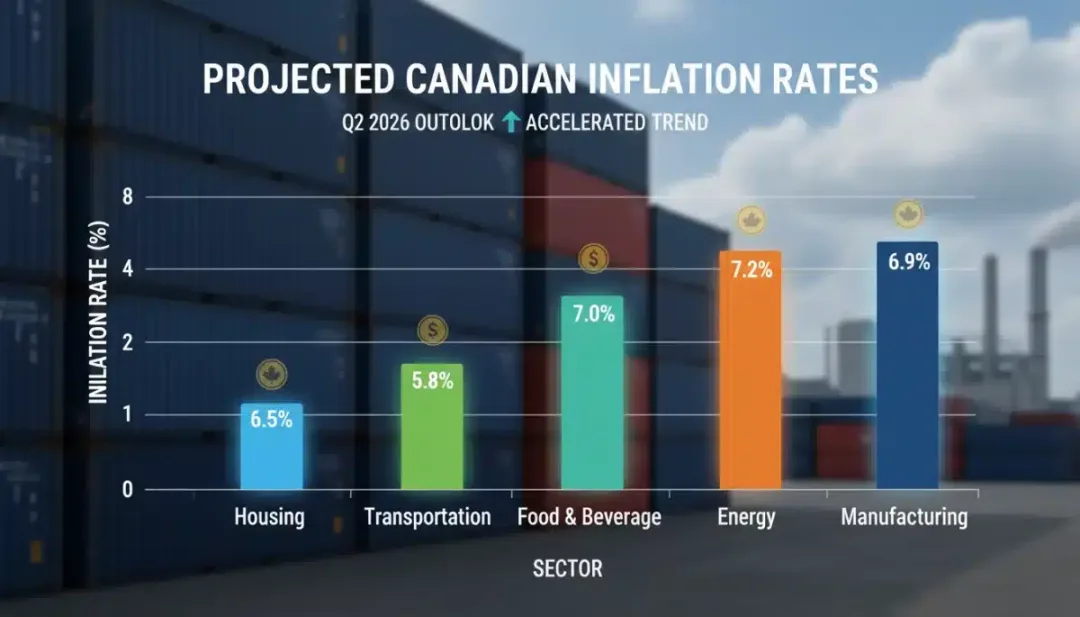
Food prices are expected to remain a significant concern for Canadian households in Q2 2026. Global weather patterns, energy costs for farming and transportation, and geopolitical events affecting grain and fertilizer supplies all contribute to inflationary pressures.
Domestic agricultural production is also subject to local climate conditions and labour availability, adding another layer of complexity. Consumers should prepare for continued increases in the cost of groceries, particularly for imported produce and processed foods.
The Canadian Price Forecast on this essential sector is profound, directly affecting household budgets and food security discussions.
- Extreme weather events globally impact crop yields, leading to reduced supply and higher prices for essential commodities.
- Rising fuel costs directly increase the expense of transporting food from farm to table.
- Packaging material shortages and increased labour costs in food processing contribute to elevated retail prices.
Automotive and Electronics Industries
The automotive sector continues to be heavily affected by the availability of critical components, most notably semiconductors. While some improvements have been noted, the backlog from previous disruptions persists, keeping vehicle prices high.
For electronics, the reliance on complex global manufacturing networks means that any hiccup in production or shipping can lead to shortages and price hikes.
Consumers looking for new appliances or tech gadgets might still face elevated costs and longer delivery times.
These sectors are emblematic of the broader Canadian Price Forecast, showcasing how highly specialized global production can be vulnerable to external shocks.
Government and Business Responses to Mitigate Impact
Both the Canadian government and private businesses are actively implementing strategies to address the ongoing supply chain challenges.
Government initiatives often focus on infrastructure investments, trade agreements, and support for domestic production to reduce reliance on vulnerable foreign sources.
Businesses, on the other hand, are exploring diversification of their supply chains, increasing inventory levels, and investing in automation to enhance resilience. These proactive measures aim to buffer the Canadian market from future shocks.
However, the effectiveness of these strategies in fully mitigating the Canadian Price Forecast remains to be seen, as the global landscape continues to evolve rapidly.
Policy Measures and Investment
The Canadian government is channeling investments into critical infrastructure, including ports, railways, and trucking routes, to improve logistical efficiency. These long-term projects aim to streamline the movement of goods within Canada and facilitate international trade.
Furthermore, policies promoting domestic manufacturing and resource extraction are being explored to build more resilient internal supply capabilities. Such initiatives are crucial for reducing Canada’s susceptibility to external supply shocks, addressing the Canadian Price Forecast.
- Government funding for port modernization and expansion projects to increase capacity and reduce congestion.
- Incentives for Canadian businesses to reshore or nearshore manufacturing operations, fostering domestic production.
- Development of new trade agreements to diversify import sources and reduce reliance on single suppliers.
Corporate Strategies for Resilience
Canadian businesses are adapting by adopting more robust supply chain management practices. This includes moving away from just-in-time inventory systems towards just-in-case, holding larger buffer stocks to absorb unexpected delays.
Diversification of suppliers across different geographic regions is another key strategy, minimizing the risk associated with disruptions in any single location.
Investment in digital technologies, such as AI and blockchain, is also helping companies gain better visibility and control over their supply chains.
These corporate efforts are vital in shaping the overall Canadian Price Forecast, allowing some companies to navigate challenges more effectively than others.
Consumer Behaviour and Spending Patterns
The prolonged period of inflation and supply chain instability has significantly altered Canadian consumer behaviour. Shoppers are becoming more price-sensitive, actively seeking deals, and adapting their purchasing habits to cope with rising costs.
Many consumers are prioritizing essential goods, deferring discretionary purchases, and exploring private-label brands as alternatives to more expensive options. This shift in spending patterns can influence retailers’ strategies and product offerings.
Understanding these evolving consumer tendencies is crucial for businesses and policymakers assessing the full Canadian Price Forecast.

Economic Outlook and Inflationary Projections
Economists are closely monitoring various indicators to refine their inflationary projections for Q2 2026. While some anticipate a gradual moderation of price increases, others warn that persistent supply chain issues and strong wage growth could keep inflation elevated.
The Bank of Canada’s monetary policy decisions will play a crucial role in shaping the economic environment. Interest rate adjustments, aimed at curbing inflation, can also impact consumer spending and business investment, influencing the broader economy.
The interplay between global disruptions, domestic policies, and consumer responses will define the actual Canadian Price Forecast on the Canadian economy.
Bank of Canada’s Role and Monetary Policy
The Bank of Canada faces the delicate task of balancing inflation control with supporting economic growth. Its decisions on interest rates are a primary tool for managing aggregate demand and, consequently, price pressures.
Forward guidance from the Bank will be critical in shaping market expectations and influencing borrowing costs for consumers and businesses alike.
The policy stance will significantly impact the speed at which inflationary pressures from global supply chain disruptions either abate or persist.
The effectiveness of monetary policy in addressing supply-side inflation is often debated, but its influence on the overall economic climate for the Canadian Price Forecast is undeniable.
- Interest rate decisions directly affect the cost of borrowing for mortgages and loans, influencing consumer spending.
- The Bank’s communication regarding future policy direction helps businesses and consumers plan their financial decisions.
- Monetary policy aims to steer inflation back to the target range, mitigating the long-term effects of price increases.
Global Economic Headwinds and Tailwinds
The Canadian economy does not operate in isolation; global economic performance significantly influences its trajectory.
A slowdown in major trading partners could reduce demand for Canadian exports, while robust global growth might increase commodity prices, affecting import costs.
The pace of recovery in global manufacturing and shipping capacities will also determine how quickly supply chain pressures ease. Any new shocks, such as additional health crises or geopolitical escalations, could quickly reverse positive trends.
Therefore, a comprehensive understanding of the Canadian Price Forecast requires continuous monitoring of both domestic and international economic developments.
Long-Term Implications for Canadian Economy
Beyond the immediate forecast for Q2 2026, the ongoing supply chain disruptions carry significant long-term implications for the Canadian economy.
Businesses are re-evaluating their global sourcing strategies, potentially leading to a more regionalized approach to production and supply.
This could foster greater domestic industrial capacity but might also entail higher production costs in the short term. The need for enhanced resilience is driving innovation in logistics and manufacturing, which could yield efficiencies over time.
Ultimately, Canada’s economic structure may undergo a fundamental shift, emphasizing self-sufficiency and robust supply networks to better withstand future global shocks, thereby shaping the enduring Canadian Price Forecast and beyond.
Preparing for Continued Volatility
Given the complex and interconnected nature of global supply chains, continued volatility is a realistic expectation for the Canadian economy. Businesses and consumers alike should prepare for a dynamic environment where adaptability will be key.
For businesses, this means continuously assessing supply chain vulnerabilities, diversifying suppliers, and investing in technology to enhance visibility and responsiveness. Building stronger relationships with domestic partners can also provide a buffer against international disruptions.
Consumers can mitigate the Canadian Price Forecast by budgeting carefully, being flexible with purchasing decisions, and exploring local alternatives where possible. Financial literacy and proactive planning remain essential tools in navigating these economic shifts.
| Key Aspect | Brief Description |
|---|---|
| Inflation Drivers | Geopolitical events, energy costs, labour shortages fueling price hikes. |
| Sectoral Impact | Food, automotive, and electronics most affected by disruptions. |
| Mitigation Efforts | Government investment, business diversification, and inventory buildup. |
| Consumer Response | Increased price sensitivity, shift to essentials, and local sourcing. |
Frequently Asked Questions About Canadian Prices and Supply Chains
What are the primary drivers of Canadian price increases for Q2 2026?▼The main drivers include ongoing global geopolitical tensions impacting trade routes, persistent energy cost volatility, and domestic labour shortages across key sectors like logistics and manufacturing. These factors collectively increase operational expenses for businesses, which are then passed on to consumers, influencing the Canadian Price Forecast.
Which sectors in Canada are most affected by supply chain disruptions?▼Sectors most affected include food and agricultural products due to global weather and transportation costs, and the automotive and electronics industries facing component shortages like semiconductors. These sectors rely heavily on complex international supply networks, making them particularly vulnerable to disruptions and impacting the Canadian Price Forecast.
How is the Canadian government responding to these challenges?▼The Canadian government is investing in infrastructure improvements for ports and transportation networks, and promoting domestic production through various incentives. These measures aim to enhance the resilience of Canada’s supply chains and reduce reliance on external vulnerabilities, thereby trying to mitigate the Canadian Price Forecast.
What can Canadian consumers do to mitigate the impact of rising prices?▼Consumers can mitigate the impact by carefully budgeting, prioritizing essential purchases, and being flexible with brands or product choices. Exploring local alternatives and private-label brands can also help manage costs effectively, which is important given the ongoing Canadian Price Forecast.
Will prices stabilize or continue to rise beyond Q2 2026?▼The outlook beyond Q2 2026 remains uncertain, depending on the evolution of global geopolitical events, energy markets, and the effectiveness of mitigation strategies. While some moderation is hoped for, persistent issues could keep prices elevated. Continuous monitoring of economic indicators is essential to understand the future Canadian Price Forecast and beyond.
Looking Ahead
The Canadian Price Forecast underscores the dynamic nature of the global economy and its direct influence on Canadian households and businesses.
Continuous vigilance over international developments, domestic policy shifts, and evolving consumer behaviours will be crucial.
Adapting to these new realities through strategic planning and resilient supply chain models will define Canada’s economic trajectory in the coming quarters.