Claim Your Student Loan 401(k) Match Under SECURE 2.0
Advertisements
Paying off higher education debt no longer means sacrificing your long-term retirement savings. Thanks to expanded federal rules, leveraging a Student Loan 401(k) match allows working professionals to build future wealth while simultaneously clearing their educational balance.
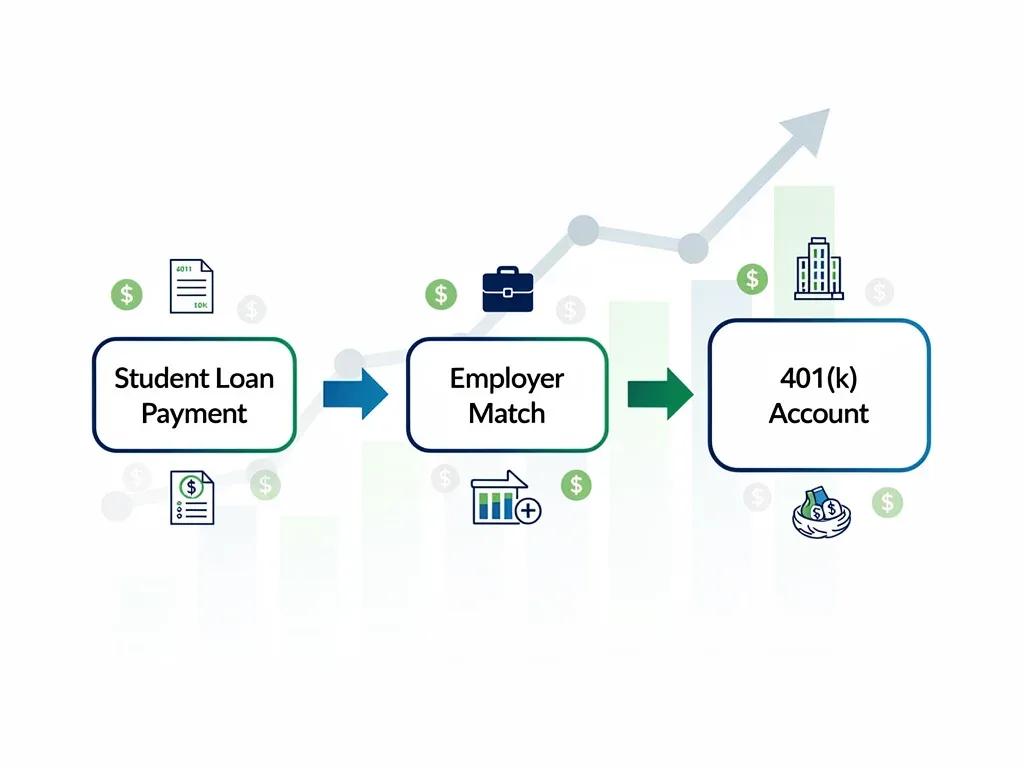
Under the SECURE 2.0 framework, employers can treat your monthly debt repayments as qualifying retirement contributions. This game-changing policy ensures you receive full company matching funds even when directing all extra cash flow toward your principal balance.
Claiming this workplace financial benefit is one of the easiest ways to accelerate debt relief without falling behind on long-term planning. Checking your employer's benefit portal today could unlock thousands in previously missed retirement perks.
SECURE 2.0 Act: A Game Changer for Student Debt Holders
The SECURE 2.0 Act, enacted in December 2022, introduced significant reforms to retirement savings, with one provision standing out for its direct impact on millions of Americans. This particular change allows employers to make matching contributions to an employee's 401(k) or 403(b) plan based on their student loan payments.
This innovative approach addresses a long-standing challenge where individuals with substantial student debt often deferred retirement savings. Prior to SECURE 2.0, many found it financially impossible to contribute to both their student loans and their 401(k) simultaneously, missing out on valuable employer matches.
The new rules, effective January 1, 2024, aim to level the playing field, ensuring that employees are not penalized for prioritizing their student loan obligations. Employers can now treat qualified student loan payments as elective deferrals for matching contribution purposes, directly benefiting those struggling with educational debt.
Understanding the Qualified Student Loan Payment Provision
The core of this provision lies in the definition of a "qualified student loan payment." These are payments made by an employee on any qualified education loan, as defined by federal law, for their education or the education of a spouse or dependent.
Employers have the flexibility to design their plans, but typically, they will match a percentage of these student loan payments, up to the plan's established matching cap.
This means that if an employee is making regular student loan payments, their employer can contribute to their 401(k) even if the employee isn't making direct contributions themselves.
This mechanism ensures that the opportunity to receive an employer match is no longer solely dependent on an employee's ability to make direct payroll deductions to their retirement account. It’s a critical step towards financial inclusivity and long-term savings for a demographic often left behind.
Eligibility and Employer Implementation
For employees, eligibility generally requires being enrolled in a retirement plan that offers this specific matching provision. It's crucial to verify if your employer has adopted this feature, as it's not automatically included in all plans.
Employers, on the other hand, must amend their existing 401(k) or 403(b) plans to incorporate this new matching option. This involves administrative adjustments and clear communication to employees about how to take advantage of the benefit.
Verify if your employer's plan includes the student loan matching provision.
Understand the specific details of your employer's matching formula and limits.
Ensure your student loan payments qualify under the plan's guidelines.
Communicate with your HR department or plan administrator for clarification.
The implementation process can vary by company, so proactive engagement with your benefits department is key to ensure you are not missing out on potential contributions.
Are you claiming your 100% student loan 401(k) employer match under expanded SECURE 2.0 rules? This question demands immediate attention.
Maximizing Your Retirement Savings with Student Loan Payments
For many, the ability to receive a 401(k) employer match based on student loan payments represents a substantial boost to retirement savings that was previously unattainable. This provision effectively turns student loan payments into a dual-purpose financial action.
Instead of choosing between debt repayment and retirement savings, individuals can now do both simultaneously, accelerating their wealth accumulation. The compound interest on these employer contributions over decades can lead to a significantly larger retirement nest egg.
Consider the long-term impact: a consistent employer match, even if it's modest, can grow exponentially over 20 or 30 years. This benefit is designed to alleviate financial strain while promoting crucial retirement planning habits.

The Financial Impact on Young Professionals
Young professionals often face the heaviest burden of student loan debt, making it difficult to prioritize retirement contributions early in their careers. The SECURE 2.0 Act directly addresses this demographic, offering a lifeline for future financial security.
By enabling an employer match on student loan payments, the act helps young workers start saving for retirement earlier, leveraging the power of time and compound growth. This early start can significantly impact their financial standing later in life.
Start retirement savings earlier, even with significant student debt.
Benefit from employer contributions that were previously inaccessible.
Reduce the opportunity cost of prioritizing student loan repayment over 401(k) contributions.
Build a stronger financial foundation for the future.
This change is particularly impactful for those in fields requiring advanced degrees, where student loan balances can be exceptionally high. It offers a tangible pathway to financial stability and long-term planning.
Navigating Employer Requirements and Documentation
While the SECURE 2.0 Act provides the framework, the onus is on employees to understand and fulfill their employer's specific requirements. This often involves providing documentation of student loan payments to the plan administrator.
Employers typically require proof of qualified student loan payments to accurately calculate and disburse the matching contributions. This might include loan statements, payment histories, or other verifiable records.
It is essential to keep meticulous records of all student loan payments and to submit them according to your employer's established procedures and deadlines. Failure to do so could result in missing out on valuable matching contributions.
Best Practices for Employees
To ensure you fully benefit from this provision, establish a clear understanding of your employer's specific process. Do not assume the match will be automatic; proactive steps are often required.
Regularly review your retirement account statements to confirm that the matching contributions are being applied correctly. If you notice any discrepancies, address them promptly with your HR or plan administrator.
Gather all necessary student loan documentation promptly.
Adhere strictly to your employer's submission deadlines.
Confirm the matching contributions appear in your 401(k) account.
Stay informed about any updates or changes to your employer's plan.
Being diligent in these administrative tasks is crucial for securing your full student loan 401(k) match. Are you claiming your 100% student loan 401(k) employer match under expanded SECURE 2.0 rules? The answer depends on your proactive engagement.
Challenges and Considerations for Employers
Implementing the student loan 401(k) match provision presents several considerations for employers. These include administrative complexities, communication strategies, and ensuring compliance with federal regulations.
Employers must update their plan documents, establish clear processes for verifying student loan payments, and educate their workforce about this new benefit. This requires a coordinated effort across HR, finance, and legal departments.
Despite the administrative burden, offering this benefit can significantly enhance employee recruitment and retention, particularly among younger demographics. It positions companies as forward-thinking and supportive of their employees' financial well-being.
Ensuring Fair and Equitable Access
Employers must also ensure that the student loan matching provision is administered fairly and equitably across all eligible employees. This involves clear communication and consistent application of the rules.
Transparency regarding eligibility criteria, submission processes, and matching formulas is paramount to building trust and encouraging participation. Regular audits can help ensure compliance and identify any areas for improvement.
The goal is to create an environment where all employees, regardless of their student loan status, feel empowered to maximize their retirement savings. Are you claiming your 100% student loan 401(k) employer match under expanded SECURE 2.0 rules? This benefit aims to be universally accessible to eligible individuals.
The Broader Implications of SECURE 2.0 for Retirement Security
The student loan 401(k) match is just one of many provisions within the expansive SECURE 2.0 Act, all designed to enhance retirement security for American workers. Other notable changes include increased catch-up contribution limits for older workers and simplified rules for small business retirement plans.
Collectively, these reforms aim to address a looming retirement crisis, where many individuals are not saving enough to maintain their standard of living in retirement. The act encourages greater participation in employer-sponsored plans and provides more flexibility for savers.
By removing barriers and offering new incentives, SECURE 2.0 seeks to empower individuals to take greater control of their financial futures. Understanding the full scope of these changes is vital for comprehensive financial planning.
Future Outlook and Potential Expansions
As the SECURE 2.0 Act continues to roll out, financial experts are closely monitoring its impact and discussing potential future expansions or adjustments. The success of the student loan matching provision could pave the way for similar innovative solutions.
There is ongoing dialogue about how to further integrate student loan management with retirement planning, recognizing the interconnectedness of these financial challenges. Policymakers are exploring additional ways to support individuals burdened by educational debt.
Monitor ongoing legislative discussions regarding retirement and student loan policies.
Stay updated on new guidance or clarifications from regulatory bodies.
Engage with financial advisors to understand how these changes affect your personal situation.
Advocate for policies that continue to support financial well-being for all.
The landscape of retirement savings and student loan management is evolving, and staying informed is crucial. Are you claiming your 100% student loan 401(k) employer match under expanded SECURE 2.0 rules? This is a prime example of such evolution.
Actionable Steps for Employees and Employers
For employees, the immediate call to action is to investigate whether their employer offers the student loan 401(k) match and how to enroll. This involves contacting HR or reviewing plan documents to understand the specific terms and conditions.
Don't assume your employer has automatically adopted this provision; many companies are still in the process of updating their plans. Proactive engagement can ensure you don't miss out on this valuable benefit.
For employers, the imperative is to consider implementing this provision if they haven't already. It's a powerful tool for attracting and retaining talent, demonstrating a commitment to employee financial health.
Implementing the Benefit Effectively
Employers should prioritize clear and consistent communication about the new student loan matching option. This includes detailed explanations of eligibility, documentation requirements, and the process for receiving contributions.
Providing accessible resources, such as FAQs, workshops, or dedicated points of contact, can help employees navigate the new system. Streamlining the administrative process for verifying student loan payments is also key.
Employees: Contact HR to inquire about your company's student loan match program.
Employees: Gather necessary student loan documentation for submission.
Employers: Review and update your 401(k) plan to include the provision.
Employers: Develop a robust communication strategy to inform employees.
Successfully integrating this benefit requires careful planning and execution from both sides. Are you claiming your 100% student loan 401(k) employer match under expanded SECURE 2.0 rules? This question becomes a straightforward call to action.
Key Provision | Impact on Savers |
|---|---|
Student Loan Match | Employers can match 401(k) contributions based on student loan payments. |
Effective Date | Provisions became effective January 1, 2024. |
Eligibility | Employees in plans offering this benefit, making qualified student loan payments. |
Action Required | Employees must verify employer plan and submit payment documentation. |
Frequently Asked Questions About SECURE 2.0 Student Loan Match
What is the student loan 401(k) employer match under SECURE 2.0?▼
It's a provision from the SECURE 2.0 Act allowing employers to contribute matching funds to an employee's 401(k) or 403(b) based on their qualified student loan payments. This helps employees save for retirement even if they can't make direct payroll contributions, addressing a significant financial hurdle.
When did this provision become effective?▼
The provisions related to the student loan 401(k) employer match officially took effect on January 1, 2024. This means eligible employees can now start receiving these valuable matching contributions, provided their employer has adopted the necessary plan amendments.
Do all employers offer this student loan 401(k) match?▼
No, not all employers automatically offer this benefit. While the SECURE 2.0 Act enables it, employers must choose to amend their retirement plans to include this provision. Employees should contact their HR department or plan administrator to confirm if their company offers it.
What documentation is needed to claim the match?▼
Employees typically need to provide proof of their qualified student loan payments to their employer or plan administrator. This may include student loan statements, payment histories, or other verifiable records. Specific requirements can vary by employer, so always check with your HR department.
How does this impact my overall retirement savings?▼
This provision can significantly boost your retirement savings by allowing you to receive employer contributions that you might otherwise miss. It helps you build your 401(k) balance earlier, leveraging compound interest over time, even while actively paying down student debt. Are you claiming your 100% student loan 401(k) employer match under expanded SECURE 2.0 rules? It's a critical question for your financial future.
What this means
The implementation of the student loan 401(k) employer match under SECURE 2.0 represents a pivotal shift in how Americans can approach their financial future. It underscores a growing recognition of the interconnectedness between student debt and retirement security.
This benefit offers a tangible pathway for millions to build wealth, even while managing significant educational loans.
As more employers adopt this provision, its impact on national retirement savings rates and individual financial well-being will become increasingly evident, marking a significant step towards a more inclusive financial landscape.