Dividend Aristocrats vs. Short-Term Corporate Bonds: Rebalancing for 5.2% Yield
Advertisements
Optimizing your investment portfolio for reliable cash flow requires balancing long-term equity growth against short-term fixed-income stability. Allocating capital toward proven Dividend Aristocrats allows income-focused investors to capture reliable payout increases while mitigating overall market volatility.
Pairing high-quality dividend growth equities with short-duration corporate debt helps protect capital while targeting a steady 5.2% annual yield. This strategic realignment balances inflation-hedged equity appreciation with predictable coupon returns across shifting interest rate cycles.
Reevaluating your traditional 60/40 asset allocation protects portfolio longevity without sacrificing immediate income generation. Here is how to structure your holdings between dividend-paying equities and fixed-income assets to achieve optimal cash yield.
Understanding the 60/40 Portfolio in Today's Market
The traditional 60/40 portfolio, comprising 60% equities and 40% fixed income, has long been a cornerstone of conservative investment strategies. However, recent market volatility and evolving interest rate environments have prompted many investors to reconsider its efficacy.
The objective of maintaining diversification and managing risk remains paramount, but the specific components and their allocations within this framework are subject to continuous re-evaluation. Achieving a target yield like 5.2% demands a more active and strategic approach than simply adhering to historical norms.
This section explores how market conditions necessitate a dynamic perspective on the 60/40 allocation, especially when integrating specific asset classes like Dividend Aristocrats and short-term corporate bonds.
The Appeal of Dividend Aristocrats for Income Generation
Dividend Aristocrats are S&P 500 companies that have consistently increased their dividends for at least 25 consecutive years, showcasing remarkable financial resilience and commitment to shareholder returns. These companies often possess strong fundamentals, stable business models, and a history of navigating various economic cycles successfully.
For income-seeking investors, Dividend Aristocrats offer a compelling proposition: a reliable stream of growing income that can provide both current yield and long-term capital appreciation. Their consistent dividend growth acts as a hedge against inflation and offers a degree of predictability in uncertain markets.
When considering Dividend Aristocrats, the equity portion often leans heavily on these proven performers. Their ability to deliver consistent income makes them a critical component in achieving specific yield targets within a diversified portfolio.
Characteristics of Leading Dividend Aristocrats
Consistent Dividend Growth: A minimum of 25 consecutive years of dividend increases, indicating financial strength.
Strong Market Presence: Often large-cap companies with dominant positions in their respective industries.
Resilient Business Models: Ability to generate stable earnings and cash flows across economic cycles.
Lower Volatility: Generally exhibit less price fluctuation compared to non-dividend-paying growth stocks.
Evaluating Dividend Aristocrat Performance
Historically, Dividend Aristocrats have not only provided consistent income but have also demonstrated competitive total returns. Their defensive characteristics can be particularly valuable during periods of market downturns, offering a cushion to overall portfolio performance.
The selection of specific Dividend Aristocrats for a portfolio aiming for a 5.2% yield would involve a detailed analysis of their current dividend yield, payout ratio, and future growth prospects. It’s not merely about the highest yield but the sustainability and growth of that income.
According to recent market analyses, a carefully curated selection of Dividend Aristocrats can significantly contribute to the equity portion of a rebalanced 60/40 portfolio, moving closer to the desired yield target.
The Role of Short-Term Corporate Bonds in Portfolio Stability
Short-term corporate bonds, typically maturing within one to five years, play a crucial role in the fixed-income portion of a diversified portfolio, offering stability and income. Their shorter duration makes them less sensitive to interest rate fluctuations compared to longer-term bonds, thus reducing interest rate risk.
These bonds are issued by corporations to raise capital, and their yields are generally higher than government bonds due to the added credit risk. However, short-term corporate bonds from investment-grade companies still offer a relatively high degree of safety and predictable income.
In the context of Dividend Aristocrats, these bonds serve as the foundational element for the 40% fixed-income allocation, providing a stable income stream and capital preservation.
Benefits of Integrating Short-Term Corporate Bonds
Lower Interest Rate Risk: Shorter maturities mean less sensitivity to changes in prevailing interest rates.
Consistent Income Stream: Regular coupon payments provide predictable cash flow for investors.
Capital Preservation: Generally less volatile than equities, offering a cushion during market downturns.
Diversification: Provide a non-correlated asset class that can smooth out overall portfolio returns.
Assessing Short-Term Corporate Bond Yields
The current market environment, with potentially higher interest rates, makes short-term corporate bonds particularly attractive as their yields have become more competitive. Investors can find opportunities to lock in favorable yields without taking on excessive duration risk.
When selecting short-term corporate bonds, credit quality is paramount. Focusing on investment-grade issuers helps mitigate default risk, ensuring the reliability of income and principal repayment. This careful selection is essential for the fixed-income component to effectively support a 5.2% yield target.
As reported by financial institutions, the current yields on high-quality short-term corporate bonds can significantly contribute to the overall portfolio yield, making them an indispensable part of the rebalancing strategy.
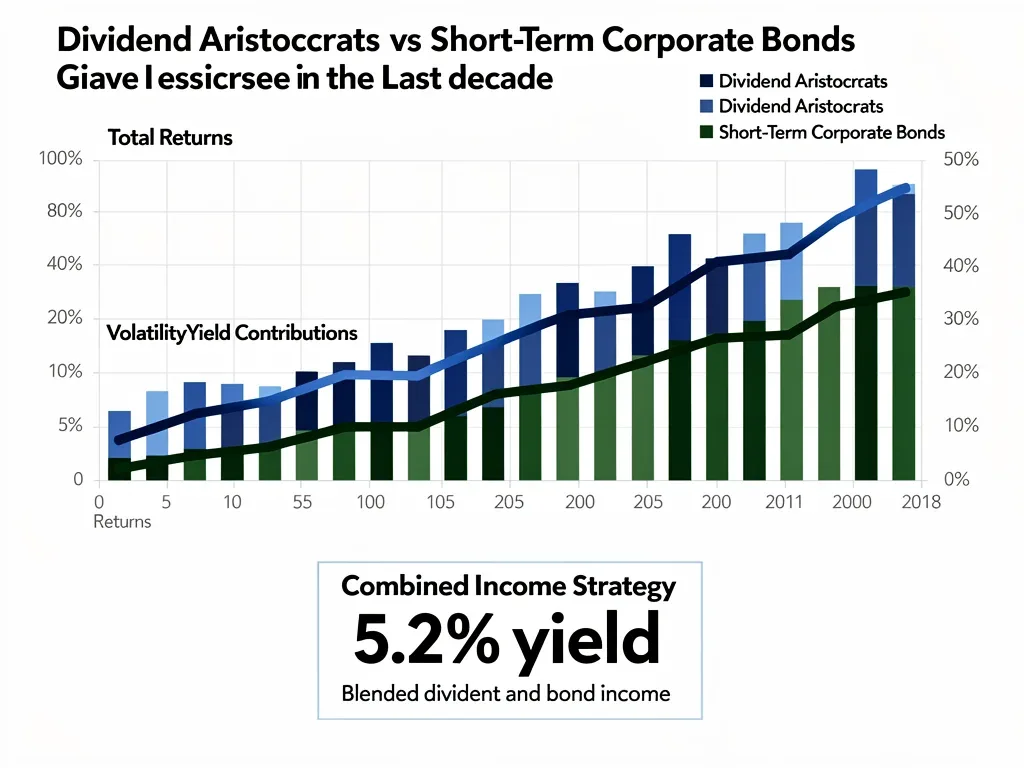
Strategic Rebalancing for a 5.2% Yield Target
Achieving a specific yield target like 5.2% through a rebalanced 60/40 portfolio requires a meticulous approach to asset allocation and ongoing monitoring. This involves not just selecting the right assets, but also dynamically adjusting their proportions based on market conditions and individual risk tolerance.
Rebalancing is the process of realigning the weightings of a portfolio of assets. It is crucial for maintaining the desired risk-return profile and ensuring the portfolio stays on track to meet its financial objectives, such as the 5.2% yield.
The interplay between Dividend Aristocrats is central to this strategy, balancing the growth and income potential of equities with the stability of fixed income.
Implementing a Rebalancing Strategy
A systematic rebalancing strategy, whether time-based (e.g., quarterly, annually) or threshold-based (when asset allocations deviate by a certain percentage), is vital. This prevents any single asset class from dominating the portfolio and helps in disciplined profit-taking and buying opportunities.
For instance, if the equity portion (Dividend Aristocrats) performs exceptionally well, its weight might exceed 60%. Rebalancing would involve selling some equities and reinvesting the proceeds into short-term corporate bonds to restore the 60/40 allocation. This practice can enhance returns and manage risk.
Conversely, if bonds outperform, a portion would be sold to purchase more Dividend Aristocrats. This disciplined approach ensures that the portfolio consistently aligns with the targeted 5.2% yield and overall investment goals.
Risks and Considerations in Portfolio Optimization
While the strategy of combining Dividend Aristocrats and short-term corporate bonds for a 5.2% yield offers compelling advantages, it is not without risks. Investors must carefully consider various factors that could impact the portfolio's performance and income stability.
Market volatility, interest rate changes, and credit risk are inherent to investing and can affect both equity and fixed-income components. A thorough understanding of these risks is essential for informed decision-making.
Navigating the complexities of Dividend Aristocrats requires a vigilant approach to risk management and adaptation to changing economic landscapes.
Key Risks to Monitor
Interest Rate Risk: While short-term bonds are less sensitive, significant rate hikes can still impact bond prices and yields.
Credit Risk: Corporate bonds carry the risk of issuer default, though this is mitigated with investment-grade selections.
Market Volatility: Equity prices, even for Dividend Aristocrats, can fluctuate, affecting the portfolio's overall value.
Inflation Risk: High inflation can erode the purchasing power of fixed income and dividends if growth doesn't keep pace.
Mitigating Potential Downsides
Diversification across different sectors within Dividend Aristocrats and across various corporate bond issuers can help spread risk. Regular reviews of credit ratings for corporate bonds and the financial health of dividend-paying companies are also crucial.
Furthermore, maintaining a cash reserve or highly liquid assets can provide flexibility during periods of market stress, allowing investors to capitalize on opportunities or cover unexpected expenses without disrupting the core portfolio. This proactive management is key to sustaining a 5.2% yield.
Experts suggest that a dynamic asset allocation strategy, coupled with a clear understanding of personal risk tolerance, forms the bedrock of a successful portfolio in today's unpredictable economic environment.
Tax Implications of Dividend and Bond Income
Understanding the tax implications of both dividend income from Aristocrats and interest income from corporate bonds is crucial for maximizing net returns. Tax efficiency plays a significant role in the actual yield an investor realizes from their portfolio.
Different types of income are taxed at varying rates, and the structure of an investment account (e.g., taxable vs. tax-advantaged) can significantly impact the after-tax yield. This often overlooked aspect can make a substantial difference to the overall profitability of the strategy.
When planning for Dividend Aristocrats, considering the tax consequences is as important as the gross yield itself.
Taxation of Dividends
Qualified dividends from U.S. companies are often taxed at preferential long-term capital gains rates, which can be significantly lower than ordinary income tax rates. However, non-qualified dividends are taxed as ordinary income.
The classification of dividends depends on several factors, including the holding period of the stock and the type of company issuing the dividend. Investors should consult with a tax advisor to understand how their specific dividend income will be treated.
Placing Dividend Aristocrats in tax-advantaged accounts like IRAs or 401(k)s can defer or eliminate taxes on dividend income, further enhancing the effective yield of the equity portion.
Taxation of Corporate Bond Interest
Interest income from corporate bonds is generally taxed as ordinary income at the investor's marginal tax rate. This can be a higher tax burden compared to qualified dividends, especially for investors in higher tax brackets.
However, municipal bonds, while not corporate bonds, offer tax-exempt interest at the federal level and sometimes at state and local levels if the investor resides in the issuing state. While not directly part of the Dividend Aristocrats, this highlights the importance of tax-aware investing.
Strategically allocating corporate bonds to tax-advantaged accounts can mitigate the impact of ordinary income tax rates on interest earnings, preserving more of the 5.2% target yield.

Forecasting Future Yields and Market Outlook
Forecasting future yields for both Dividend Aristocrats and short-term corporate bonds involves analyzing current economic indicators, central bank policies, and corporate earnings outlooks. The dynamic nature of financial markets necessitates continuous assessment to maintain a 5.2% yield target.
Economic projections from leading financial institutions provide crucial insights into potential shifts in interest rates, inflation, and corporate profitability. These forecasts help investors anticipate market movements and adjust their portfolios accordingly.
The ongoing dialogue around Dividend Aristocrats is heavily influenced by these forward-looking analyses.
Economic Factors Influencing Yields
Key economic factors include inflation rates, GDP growth, and employment data, all of which influence central bank decisions on monetary policy. A hawkish stance by the Federal Reserve, for instance, could lead to higher bond yields but might also pressure equity valuations.
Geopolitical events and global economic trends also play a significant role. Supply chain disruptions or international trade disputes can impact corporate earnings and, consequently, dividend growth and bond credit quality.
Therefore, a holistic view of the macroeconomic landscape is essential for making informed decisions about the composition of a 60/40 portfolio aimed at a 5.2% yield.
Analyst Projections for Dividend and Bond Markets
Financial analysts regularly publish projections for dividend growth rates of Aristocrats and yield forecasts for corporate bonds. These projections are based on detailed company-specific analysis and broader market trends.
For Dividend Aristocrats, the focus is often on the sustainability of their business models and their ability to continue increasing dividends. For corporate bonds, credit spreads, and the overall interest rate environment are key determinants of future yields.
Investors should carefully review these projections from reputable sources to fine-tune their rebalancing strategy and ensure the portfolio remains aligned with the target of Dividend Aristocrats.
Case Studies: Successful 60/40 Rebalancing
Examining real-world examples of successful 60/40 portfolio rebalancing strategies can provide valuable lessons for investors. These case studies highlight how different market conditions were navigated to achieve specific financial goals, including yield targets.
While every investor's situation is unique, the principles behind successful rebalancing remain consistent: discipline, adaptability, and a clear understanding of asset characteristics. These examples illustrate the practical application of the concepts discussed.
The effectiveness of Dividend Aristocrats can be better understood through these empirical demonstrations.
Illustrative Example 1: 2008 Financial Crisis
During the 2008 financial crisis, a rebalanced 60/40 portfolio that included resilient Dividend Aristocrats and high-quality short-term corporate bonds demonstrated superior capital preservation compared to more aggressive strategies.
The bonds provided a stable anchor, while the Aristocrats, though suffering some capital depreciation, maintained their dividend payouts, offering crucial income.
The disciplined rebalancing during the downturn allowed investors to buy more equities at depressed prices, setting the stage for significant recovery gains. This period underscored the importance of fixed income in mitigating equity market shocks.
This case illustrates how the strategic allocation between Dividend Aristocrats and short-term corporate bonds can provide both defense and opportunity during severe market corrections.
Illustrative Example 2: Low Interest Rate Environment
In periods of persistently low interest rates, achieving a 5.2% yield solely from bonds becomes challenging. Here, Dividend Aristocrats with robust dividend growth profiles played a more significant role in driving portfolio income.
A careful rebalancing act involved allocating a slightly higher proportion to high-yielding, stable Dividend Aristocrats, while still maintaining exposure to short-term corporate bonds for diversification and capital preservation. This dynamic adjustment was key to meeting the yield target.
This scenario emphasizes the flexibility required in the Dividend Aristocrats strategy, adapting to prevailing interest rate environments to optimize income generation.
Key Aspect | Description |
|---|---|
Investment Goal | Target a 5.2% yield from a rebalanced 60/40 portfolio. |
Asset Classes | Dividend Aristocrats for growth/income, Short-Term Corporate Bonds for stability. |
Rebalancing Strategy | Periodic adjustments to maintain 60% equities / 40% fixed income. |
Risk Management | Mitigating interest rate, credit, and market volatility risks. |
Frequently Asked Questions About Portfolio Rebalancing
What are Dividend Aristocrats and why are they important for a 5.2% yield?▼
Dividend Aristocrats are S&P 500 companies with 25+ years of consecutive dividend increases. They are crucial for a 5.2% yield due to their consistent income growth and financial stability, providing a reliable equity component in a rebalanced portfolio.
How do Short-Term Corporate Bonds contribute to a 60/40 portfolio?▼
Short-Term Corporate Bonds provide stability and predictable income to the fixed-income portion of a 60/40 portfolio. Their shorter duration reduces interest rate risk, making them an ideal component for capital preservation and yield contribution.
What is the main benefit of rebalancing a 60/40 portfolio with these assets?▼
The main benefit is optimizing for a target yield, such as 5.2%, while managing risk effectively. Rebalancing ensures that the portfolio maintains its desired allocation, capitalizing on market movements to buy low and sell high, and adapting to economic changes.
What are the primary risks associated with this rebalancing strategy?▼
Key risks include interest rate fluctuations affecting bond prices, credit risk from corporate bond issuers, and market volatility impacting equity values. Inflation can also erode real returns. Careful selection and ongoing monitoring help mitigate these risks.
How does tax efficiency impact the overall 5.2% yield?▼
Tax efficiency significantly affects the net yield. Qualified dividends receive preferential tax treatment, while bond interest is taxed as ordinary income. Utilizing tax-advantaged accounts for certain assets can reduce the tax burden and enhance the effective 5.2% yield.
What this means
The strategic rebalancing of a 60/40 portfolio using Dividend Aristocrats and Short-Term Corporate Bonds to achieve a 5.2% yield represents a proactive approach to income investing in a dynamic market.
This strategy emphasizes diversification, risk management, and tax efficiency, offering a robust framework for investors seeking consistent returns.
Continuous monitoring of market conditions and economic indicators will be essential to adapt the portfolio and sustain the target yield, ensuring long-term financial objectives are met.