OAS Benefit 2026: Are You Getting Your Full $713?
Advertisements

Latest developments on Understanding the Old Age Security (OAS) Benefit in 2026: Are You Getting Your Full $713 Monthly Payment?, with key facts, verified sources and what readers need to monitor next in Canada, presented clearly in English (Canada).
Understanding the Old Age Security (OAS) Benefit in 2026: Are You Getting Your Full $713 Monthly Payment? is a critical topic for Canadian seniors and those nearing retirement. The OAS program, a cornerstone of Canada’s social safety net, provides a modest monthly pension to most Canadians aged 65 and over.
As 2026 approaches, many are asking about the maximum benefit amount and the factors that determine their individual payment. This article aims to clarify these points, offering a detailed look at what recipients can expect and how to ensure they receive their entitled benefits.
Navigating government benefits can be complex, but informed planning is key to maximizing your financial well-being in retirement. We will delve into the eligibility requirements, payment amounts, and essential considerations for the upcoming year.
Understanding the Old Age Security (OAS) Benefit in 2026: Are You Getting Your Full $713 Monthly Payment?
The Old Age Security (OAS) program is Canada’s largest pension program, providing a monthly payment to eligible seniors. Unlike the Canada Pension Plan (CPP), OAS is funded through general tax revenues, not contributions, making it a universal benefit for qualifying individuals.
For 2026, the maximum monthly OAS benefit is projected to be around $713, though the exact figure will be confirmed closer to the date and is subject to quarterly adjustments based on the Consumer Price Index. This amount is crucial for many seniors relying on it to cover essential living expenses.
Understanding whether you qualify for this full amount, or if your payment will be adjusted, requires a clear grasp of the program’s rules. These rules encompass residency requirements, income levels, and other specific conditions that can impact your benefit.
Eligibility Criteria for OAS in 2026: What You Need to Know
To receive the OAS benefit, certain criteria must be met, primarily related to age and residency. These qualifications are fundamental to accessing this important federal pension, ensuring that the program targets its intended beneficiaries efficiently across Canada.
For most applicants, being 65 years of age or older is a primary requirement, coupled with having resided in Canada for a specified number of years after turning 18. These residency rules are in place to ensure that the benefit supports those who have contributed to Canadian society over a significant period.
The exact residency requirements can vary depending on whether you are applying from within Canada or from abroad, and specific international agreements may also play a role. It is important to review these details carefully to understand your eligibility for the OAS Benefit 2026.
Age and Residency Requirements
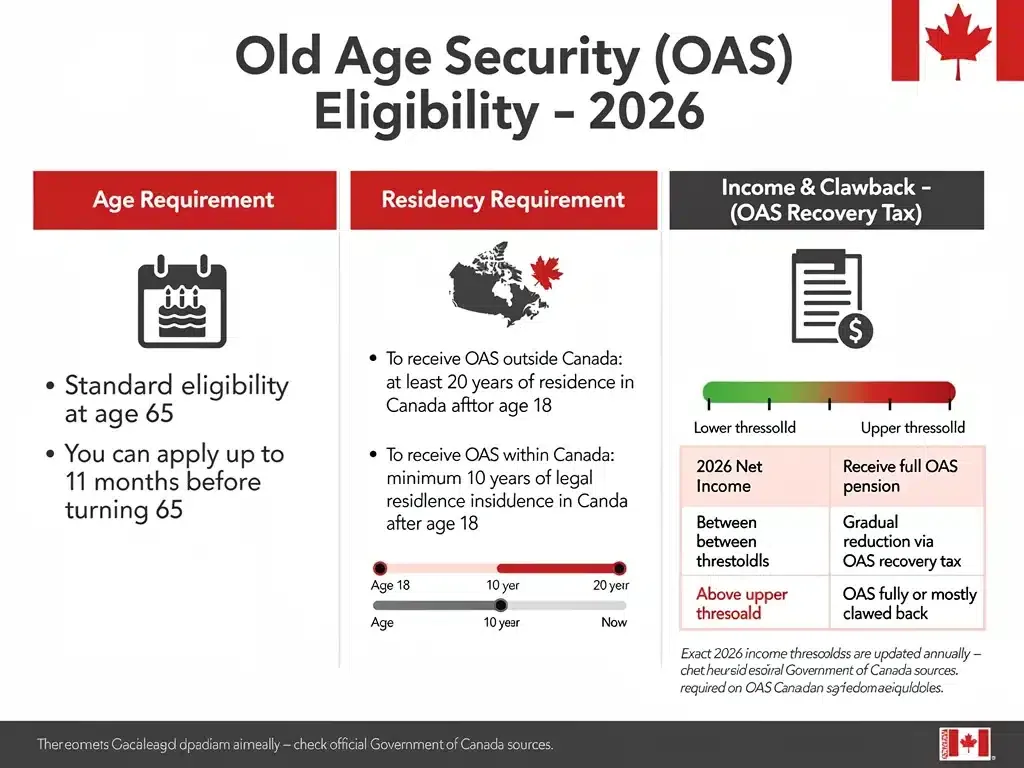
To qualify for the basic OAS pension, you must be 65 years old or older. If you live in Canada, you must have resided in Canada for at least 10 years after turning 18. This 10-year period does not need to be continuous, but it is a critical benchmark.
If you live outside Canada, you must have been a Canadian citizen or a legal resident of Canada on the day before you left Canada, and have resided in Canada for at least 20 years after turning 18. These rules ensure that the OAS benefit remains a Canadian-focused support system.
- Must be 65 years old or older.
- Residency in Canada for at least 10 years after age 18 (if residing in Canada).
- Residency in Canada for at least 20 years after age 18 (if residing outside Canada).
Applying for OAS: When and How
Service Canada often automatically enrolls eligible individuals for OAS benefits. However, it is always wise to confirm your enrollment and, if necessary, apply manually to avoid any delays in receiving your payments as you approach 65.
Applying for the OAS benefit typically involves submitting an application form along with supporting documents, such as proof of age and residency. It is recommended to apply six months before your 65th birthday to ensure a smooth transition and timely receipt of your first payment.
- Automatic enrollment is common, but verify your status.
- Apply six months before your 65th birthday if not automatically enrolled.
- Submit required documents, including proof of age and residency.
The $713 Monthly Payment: Understanding the Maximum OAS Benefit in 2026
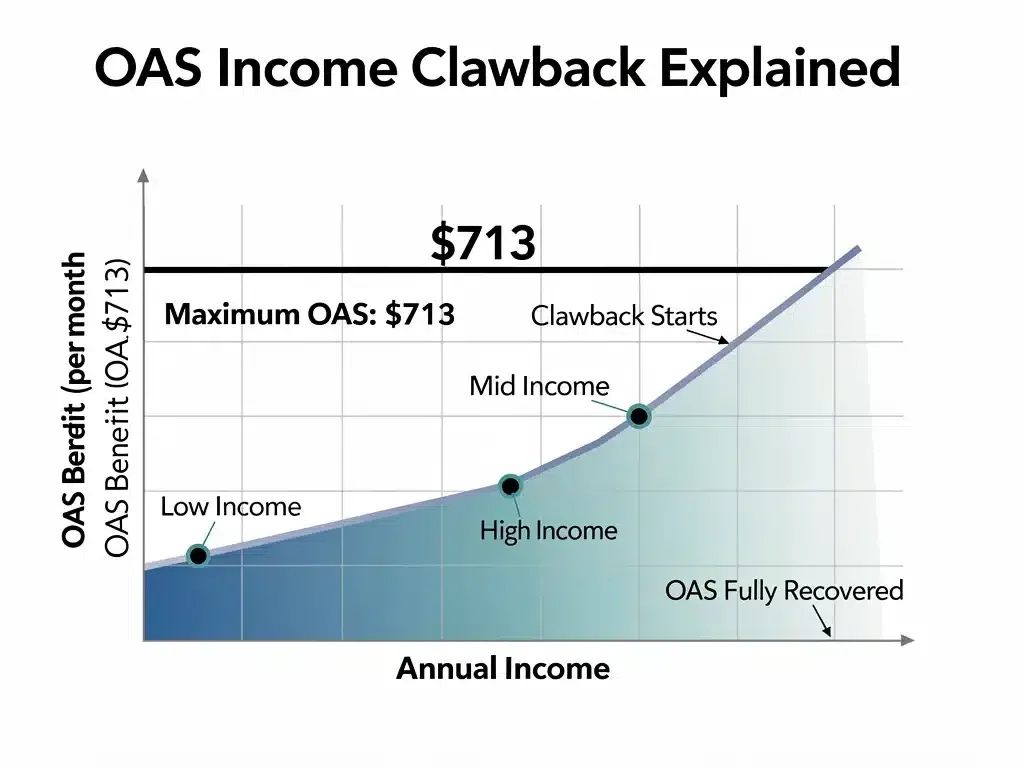
The maximum OAS benefit, projected at approximately $713 for 2026, is a significant figure for countless Canadian seniors. This amount represents the highest possible payment for a fully eligible individual, assuming no income-based reductions are applied.
It is important to remember that this figure is subject to quarterly adjustments, reflecting changes in the Consumer Price Index. These adjustments are designed to help maintain the purchasing power of the OAS benefit, protecting seniors from inflation’s impact on their fixed incomes.
While the $713 figure provides a clear benchmark, many factors can influence the actual amount an individual receives. Understanding these variables is crucial for accurately projecting your own OAS income.
How Payments are Calculated and Adjusted
OAS payments are primarily based on the number of years you have resided in Canada after age 18. To receive the full OAS benefit, you generally need to have lived in Canada for at least 40 years after your 18th birthday. If you have resided in Canada for fewer than 40 years but at least 10 years, you may receive a partial pension.
A partial pension is calculated as 1/40th of the full pension for each year you have resided in Canada after age 18. For example, if you lived in Canada for 20 years after age 18, you would receive 20/40ths, or half, of the full OAS benefit. This proportional calculation ensures fairness based on residency contributions.
The government reviews OAS payment amounts every three months, in January, April, July, and October, and adjusts them if the cost of living, as measured by the Consumer Price Index, increases. This mechanism helps the OAS benefit keep pace with inflation, offering greater financial stability to recipients.
Income Impact: The OAS Clawback and Net Benefit for 2026
A crucial aspect of the OAS program is the income-tested recovery tax, often referred to as the ‘OAS clawback.’ This mechanism reduces your OAS benefit if your net income exceeds a certain threshold, ensuring that the benefit is primarily directed to those who need it most.
For 2026, understanding the income threshold and how it could affect your potential $713 monthly payment is vital for financial planning. Many seniors are surprised to learn their OAS benefit is reduced due to other retirement income sources.
This clawback can significantly impact your net benefit, so it is essential to factor it into your retirement income projections. Being aware of this threshold allows for better financial management and potentially strategic income planning.
The OAS Recovery Tax Threshold
The OAS recovery tax applies if your net individual income in the previous calendar year exceeds a certain amount. For 2026, this threshold will be adjusted, but historically it has been around $80,000. For every dollar of net income above this threshold, your OAS benefit is reduced by 15 cents.
The OAS benefit is completely eliminated if your net income reaches an upper threshold, which is also adjusted annually. This upper limit for 2026 will determine the point at which high-income seniors receive no OAS payment at all, making income management critical.
It is important to note that the income used for the clawback calculation is your net income as reported on your tax return. This includes income from all sources, such as CPP, private pensions, RRIF withdrawals, and employment income, so comprehensive financial planning is essential.
Mitigating the Clawback’s Effects
For some seniors, strategic income planning can help mitigate the impact of the OAS clawback. This might involve deferring certain income sources, such as RRIF withdrawals, or exploring income-splitting opportunities with a spouse.
Consulting with a financial advisor can provide personalized strategies to manage your taxable income effectively. Understanding your total income picture and how it interacts with the OAS recovery tax is key to maximizing your overall retirement income.
Payment Dates and Direct Deposit for OAS Benefits in 2026
Knowing when to expect your OAS payments is crucial for budgeting and financial organization. Service Canada maintains a consistent schedule for benefit disbursements, ensuring recipients can plan their expenditures accordingly.
For 2026, the payment dates for the OAS benefit will follow the established monthly schedule, typically on the third-to-last banking day of each month. Direct deposit is the preferred and most efficient method for receiving these funds.
Enrolling in direct deposit ensures that your payments are securely and promptly transferred directly into your bank account, avoiding potential delays associated with mailed cheques. This convenience significantly simplifies financial management for seniors.
2026 Payment Schedule Overview
The OAS benefit is paid monthly, usually on the third-to-last banking day of the month. While specific dates for 2026 will be officially published by Service Canada, the pattern is highly predictable, allowing for reliable financial planning.
It is advisable to check the official Service Canada website for the precise 2026 payment calendar as it becomes available. This ensures you have the most accurate and up-to-date information regarding your benefit disbursement dates.
Setting up direct deposit is simple and highly recommended. It provides peace of mind, knowing your funds will arrive consistently without the worry of lost or delayed mail, and is a standard practice for most government benefits.
Other Related Benefits: GIS and Allowance in 2026
Beyond the basic OAS benefit, certain low-income seniors may be eligible for additional support programs, such as the Guaranteed Income Supplement (GIS) and the Allowance. These programs are designed to provide extra financial assistance to those with limited income, complementing the OAS payment.
The GIS provides a monthly non-taxable benefit to Old Age Security pensioners who have a low income and reside in Canada. The Allowance provides benefits to low-income individuals aged 60 to 64 who are spouses or common-law partners of GIS recipients, or to widowed individuals in the same age bracket.
These supplementary benefits are income-tested and are vital for many seniors struggling to make ends meet. Understanding their eligibility criteria and how they interact with the OAS Benefit 2026 is crucial for maximizing overall financial support.
Guaranteed Income Supplement (GIS)
The GIS is an additional payment available to OAS recipients with low income. Eligibility and the amount received depend on your marital status and your annual income, excluding the OAS pension itself. It is a non-taxable benefit, which further enhances its value.
The GIS is automatically reviewed each year based on your income tax return. If you are eligible, you do not need to reapply annually, provided you file your taxes on time. This streamlined process ensures continuous support for eligible low-income seniors.
The thresholds for GIS eligibility are adjusted annually, so it is important to stay informed about the latest income limits for 2026. This supplement can significantly boost the financial security of vulnerable seniors in Canada.
The Allowance and Allowance for the Survivor
The Allowance is a benefit available to 60- to 64-year-olds whose spouse or common-law partner receives the OAS and GIS benefits. It provides financial support during the transitional period before they become eligible for OAS themselves.
The Allowance for the Survivor is available to low-income widowed individuals aged 60 to 64. Both Allowance benefits are also income-tested and non-taxable, providing critical support during a potentially challenging life stage.
These benefits are subject to similar income review processes as the GIS, requiring annual income tax filing to maintain eligibility. They play a vital role in preventing poverty among older Canadians who are not yet 65 but face significant financial constraints.
Keeping Up-to-Date: Official Sources and Information for 2026
Staying informed about the latest changes to the OAS benefit and related programs is essential for all recipients and future applicants. Government policies and economic conditions can influence benefit amounts and eligibility rules, making continuous monitoring important.
Reliable information primarily comes from official government sources, which provide accurate and timely updates. Relying on these direct channels ensures that you are receiving verified data rather than speculation.
Regularly checking these sources will help you understand any adjustments to the maximum payment, income thresholds, or application processes for the OAS Benefit 2026. This proactive approach can prevent misunderstandings and missed opportunities.
Service Canada and Government of Canada Websites
The official Service Canada website is the primary resource for all information related to the Old Age Security program, including eligibility, application forms, payment dates, and current benefit amounts. It is updated regularly with the most accurate details.
The Government of Canada website also provides comprehensive guides and news releases concerning social benefits and financial support for seniors. These platforms are designed to be user-friendly and provide clear, authoritative information.
Subscribing to government newsletters or alerts can also be an effective way to receive timely notifications about changes or updates to the OAS program. This ensures you are always in the loop regarding your benefits.
Planning for Retirement: Integrating OAS into Your Financial Strategy
The OAS benefit, while not a sole source of retirement income for most, is a foundational element in a comprehensive financial plan. Understanding its role and how it interacts with other income streams is crucial for long-term financial security.
Integrating the OAS Benefit 2026 into your overall retirement strategy involves considering its taxable nature, potential clawbacks, and how it complements other pensions and savings. A holistic view ensures you maximize all available resources.
Effective retirement planning goes beyond simply anticipating the OAS payment; it involves careful consideration of all financial variables. This proactive approach helps secure a stable and comfortable retirement.
Holistic Retirement Income Planning
When planning for retirement, consider the OAS benefit alongside your Canada Pension Plan (CPP) payments, private pension plans, RRSPs, TFSAs, and any other investments. Each component plays a unique role in your overall income picture.
Understanding the interplay between these different income sources is vital, especially concerning tax implications and income-tested benefits like OAS and GIS. A well-structured plan can help optimize your after-tax income.
Regularly reviewing your financial plan with a professional advisor can help you adapt to changing circumstances and government policies. This ensures your retirement strategy remains robust and aligned with your financial goals.
| Key Point | Brief Description |
|---|---|
| Maximum Benefit 2026 | Projected at approximately $713 monthly, subject to quarterly adjustments. |
| Eligibility Criteria | Age 65+, 10-40 years Canadian residency after age 18. |
| OAS Clawback | Benefit reduced by 15 cents for every dollar above an income threshold (approx. $80,000 for 2026). |
| Related Benefits | GIS and Allowance provide additional support for low-income seniors. |
Frequently Asked Questions About OAS Benefit 2026
Will the OAS benefit definitely be $713 in 2026?▼The $713 figure is a projection for the maximum OAS benefit in 2026, based on current trends and historical adjustments. The exact amount will be officially confirmed by Service Canada closer to the date and is subject to quarterly adjustments linked to the Consumer Price Index.
How does the OAS clawback work for the OAS Benefit 2026?▼If your net income in 2025 exceeds a certain threshold (historically around $80,000), your OAS benefit for 2026 will be reduced. For every dollar over this threshold, 15 cents is deducted from your annual OAS payment. This ensures the benefit targets lower and middle-income seniors.
Do I need to apply for the OAS Benefit 2026, or is it automatic?▼Many eligible Canadians are automatically enrolled for OAS. However, it’s always best to confirm your enrollment with Service Canada as you approach your 65th birthday. If you’re not automatically enrolled, you will need to apply, ideally six months before turning 65.
What if I haven’t lived in Canada for 40 years?▼If you’ve lived in Canada for at least 10 years after age 18 but less than 40 years, you will receive a partial OAS pension. This is calculated as 1/40th of the full OAS benefit for each year of residency. For example, 20 years of residency would yield 50% of the full benefit.
Are there other benefits alongside the OAS Benefit 2026 for low-income seniors?▼Yes, low-income seniors receiving OAS may also be eligible for the Guaranteed Income Supplement (GIS). Additionally, the Allowance and the Allowance for the Survivor provide support for 60- to 64-year-olds who are spouses of GIS recipients or are widowed, respectively.
Looking Ahead: Maximizing Your OAS Benefit in 2026
The insights into the OAS Benefit 2026 highlight the importance of proactive financial awareness for Canadian seniors. Understanding the eligibility criteria, the potential for income-based reductions, and available supplementary benefits is paramount.
Staying current with official Service Canada announcements will ensure you have the most accurate information regarding payment amounts and policy changes. Strategic tax and income planning can also play a significant role in optimizing your net benefit.
Ultimately, a well-informed approach to the Old Age Security program allows seniors to confidently integrate this vital income stream into their overall retirement strategy, securing their financial future.